
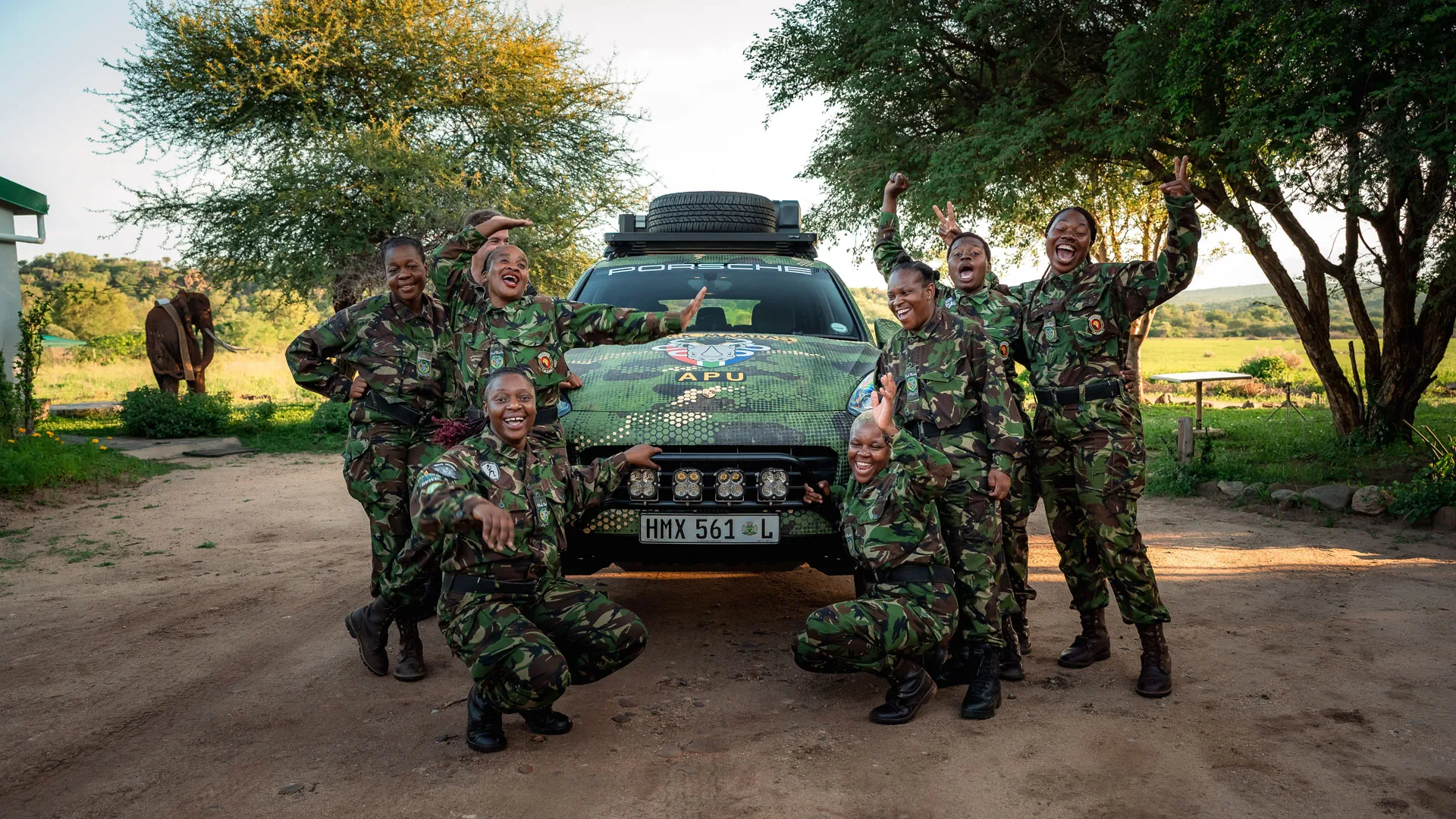
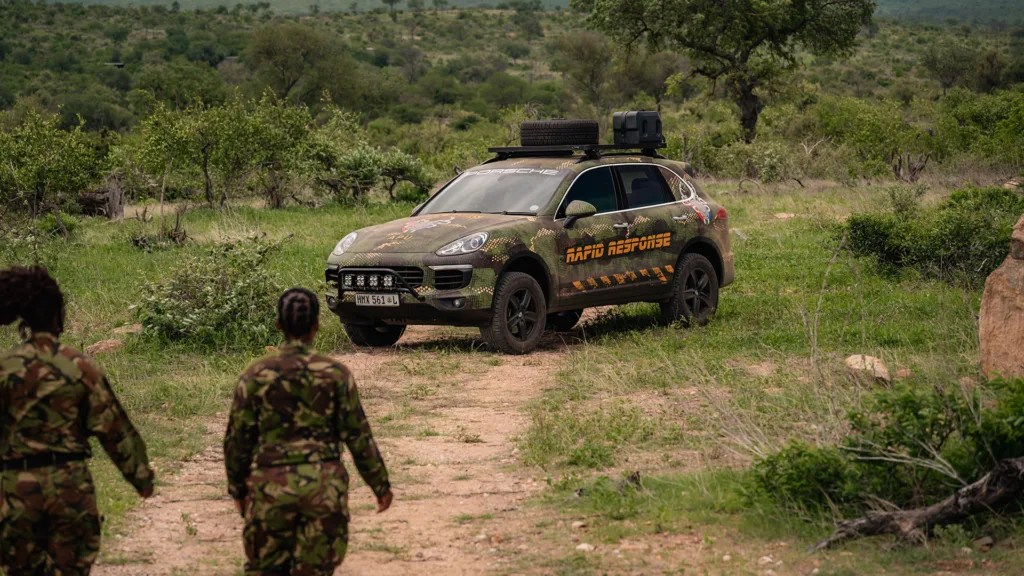
Porsche South Africa has donated a specially modified Porsche Cayenne to the Black Mambas, the world’s first all-female, unarmed anti-poaching unit, to serve as its first dedicated rapid response vehicle. According to the company, the vehicle was prepared by Porsche Centre Johannesburg and is already in full-time operation across the Greater Kruger in north-eastern South Africa.
Formed in 2013, the Black Mambas patrol around 20,000 hectares of the Greater Kruger, one of the most important areas in the world for rhino protection. Their approach is grounded in prevention, community education, and a visible presence maintained 24 hours a day to deter poachers before harm can occur. The unit operates unarmed, calling on armed response teams when required, and most patrols are carried out on foot.
The donation responds to a long-running crisis. The Greater Kruger and the adjacent Kruger National Park hold the largest population of rhinos in the world, but the figures cited by Porsche indicate the Kruger’s rhino population has fallen by around 60 per cent since 2013, a decline the company attributes to organised poaching networks. At the start of the 20th century an estimated 500,000 rhinos lived in the wild; today only a fraction of that number remains.
Built for the reserve
Reliable transport is essential for reaching remote areas and responding quickly to threats, and according to Porsche, vehicle breakdowns were previously a frequent obstacle that slowed response times. The Cayenne received a series of practical modifications: suspension upgrades and underbody protection for the terrain, a bull bar and spotlights for night patrols, Yokohama off-road tyres, a roof rack carrying a full-sized spare, and water tanks to support the patrol dogs. It is finished in striking camouflage livery intended to keep it a visible presence, in line with the unit’s non-violent approach.
Poaching incidents in the Greater Kruger have declined in recent years, a trend the unit and Porsche attribute to ongoing conservation work. Craig Spencer, founder of the Black Mambas, said the vehicle had changed the way the unit works, allowing it to respond faster, cover more ground, and be present where it is needed most. A mini-documentary filmed with the unit across the reserve has also been produced.


