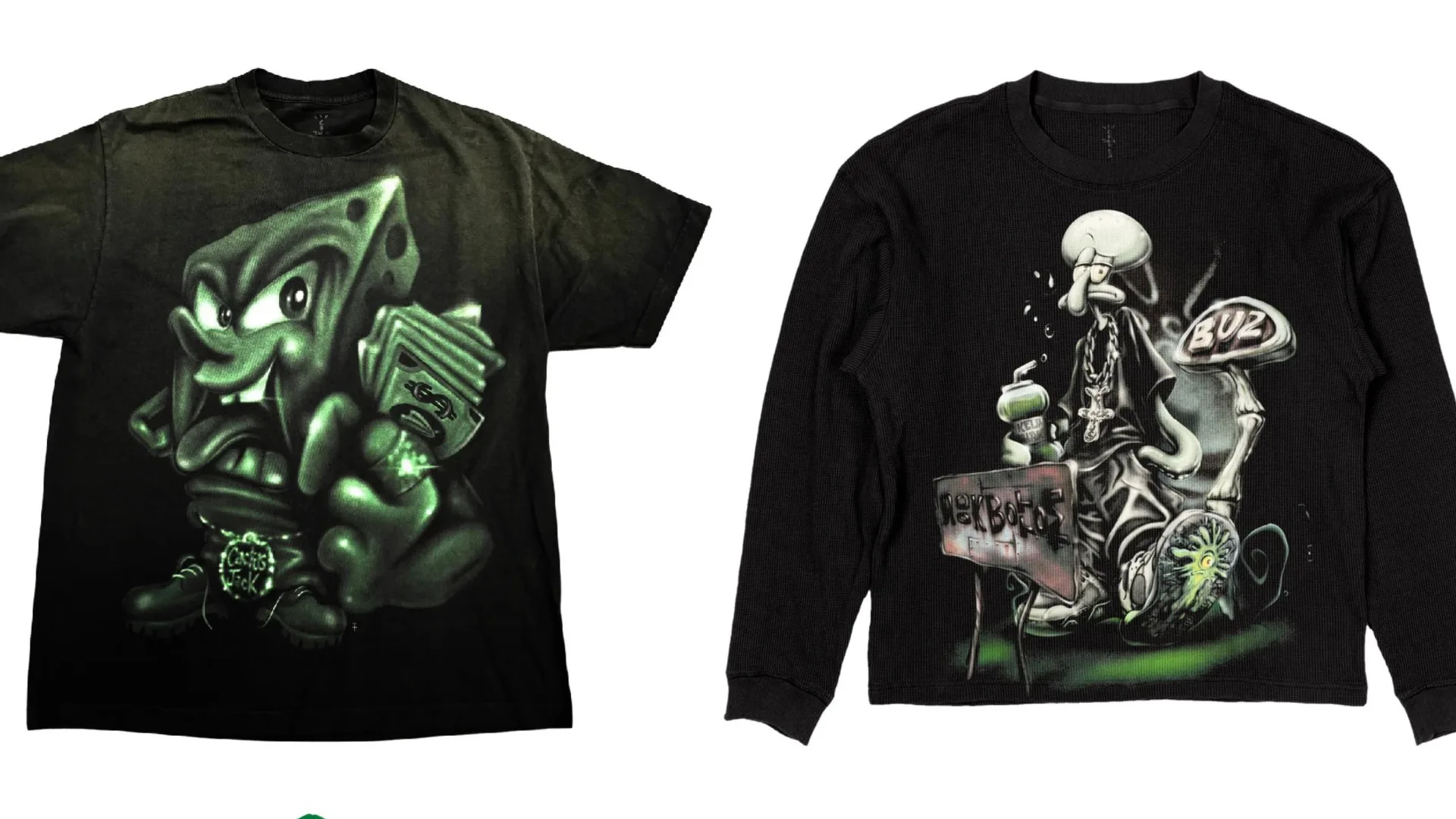

Five years into his tenure at AMIRI, Fardin Hazratizadeh occupies a rare position in contemporary fashion: a Persian immigrant who came of age through sneaker culture and now leads one of luxury’s most influential footwear and accessories divisions as AMIRI’s director of footwear and accessories.
His ascent, from selling sneakers in the Bay Area to shaping silhouettes that move global markets, wasn’t just career ambition. It was a matter of survival, a language of reintegration that arrived precisely when he needed it most.
“I was around nine years old when I arrived in the United States from Iran,” Hazratizadeh recalls. “Coming to a totally different culture at such a young age, and barely speaking any English, made the move extremely difficult.” It was during middle school that he found common ground. “Most of the early friends I made were part of the footwear movement, that’s really how it all started.”
As a teenager growing up in the Bay Area, sneakers became both currency and community. “Kids were lining up at stores,” he says, singling out HUF in San Francisco as a formative destination. “It was iconic. We’d take trips out there, spend the night — it was a whole thing.” Before long, Hazratizadeh was buying and selling sneakers himself.
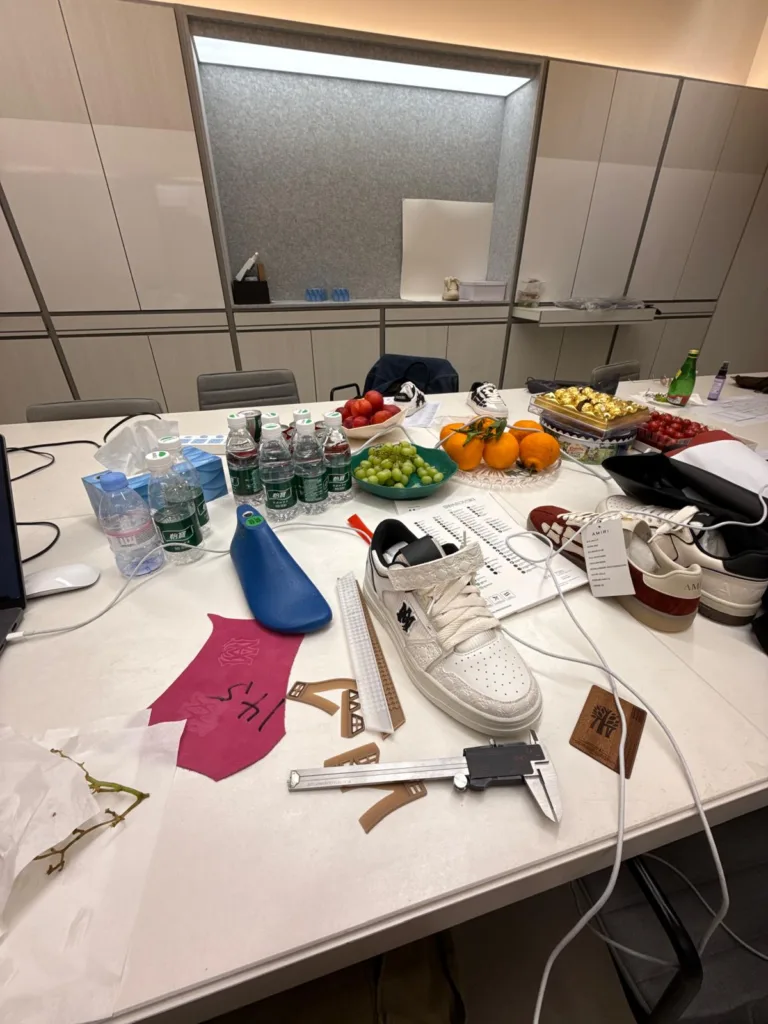
After high school, Hazratizadeh went on to study industrial and product design at the Academy of Art University, where he stumbled upon the second revelation: footwear design as a formal discipline.
Read More
“During one of my last semesters there, they added a footwear class,” he explains, “but I was not able to get into it as it filled up really quickly.”
The setback turned into fuel: “Although I wasn’t enrolled, a friend of mine was,” Hazratizadeh says. “Since it was a studio class, I would walk in and study the process alongside the accepted students. I was kind of building my own portfolio on the side.” Hazratizadeh’s persistence paid off. The following semester, he had secured a spot in the course.
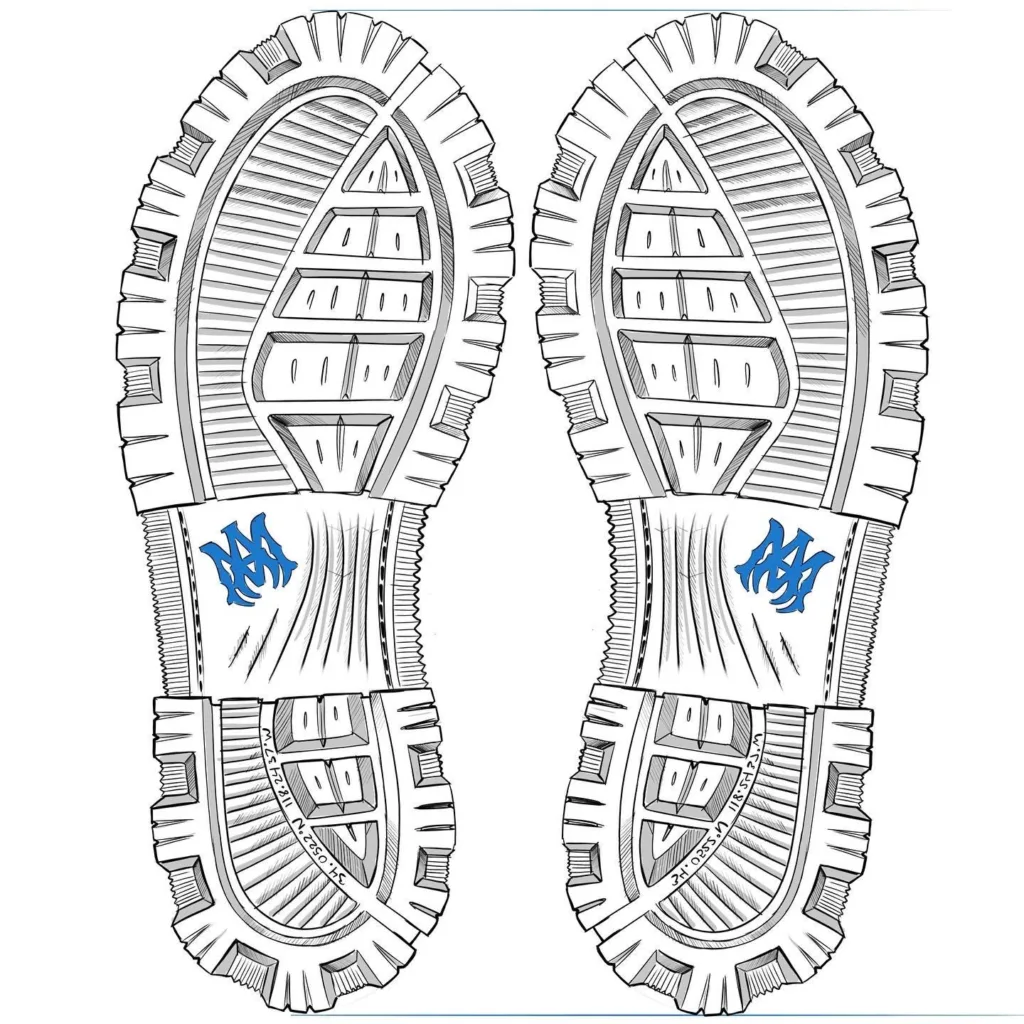
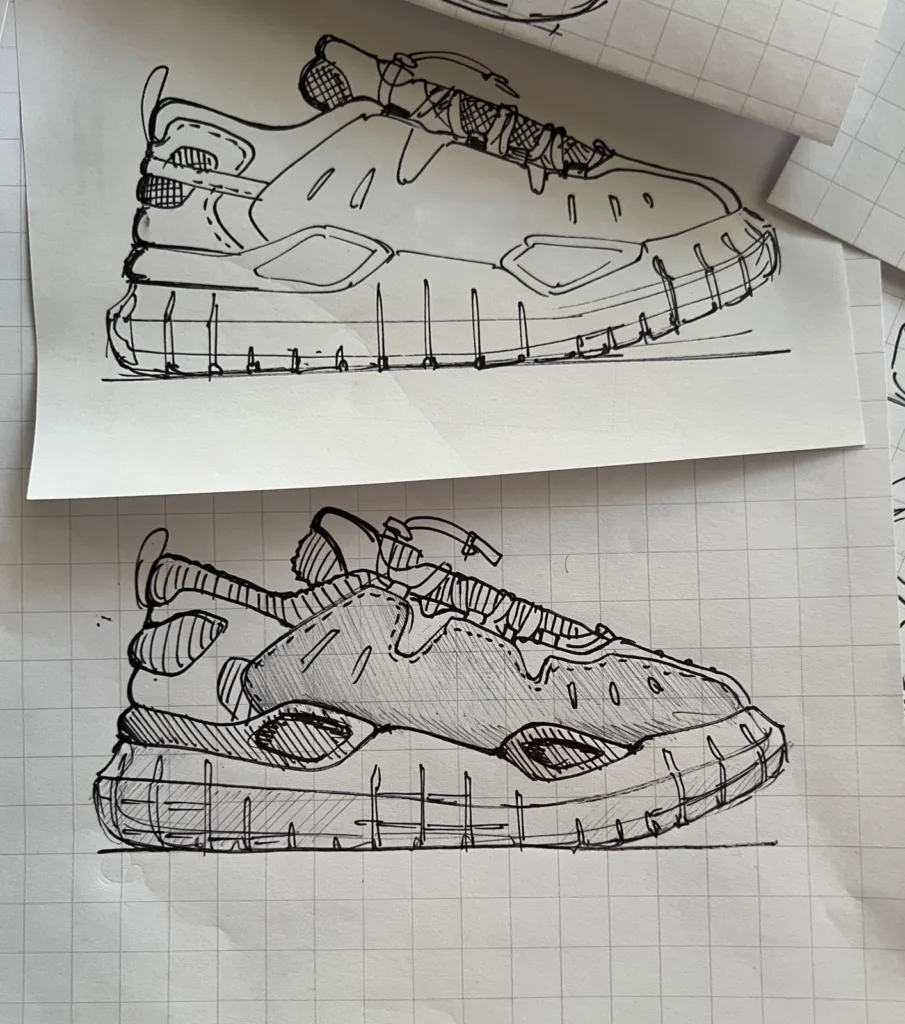
The class would open another door, although once again, indirectly. “During that time, my friend was actually offered an internship at New Balance, which was a big move,” he says. “But since I had done a project and I had a portfolio put together, I really pushed the school to let me interview as well. I secured this internship with New Balance essentially by taking a chance on myself, and well, essentially, from my friend [laughs].”
Hazratizadeh mentions this with a knowing smile, because today, that same friend, Michael McHale, was hired by Hazratizadeh as soon as he arrived at AMIRI; a full-circle moment rooted in loyalty and shared beginnings.
Before he arrived at AMIRI in 2021 as senior footwear and accessories designer, however, there was yet another internship, secured in classic Hazratizadeh style: by seizing the chance and quietly aligning the stars.
“At the time, Salehe Bembury was the head of footwear for Versace, and he had a little private office in LA, which is unheard of for a brand of that caliber. For that reason, Bembury was looking for an intern on his social media.” Hazratizadeh recalls how he got his foot into luxury fashion. “I just sent him my portfolio,” one that he updated every single day.
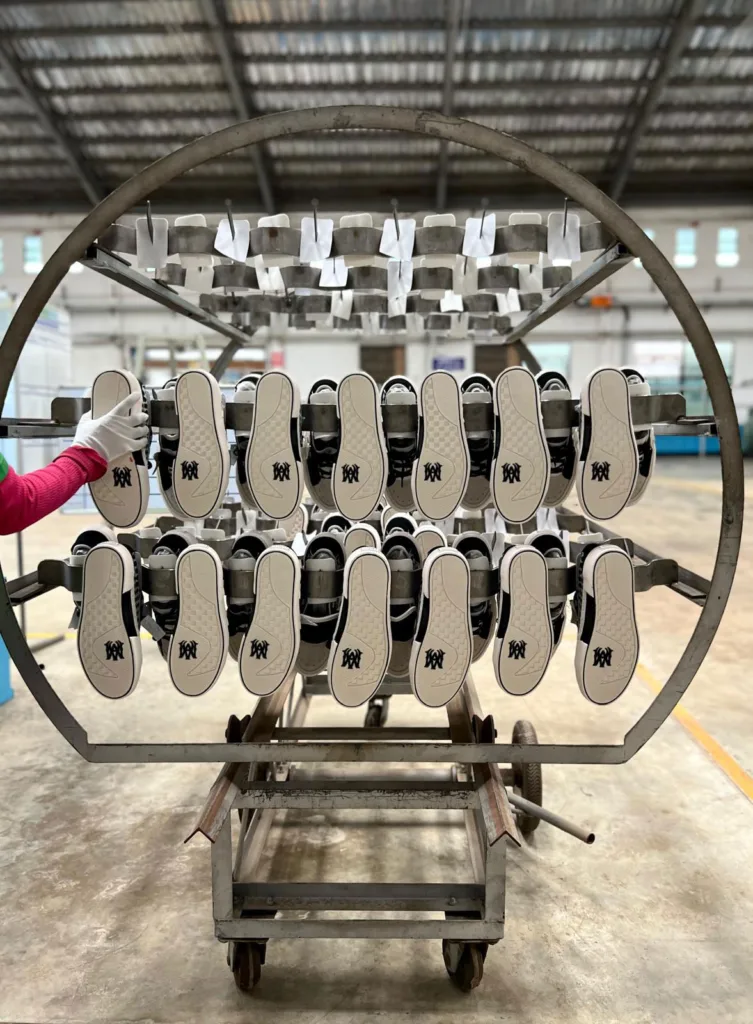
For three years, Hazratizadeh worked alongside Bembury on designing men’s and women’s footwear for Versace, a time he describes as “one of the greatest learning experiences,” absorbing the language of luxury craftsmanship and learning how to translate bold ideas into wearable reality.
It was during this formative period that he was introduced to designer Mike Amiri, also of Persian descent, whose Los Angeles-based brand was beginning to carve out space in the luxury market with its rock-and-roll aesthetic and California sensibility.
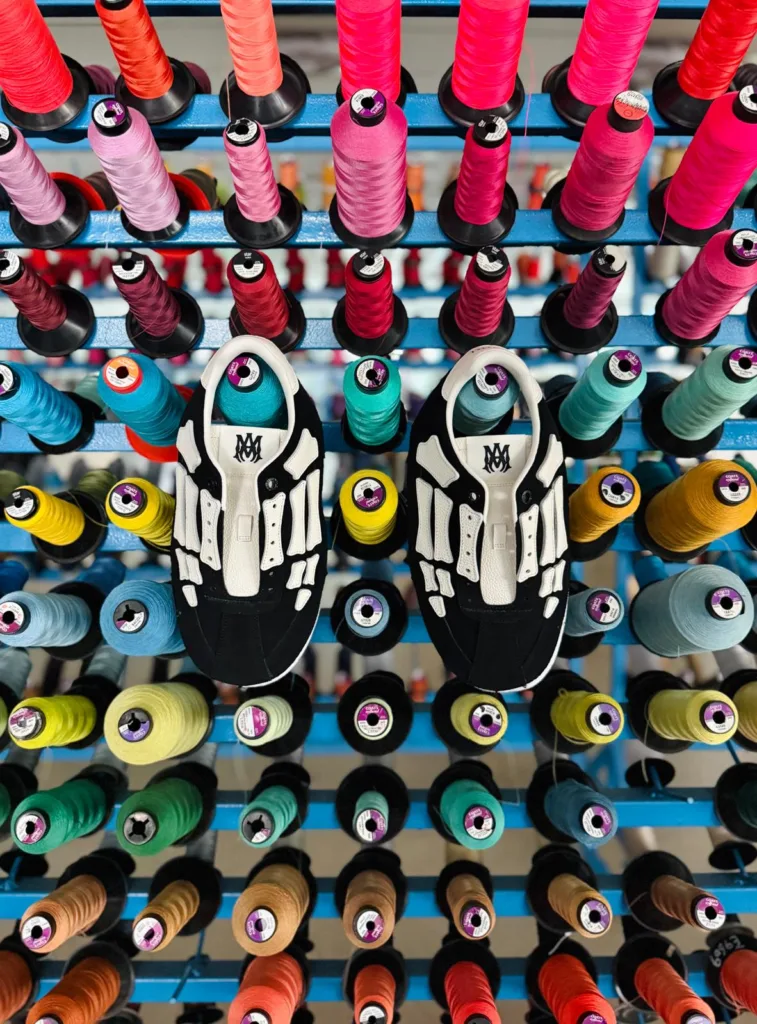
Although not the title of the song, AMIRI skyrocketed in 2019 following Pop Smoke’s DIOR, where he name-drops the brand religiously on the chorus. The song endorses AMIRI Jeans, but at the time Hazratizadeh joined, the brand was still defining its footwear identity. In 2021, that changed with the release of the MA-1 sneaker.
“We had a sneaker called the MA-1,” says Hazratizadeh. “It had a puffier silhouette that put us on the map as far as footwear; new people were coming into the brand to buy footwear only.”
This shoe was a milestone in Hazratizadeh’s career, not merely because of its success but because it marked a shift in how Hazratizadeh approached design. Footwear became mathematics.
“I think why that shoe worked well, and changed the idea that I had going into designing shoes, is because it was fulfilling different characters at the same time. It was referencing skate culture — very California, very AMIRI, right? — and it was also very sporty. Obviously, it had a big presence to it because of the silhouette, and then there’s the comfort. It made me think of all shoes as an equation in some way. It’s like, what am I hitting on this design that will potentially make this shoe more successful?”
Getting there wasn’t easy; equations usually require trial and error. “Mike Amiri and I worked very closely on that shoe,” Hazratizadeh says. “There were countless prototypes. It took hours to get it right.”
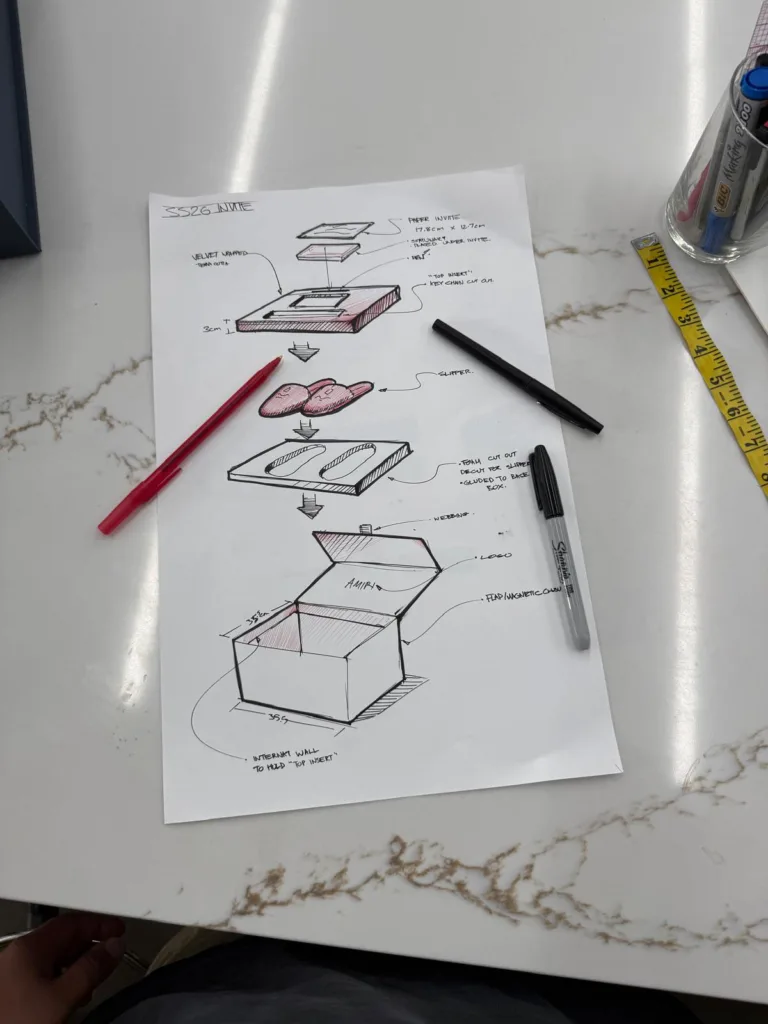
Five years in, Hazratizadeh isn’t going anywhere, though his curiosity continues to expand. He is always eyeing other products, as a hobby and as inspiration, pulling both from his formal background in product design and his cabinet designer father’s DNA. “I like what I’m building, you know? There’s still so much building to do, and I’m enjoying the building,” he says.
“However, it’s always good to think ahead.” Hazratizadeh reflects, “I am a product nerd, I’m always looking at products. Right now, for example, I am driving and looking at cars. I just want to keep designing more cool items. If I can get to a place where I’ll have enough time to design some furniture, even as a hobby, that will be very meaningful for me.”
Although a product enthusiast, remember, it was a sense of community that initially paved the way, so collaborations are of equal importance. “What I want is to get to a place where I could do collaborations, whether footwear or other products. I think collaboration is such a big part of the design process, bigger brands, heritage brands, that aspect interests me.”
For Hazratizadeh, impact matters. “I think time goes by so fast in life, and you kind of realize that even more when you have kids,” he reflects. “You ask, what am I doing right now? Is this what I should be doing, or should I be with my kids right now? It makes you more selective about where you invest your energy and creativity.”
But it’s not just his immediate family and two kids that push him to keep going; his Persian community makes this sense of meaning even more urgent.
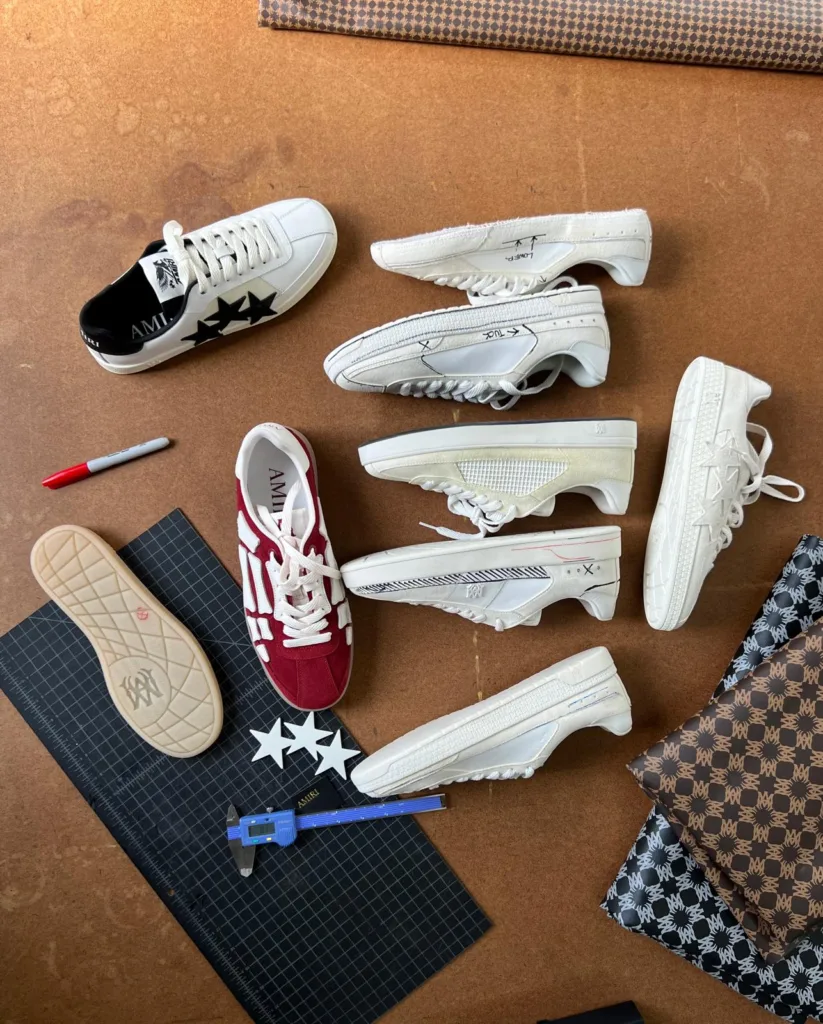
“Seeing the support of the community on a daily basis and how much love I get from my people pushes me to work more, to work longer, to do bigger things, and to build more. Many people in Iran, who are basically in the same position that I used to be, reach out to express their pride and aspirations. That goes such a long way for me. It means a lot.”
For aspiring designers aiming to break through in the fashion industry, Hazratizadeh is direct: “You think there is gonna be no changes and no newness, but brands like HOKA or On weren’t even a part of the conversation while I was growing up, now they have taken such a big percentage of the business. There’s always going to be brands that come and challenge the establishment.” But for him, in order to lead and to challenge, you have to work hard, and sketch even harder. His success was a matter of impeccable timing, but also a very strong and evolving portfolio.
“People don’t necessarily realize how important your portfolio is. You should reach out to people and have that confidence, but you have to make sure that you have something to back it up when you do reach out. A lot of times, when I want to hear people out and give them the time, there’s nothing, and it’s like, you cannot expect someone to give you an opportunity if you’re not backing it up yourself.”
His journey proves the formula: a sketchbook, relentless persistence, and the courage to keep taking chances. Even when you’re not officially in the room, like Hazratizadeh sneaking into that footwear class, eventually one of those shots will land.

Pop Culture Editor-At-Large at Complex MENA.