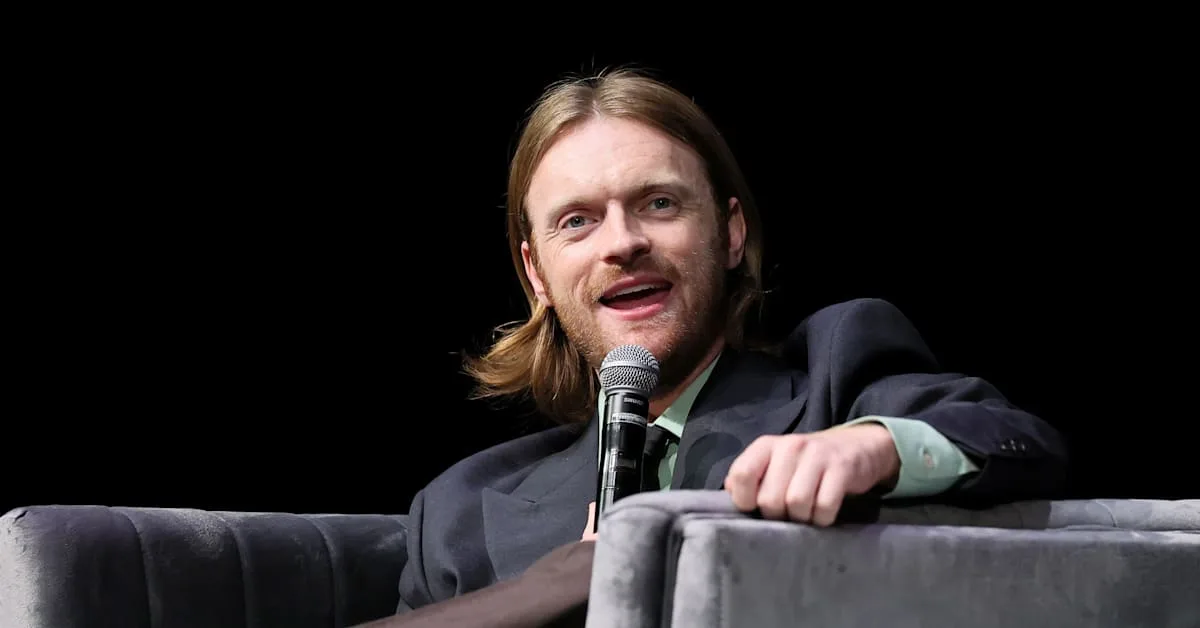

On what feels like a forsaken corner of the world, right on the edge of living where everything is razed, the West Bank erects love.
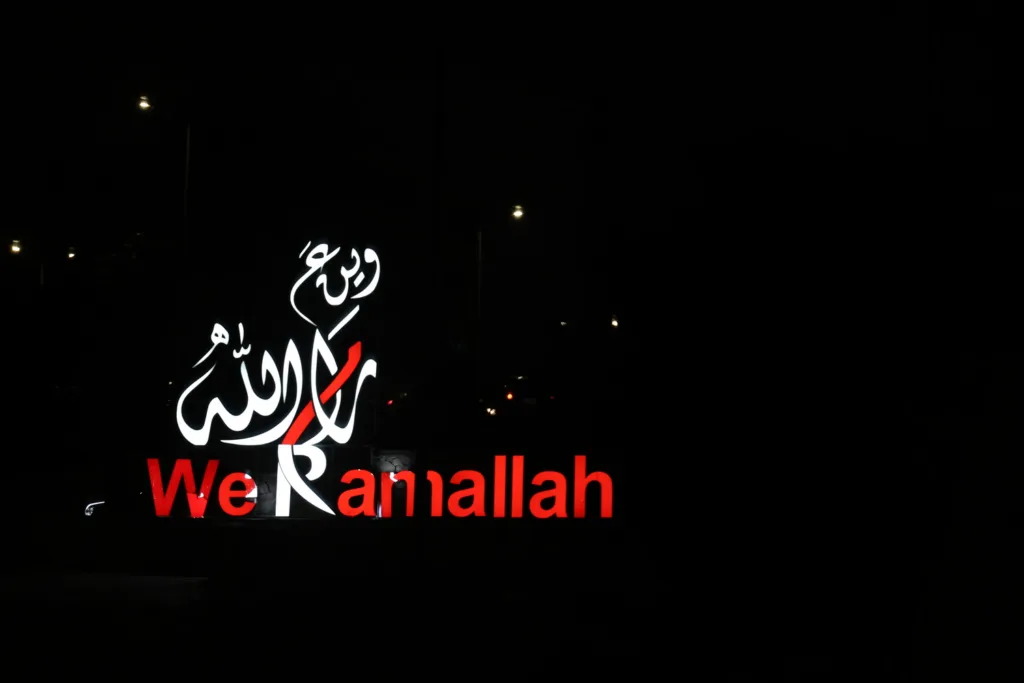
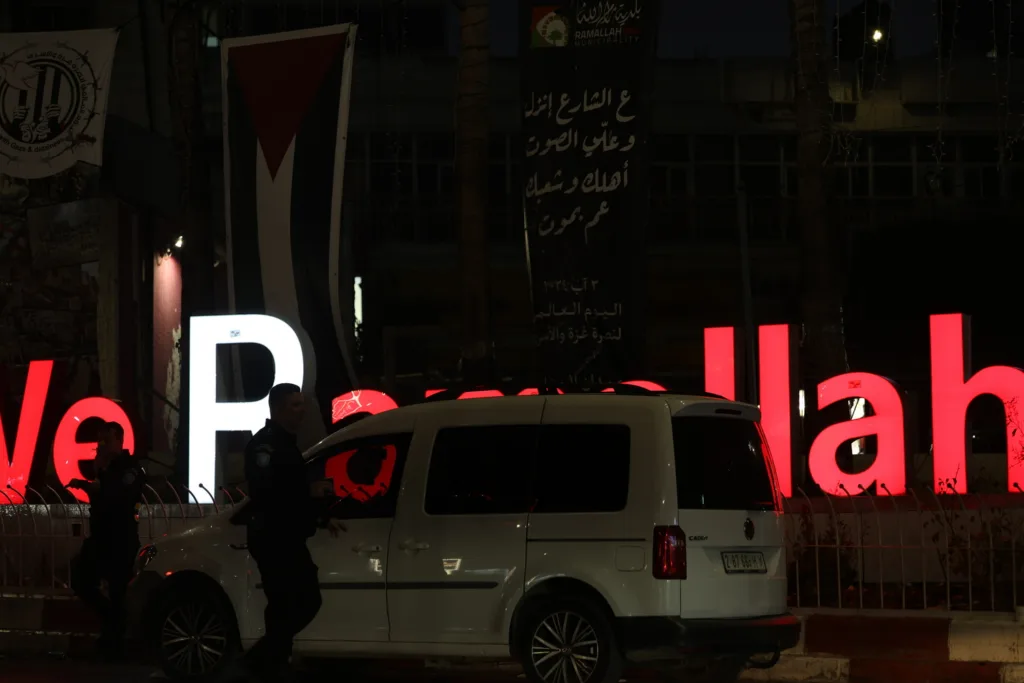
‘How do you brand a city that barely even exists?’ asked the mayor of Ramallah back in 2018, and accidental pop culture became the answer. The same year that the city of Amsterdam removed its famous red-and-white ‘I Amsterdam’ lettering because of tourist overcrowding, the City of Ramallah erected its own, strikingly similar version, ‘WeRamallah’, in the hope of attracting tourism, any tourism.
The 2020 documentary The Mayor, directed by David Osit, follows the city council as it debates potential slogans before settling on ‘WeRamallah’. But the bubble is quick to burst with one simple question: ‘Do we even know what city branding is?’
The question carried a dogmatic truth. Following the Oslo Accords, which permitted the return of the PLO to Palestinian territory in 1996, everything has been crippled. Not for lack of muscle or brains, but because of helplessness, of that which is the opposite of self-autonomy.
What no one asked in that city council meeting was: why? Why brand the de facto, the supposedly temporary? The city of Ramallah is itself a passage, an interim that hosts the governmental body until its return to where it believes it belongs in Jerusalem. Unlike what the city proposes, it is but a waiting room, a refugee camp even, awaiting the promised return, now overflowing with Range Rovers and matcha lattes.
Within the surreality of everything, and diagnosed with a Mediterranean fever of the psyche, no one was to ask why brand the limbo: a limbo with no port and no air, a limbo that its citizens can’t leave and that can scarcely welcome anyone. Instead, what the Municipality of Ramallah initiated became a rippling cultural phenomenon, adopted by most of the nearby cities, towns, and villages, even where it was utterly impossible.
Read More
The nearby town of Birzeit, for example, erected ‘WeBirzeit’. Yet the slogan was nonsensical. The letter ‘B’ at the beginning of its name stripped the phrase of the very thing that gave it meaning. It was an exact imitation, perhaps too exact.
While the logic of the structure no longer held, the popularity of the practice found other ways to reproduce itself, once again, strictly through imitation.
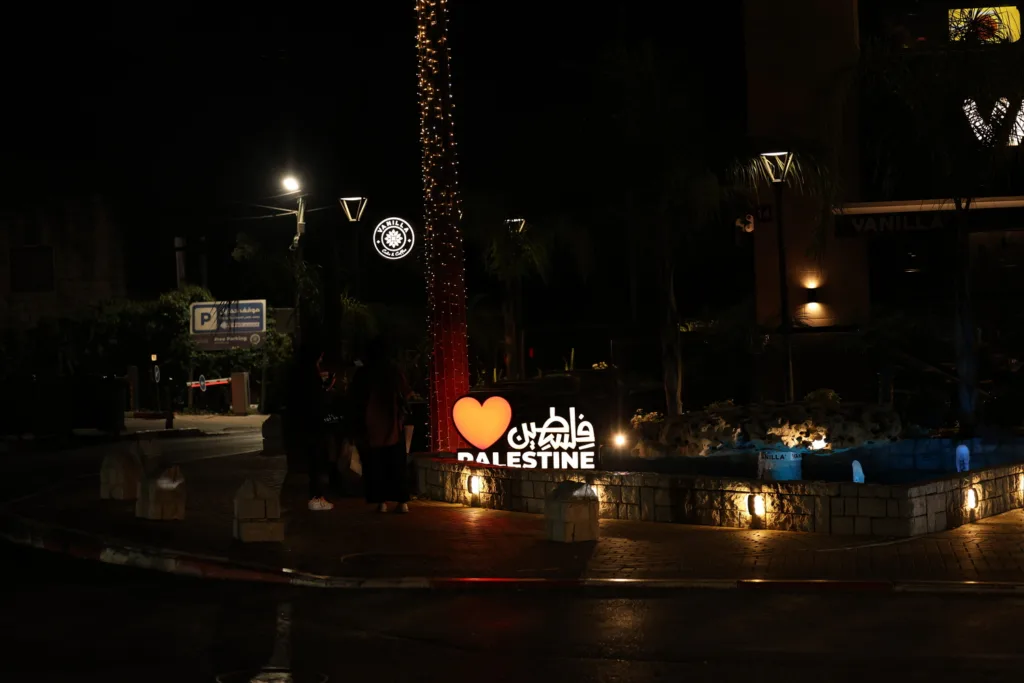
The jumbo red-and-white LED lettering of ‘WeRamallah’ abandoned its word play and adopted a New Yorkian model. A red heart came to sit at the centre of declarations of love for Kubar, Taybeh, Jericho, Halhul, and countless other places.
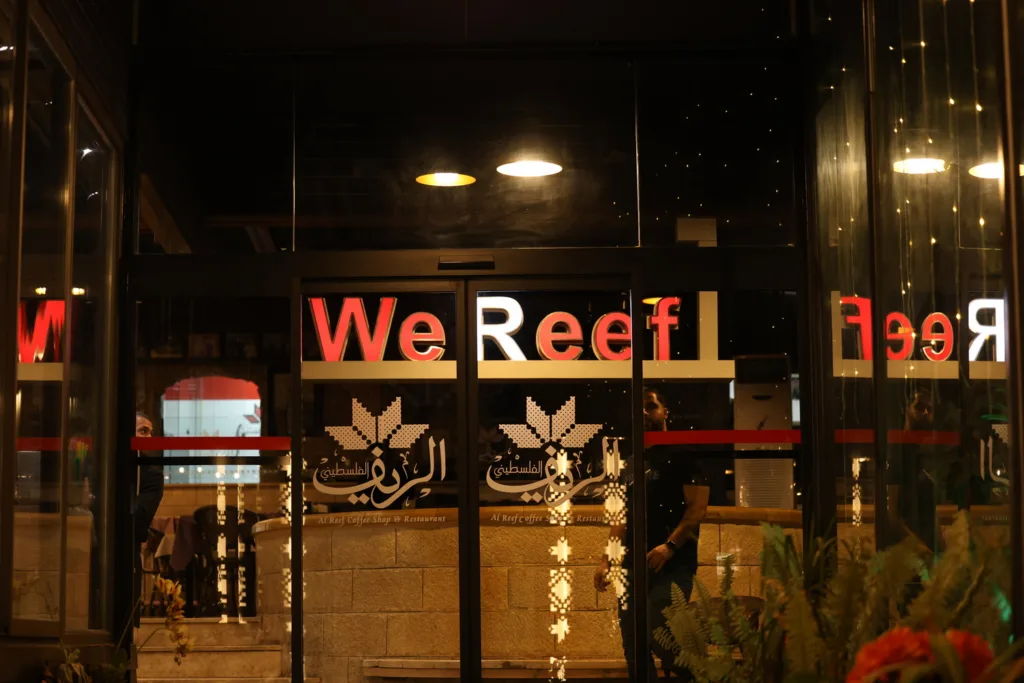
It was an imitation that gave rise to more imitations, moving from the public sector to the private. Medical clinics, car dealerships, and restaurants adopted the formula to brand their own businesses. It became commercial, mass-produced, and almost impossible to avoid across the West Bank. But was that ever not the case? At the core of city branding is branding, it is in its title.
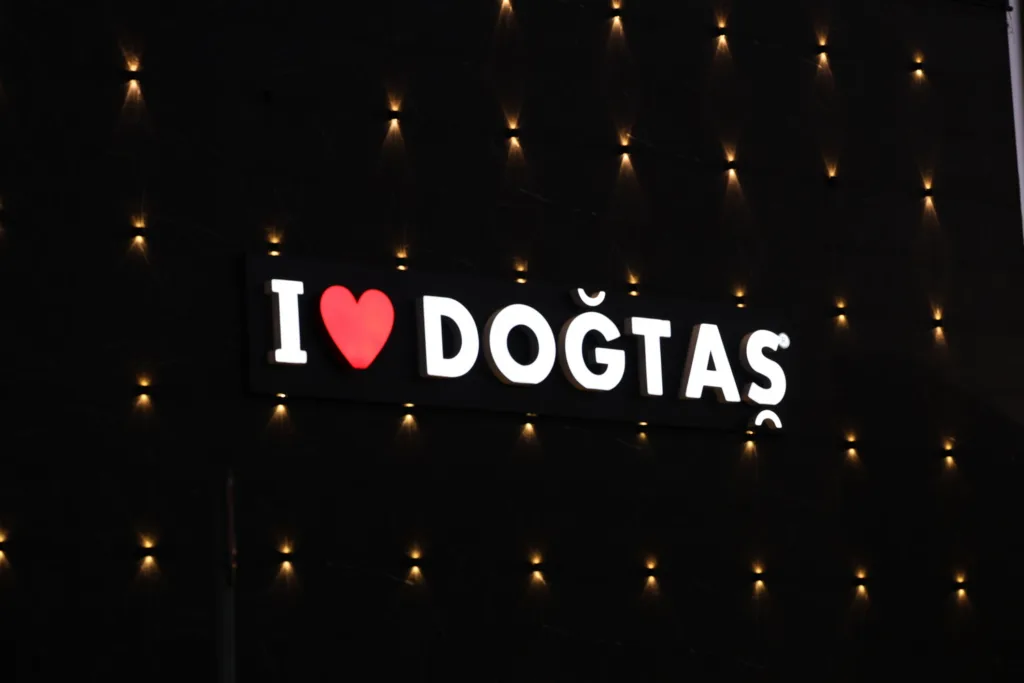
Frankly, the public’s relationship with what occupies the public sphere cannot be calculated or controlled. That is how culture proliferates, eventually becoming popular culture, at whose centre the New York City slogan sits.
The Slogan, ‘I ♥ NY’ designed in 1977 as part of a New York State Department of Commerce tourism campaign succeeded in its aim of lifting local morale during a period of severe economic crisis and rising crime. Today, it appears on garments and trinkets in souvenir shops around the world, and further still, on the cracked asphalt roads in towns across the West Bank.
In the Palestinian case, however, the ‘I ♥’ motif that crammed the West Bank revealed something more daring than mere consumerism, the rise of capitalist enterprise or even the adoption of a globalised visual language rooted in pop culture.
The branding was not simply an attempt at normalcy in a place where normalcy never found a palm to grip, nor a performance of control by a municipality with little authority over the very infrastructure on which it depends, compensating for its enforced reliance on its occupiers through the erection of hulking visual symbols. It was, in reality, an expression of thirst.
There is a worldly, almost biological understanding that survival is nothing but a beating heart.
On what feels like a forsaken corner of the world, right on the edge of living, forsaken citizens erect love simply because a heart belongs to those who are still alive, even if it has to be made out of PVC.
To ‘heart’ the West Bank is not simply to declare love, but to seek it. Despite everything, let this place be loved, the West Bank begs. It produces it again and again, until even PVC learns how to beat.

Pop Culture Editor-At-Large at Complex MENA.