Sirat, Oscar nominated film and Winner of the Jury Prize ex-aequo at the 78th Festival de Cannes, tiptoes for exactly a hundred minutes.
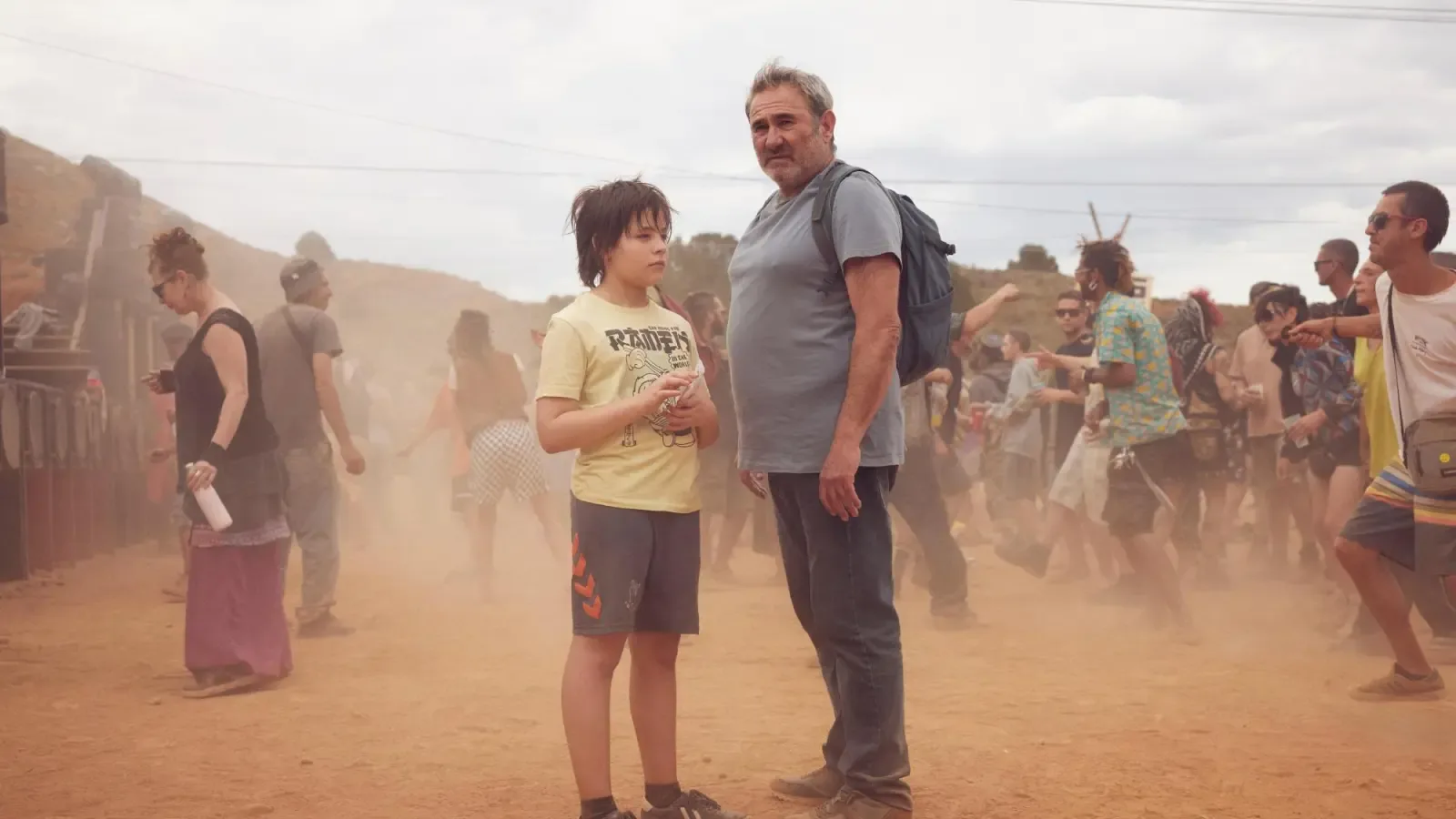
The film, by Franco-hispanic director Oliver Laxe, follows a father searching for his missing daughter, Marina, from one rave to the next. Abruptly, this drifting rave community is confronted by the arrival of a “brown-skinned” militia from an unnamed neighboring country.
If the plot sounds familiar, it’s because it is. One month before the film received production support from Spain’s Ministry of Culture, a strikingly similar real-world happening unfolded on the outskirts of the Gaza Strip, long described by Human Rights Watch as an “open-air prison.”
Shot primarily in the Moroccan desert, Sirat opens on a dancing crowd, centering it is a man draped in a keffiyeh, before cutting to a missing-person flyer unmistakably reminiscent of those circulated in the aftermath of October 7.
It is not confirmed if the film draws from the incident or not, and not that it matters, there is nothing inherently wrong with inspiration drawn from worldly happenings, but Sirat feels watered down, not clear in its direction.
Politically, it insists on having an Arabic speaking militia, but never delivers any stance, nor does it favor the emotional depth of grief and collective hysteria instead. It is narratively unfocused beginning to end.
Read More
Throughout the film, titled in reference to the Islamic concept of the “narrow bridge” over Hell, techno music is blasting, interrupted only by a Quran recitation at one point. The film gestures toward a hellish fever dream, yet the depiction of violence is curiously inverted.
When the militia is introduced, they appear armed but restrained, their presence controlled rather than brutal. The dancers, by contrast, are outraged–screaming, entitled, insisting: “We are just dancing.”
Later on, a white woman is scolding a seemingly young brown man who’s merely standing there saying: “Are you gonna shoot me for just pissing?”
In the midst of a completely white “just dancing” cast, the aggression is one sided, directed only towards those of darker skin.
At first, this dynamic seems to function as critique. But the film ultimately reframes the white rave crowd as lost souls, each burdened by personal tragedy, inviting sympathy rather than accountability.
They are not depicted as outsiders intruding upon land where they are linguistically, geographically, or spiritually unwelcome. The film never asks whether their tragedy might stem from their own entitlement.
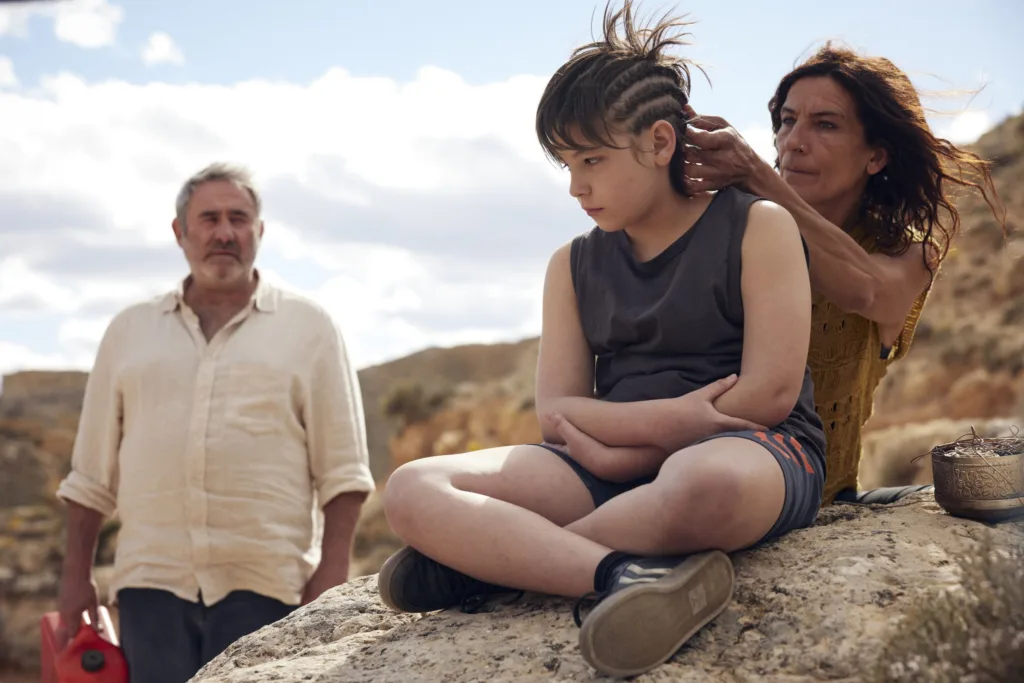
In one scene, the son is getting cornrows by one of the European ravers as they chat casually about Mauritanian camels and seals. The moment doesn’t add anything to the film, already empty, but it raises a larger question: is this superficial mixing of different religions, languages, cultures, simply another recycling of Orientalist aesthetics as emotional shorthand? Still they say very little. They function as mood, not meaning.
It becomes clear that this is the film’s ethos: disengagement. Languages, countries, cultures thrown around almost randomly, and politics untouched.
The one moment where politics threatens to enter via a news broadcast on the radio, it is immediately shut down by the hippies. That gesture feels like the film’s manifesto: politics as unwanted noise. Yet disengagement itself is political, privileged even.
Laxe attempts to touch on politics again, as one of the hippies sings to “Mr. President”: “I don’t want to go to war.”
While the sentiment echoes familiar pacifist slogans (Make love not war, or in Palestinian activist vernacular, Make hummus not wars) here it lands as timid and reductive. The film’s refusal to articulate anything substantial becomes its defining stance, as if quietly declaring: we agree with the status quo.
Sirat is a mixology of multiple unfinished ideas, like a cocktail with not one lick of liquor. All the ingredients are watered down, confronting nothing. Not techno, rave culture, political conflict, divine death, grief, or sufism the director names as one of his fascinations.
It is not clear if the film is an initiation to dance in or around armed conflict? A critique of it? Or an offering of peace? Dancing seems to be the answer, just that. Escapism mixed with QAnon-esque murmurs of an impending World War III surfacing occasionally.
When the son dies after the car falls off a cliff in the Sahara as they escape the militia, the response is neither reflection nor reckoning. It is drugs and dancing on what turns out to be a minefield. The ravers dance, then tragically blow up one after the other.
This is trauma for the sake of trauma, and no confrontation, no nuance. Unlike Climax by Gaspar Noé, another film about a party gone catastrophically wrong, Sirat stuffs itself with cultural signifiers that ultimately say very little. One wonders whether the film might have worked better set at a rave in Tilburg or Amsterdam? Without the dust, without the vaguely “techno-Islamic” aesthetic.
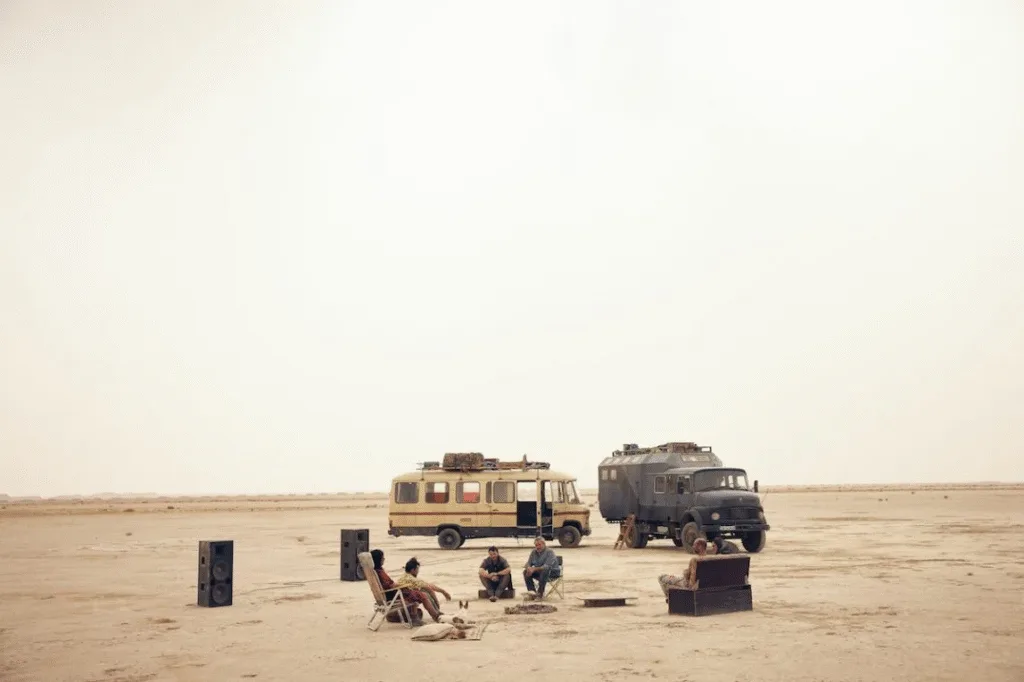
Is it fair to call this cultural laundering? Before Europe claimed techno as its own, the genre was pioneered by Black artists in Detroit under the banner of Underground Resistance. Radical, anti-drug, and explicitly political. That history is entirely washed out here, replaced by a dominantly white, apolitical, hedonistic rave fantasy. Just like it washes out the films chosen location, and real life happenings the film was forming during.
Laxes seems to not mind this timid approach, to him, this film is spiritual, but in fact, it is the opposite, it is ethically cowardly. It attempts to feel profound without ever committing to meaning.
The film borrows the visual and sonic language of conflict, spirituality, and counterculture, yet refuses responsibility for any of them.
In the language of contemporary internet culture, the film crosses into the territory of the “Spiritually Israeli” meme: European, white-washed, ethically weightless, and profoundly lacking in nuance.
Sirat mistakes withdrawal for depth and escapism for peace. Rather than spirituality, what it offers feels closer to surrender: thin, cautious, and afraid.

Pop Culture Editor-At-Large at Complex MENA.