Of late, it’s become a bit like clockwork. Come Ramadan, overnight, as if by some magical bidding of the month, tall tents are erected with glamorous, red-carpet-laden entrances, glittery motifs of crescent moons and stars, and hot and cold mezze – always the hot and cold mezze, as if iftar begins with the hot variety and ends at the cold.
Bless these commercial majlises – there’s only so much whimsy one can produce, and the truth is that Dubai adores these glitzy experiences.
But amidst all this homogenous programming, it’s easy to lose sight of what Ramadan is really about. The fasts we break at home – products of not a trend, but a life lived, absolute and evolving at the same time. The iftar table at home is the story told of family, of connection, culture, migration, and generations. In the differences between each one lies the technicolour diversity of this beautiful practice and of Dubai itself.
“I don’t know what a Dubai style iftar is,” says Farida Ahmed, one half of the founding sisters of Frying Pan Adventures, Dubai’s most authentic food tours. “We have over 200 nationalities in this country and whether you walk into a Malaysian home or a Filipino one, it is still a Dubai iftar. I mean, the Emiratis enjoy samosas, and we Indians enjoy samosas, but little does everyone know that samosas are the right of the Iranians.”
Just look at Ayesha Erkin’s iftar spread.
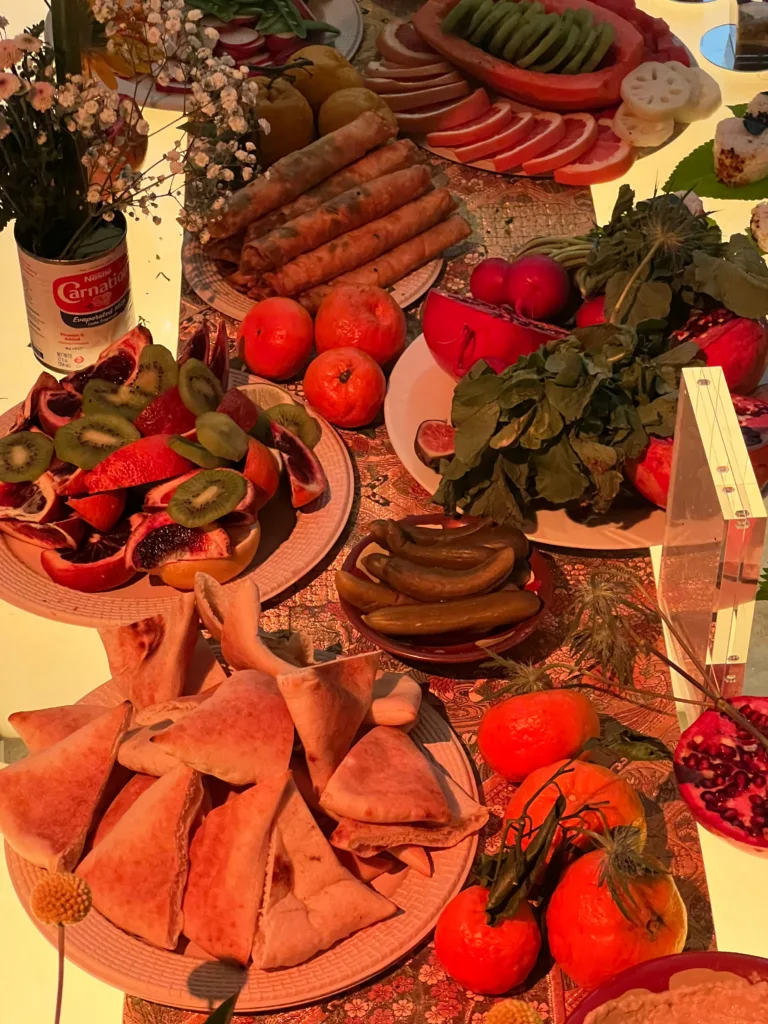
An architect specialising in vernacular, regional, and sustainable design by training, and now the founder of People, Places and Spaces, a culinary and creative studio, Erkin grew up in several countries.
Read More
“My mom is half Arab, half Turkish,” she explains over a video call one late night, post taraweeh. “So she’s Palestinian-Saudi. My dad is Uzbek-Uyghur, but he grew up in Pakistan, and so I grew up in Pakistan, Saudi Arabia, Germany and then the U.S. when I was 14. So Ramadan was always different for the country that we were in.”
Dates, a staple that Erkin grew into a cultural shift of its own; Quaker shorba, from the Kingdom, made with – wait for it – Quaker Oats, with tomatoes, chicken, lime and cardamom – Mama Erkin’s special touch; Rooh Afza, with mint or milk and tukh malanga, or basil seeds, picked up in Pakistan; Qamar-al-Din, made with apricot paste and orange blossom water; pakore, a mainstay on most South Asian tables and a specialty of Erkin’s father – these dishes make up Erkin’s childhood iftar tables, and as is the way of familial inheritance, some of her tables into adulthood here in Dubai.
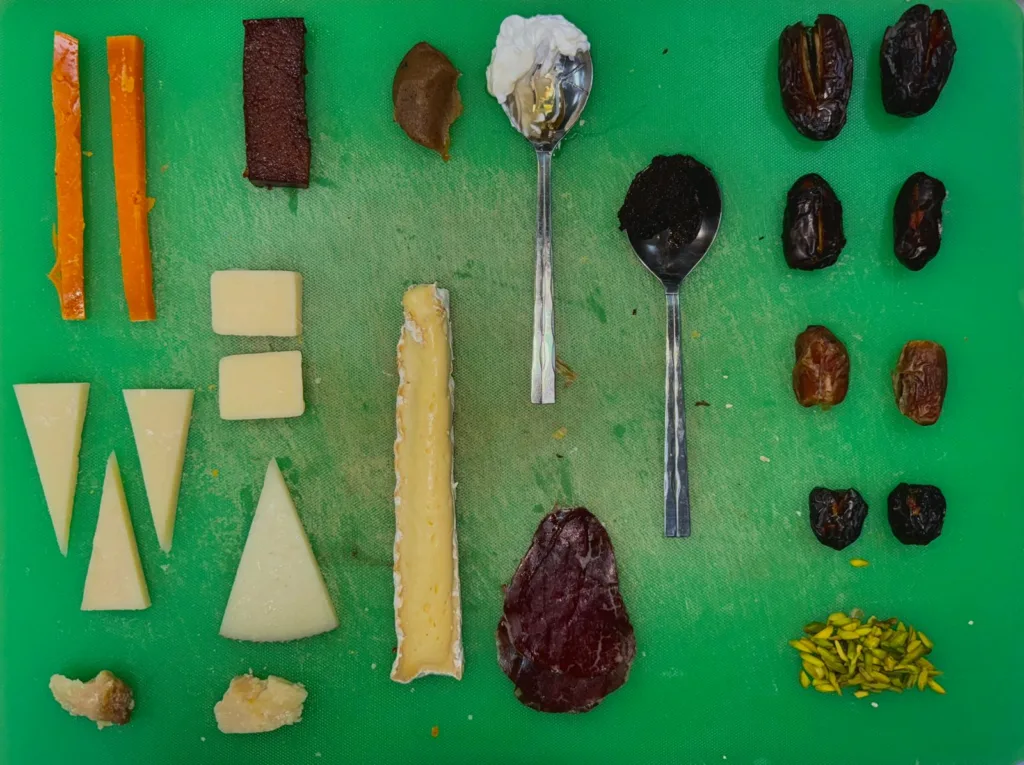
“Since I think I was like 18, I’ve been fasting more or less by myself,” remarks Erkin. “But I have carried traditions from my family. So, the soup that I was talking about, that’s something that I try to make for myself at the start of Ramadan, because it does make me feel like I’m at home. Similarly, for dinner, today I actually ordered Uyghur food – I ordered laghman, because it’s a home food.”
Over at Farida’s doorstep of memory, her family is preparing to leave for the mosque – a space where they will break their fast every day of this month, with their people. Her family belongs to the Bohri community, a Muslim sect hailing primarily from Gujarat, India.
“Going to the mosque meant dates and laban, and then after the prayers are over everyone sits down around the round hall and then you partake of a communal meal.”
“The times we didn’t go to the mosque our table has never been elaborate because my mom happens to be a clinical dietitian and nutritionist. Hence the dates, laban with a hint of zeera powder as well for digestion. Sometimes dahi vada, til ki mirchi, which is you take the big chillies, deseed them, stuff them with this really tangy sesame seed paste, coat it in flour and deep fry it.”
For Farida, her recollection of childhood iftars is more attached to the act of communal dining – another vital aspect of the month, rooted in the simplicity that is demanded of us – a table that is welcome to all, regardless of where you fall in the hierarchy of society.
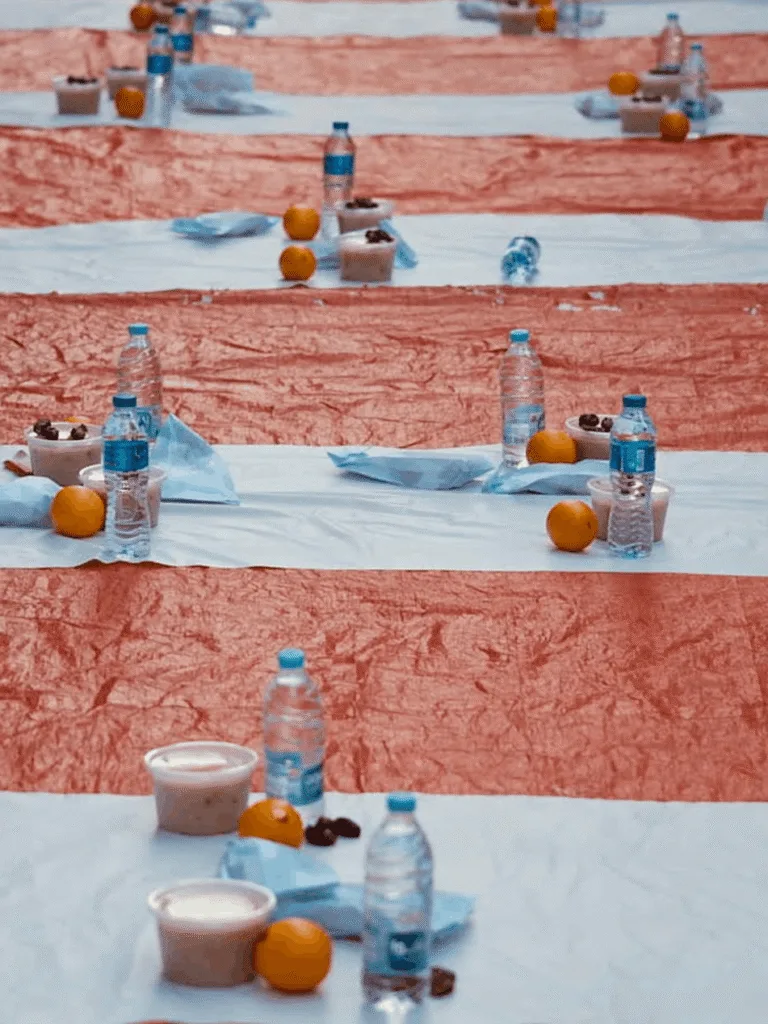
“Very few visitors and residents are aware that mosques, especially in Dubai, all 30 days of Ramadan, are distributing meals. All these meals, all the food grain is contributed by long-standing families, maybe organisations. It’s magical because people will come, you’ll take your place on the mat. It doesn’t matter if you’re a taxi driver or CEO of a company. No one asks. Your nationality, no one asks. They don’t even ask you what your religion is.”
As such, the Dubai Souqs Tour in the month of Ramadan takes you closer to this system.
Like any communal setting, the iftar table is also a space for conscious conversation, fuelled by the introspection we engage in this month.
Being deliberate with one’s dialogue is something that Ramadan makes space for – an antithesis of the perception that food, or lack thereof, is the only topic of interest.
“If it’s someone new, I’ll explain why,” says Erkin. “I’ll say, actually, we’re drinking water before sunrise and after sunset, and it’s because this makes you a bit more empathetic and you value water a lot more. For example, framing the conversation towards how people are talking about ChatGPT and wasting so much water, and if you’re fasting, you now start to value these small things where you do think twice before throwing away that half-empty water bottle.”
But what about the tent? In true spirit of the season, we must exercise full candour with ourselves and each other – all of us have, at some point, put on an overpriced kaftan (a kandoura, if you’re a brother and not a babe) and sauntered in, for this is a rite of passage.
Erkin points out the obvious problem of food waste – so strongly against the doctrine of Ramadan – and Farida the work they do in bringing the community together, educating it about the significance of this month. It’s a double-sided coin, again, a marker of diversity.
But that’s Dubai for you.

Dubai based writer, focused on food and lifestyle stories.