
Morocco has the talent, there is no denying that, but Enesse wants to make sure it has the infrastructure, too. MAANA Publishing, his new venture with Universal Music Publishing France, is taking aim at the less glamorous but essential side of the music business: publishing, contracts, credits and international access. Named after the Darija word for “with us,” MAANA is built around a simple premise: the people making the music should have a say in what happens to it. They should be heard, credited, and most importantly, protected. We sat down with Enesse to talk about why the industry needs better foundations, what he sees in Morocco’s next generation of talent, and his ambitions to put chaâbi in rooms with the biggest names in global rap.
COMPLEX MENA: Why ‘MAANA’?
Enesse: It means ‘with us’ in Darija. Not ‘for us’ or ‘about us’ but with. That says it all.
CM: MAANA is launching at a time when the Moroccan music scene feels more visible than ever. What do you hope this brings that the local ecosystem has been missing?
Enesse: Structure. Talent has never been the problem; Morocco and the region have always had that. What’s missing is the layer underneath it. Contracts, publishing, people whose actual job is to protect the person making the music.
I’ve watched creatives do most of the work on a song that blew up and walked away with almost nothing. No credit, no split, no publishing and a small cheque. It’s frustrating and it’s avoidable. With Universal Music Publishing France behind us, that’s exactly what we’re built to handle.
Read More
The other half is the bridge. There’s no reason someone making music in Morocco should stay limited to Morocco. I spent years in the US working with the Justice League, contributing to projects for artists like Lil Wayne, Rick Ross and many more. I know where those doors are and how they open. MAANA is there to walk people through them and give everyone a fair shot at placements in other markets.
CM: What does this moment signal for the next generation of artists and producers?
Enesse: That the people looking out for them are organised now. For a long time the unspoken deal was that if you wanted a real shot, you had to accept getting taken advantage of a little along the way. That’s not the deal anymore. A talented kid producing in his bedroom in Nador can sign something today and actually understand what he’s signing. That sounds small but it changes everything about where he will be in five years.
CM: Is there a MAANA sound yet, or is it too early to say?
Enesse: There are no boundaries when it comes to sound. Everyone who comes in has something of their own to bring and I don’t want to flatten that. What I care about is that it’s avant-gardiste and that the quality is there. Always push it further, whatever we’re doing.
I also want to be the guy who makes the craziest collaborations happen. Imagine a chaâbi 6/8 beat under Future, or Drake, or Gunna. That’s the kind of thing I’m chasing.
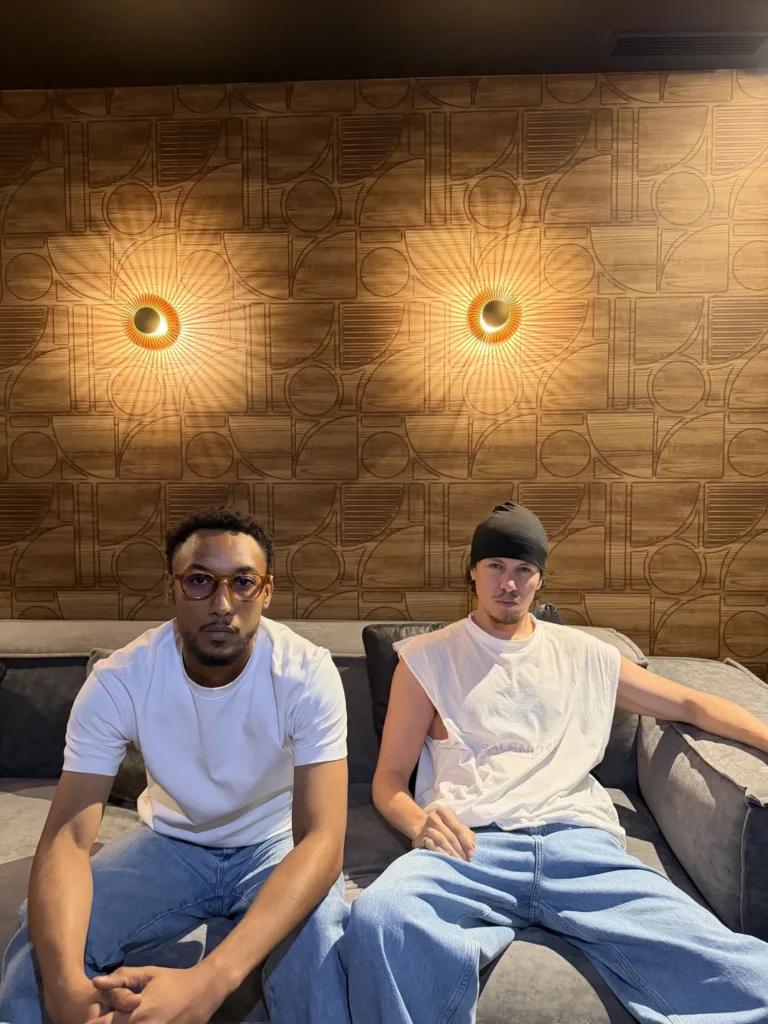
CM: Will your focus be on developing careers from the ground up, or amplifying artists who already have momentum?
Enesse: From the ground up, for now. We haven’t signed an artist yet. What we’ve done with Universal Music Publishing France so far is sign two producers: Khazzi and Bachir Zairi. Two great Moroccan producers whom I love.
When it comes to artists, I’m not in a hurry and I’m not chasing numbers. It has to be ‘un coup de cœur’. I need to fall in love with the person, the voice, the writing, all of it. When things get hard, when the nos start coming, the only thing that keeps you pushing is that it’s personal. If I sign someone off a streaming count, I’m not fighting for them at 4am. If I sign someone I believe in, I am.