
Fans of Tunisian rap and the broader Arab hip-hop scene will immediately recognize when a song is produced by John Six.
Not because of the thumping trap drums he vigorously employs in his music, though that has become a hallmark of his production.
And not because of his haunting synths or dream-like melodies, even though those, too, have solidified his signature sound.
Most listeners will recognize a John Six-produced track by the tag he leaves on his songs, one of the most distinguishable and arguably one of the best in the regional Arab rap scene.
“F*** ‘em, John. F*** all of them.”
The tag, which is a line pulled from the hit TV show, The Sopranos, remains so simple yet so effective in setting the tone for the high octane and high energy production that awaits the listener.
Read More
It’s that production that has come to define the quintessential sound of Tunisian rap over the last half decade.
Since his start seven years ago, the 30-year-old producer has quietly architected the country’s hip-hop scene with production that took John Six multiple years to perfect and make his own.
His sound helped propel the careers of several emcees in the North African country, including longtime collaborators Ktyb, Ta9chira, and 4lfa.
‘I have no plans or strategy with my career,’ John Six says from his home in Tunis. ‘I made my music based on expressing my feelings and what’s in my head and now I’m here.’
His production remains one of the first entry points into a rap scene that has not yet crossed beyond its borders in the way that the neighbouring Egyptian and Moroccan rap scenes have.
Even as he has crafted the sound of the genre in the country, John Six believes that Tunisia still has some ways to go before it can fully break out regionally.
‘Tunisian rap still doesn’t have an identity that makes it easily attributable to the country,’ he explains. ‘Artists here make whatever they want to make. In Morocco or Egypt, when you listen to a track, you know it’s Egyptian or Moroccan. We all still have to work this way together to give Tunisian rap a distinct identity.’
And yet, ironically, John Six’s own sound has become one of the clearest markers of that emerging identity.
His fascination with production came as a child when he would spend time with one of his cousins who had a large CD collection of French and American rap.
John Six cites Wu-Tang Clan and 50 Cent’s Get Rich Or Die Tryin’ among his first rap loves.
But he did not immediately try his hand at music until 2020, when rapper and friend Six Boy encouraged him to try the music production software, Fruity Loops Studio.
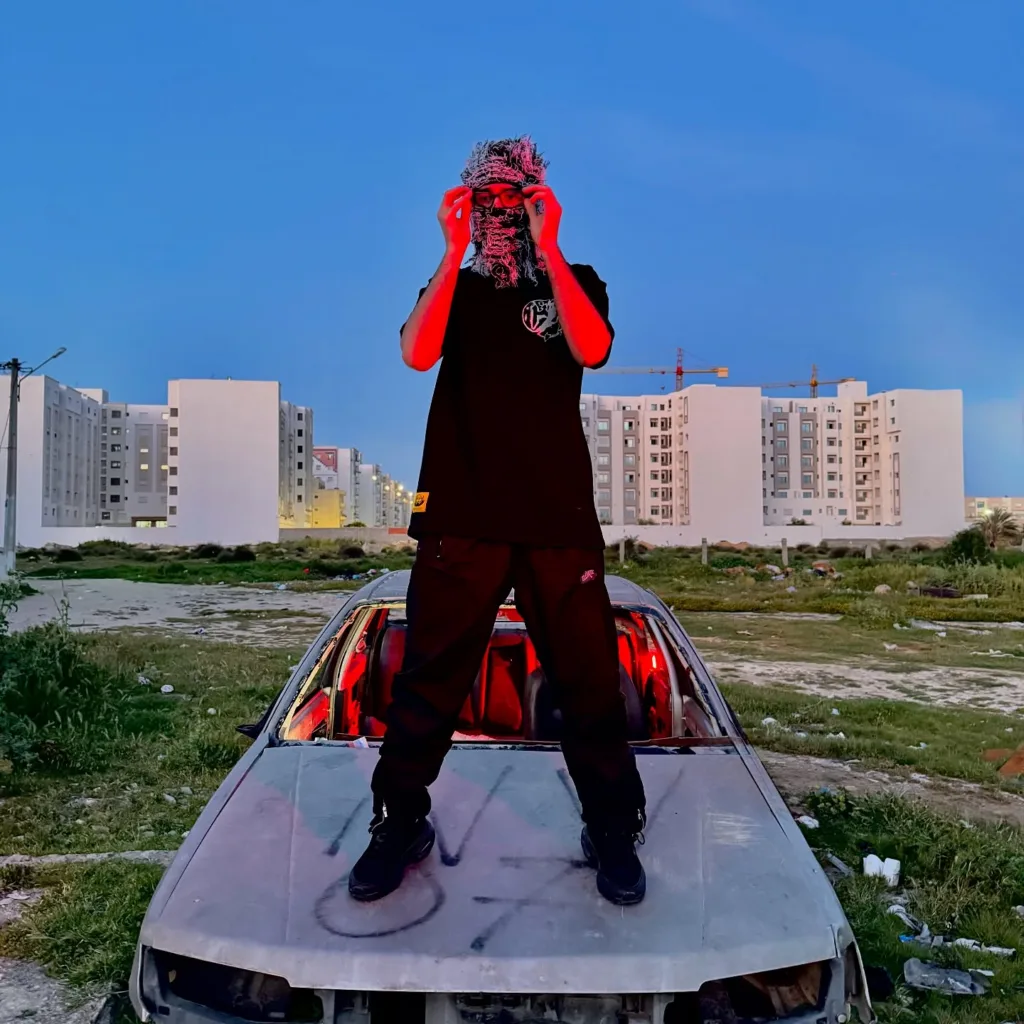
‘When I was a kid, I never imagined myself doing music, but all my friends and entourage were in music and rap,’ John Six admits. ‘Just one year after starting FL Studio, I started producing for Ta9chira. I made beats with him first and we would go to the studio once a week.’
He credits Ta9chira, who he knew as a friend prior to producing his music, for helping hone his craft and creating a partnership that proved pivotal for both of their careers.
‘It was a good connection,’ John Six says of his relationship with Ta9chira. ‘We have the same ideas and we want to do the same type of rap.’
His collaborative efforts lead to them forming the group Black Hoodie with 4lfa, an Avengers-style assembly of fiercely independent artists willing to take risks in their lyrics.
Though the group has since disbanded, John Six emphasizes that Black Hoodie laid a foundation for free and honest expression.
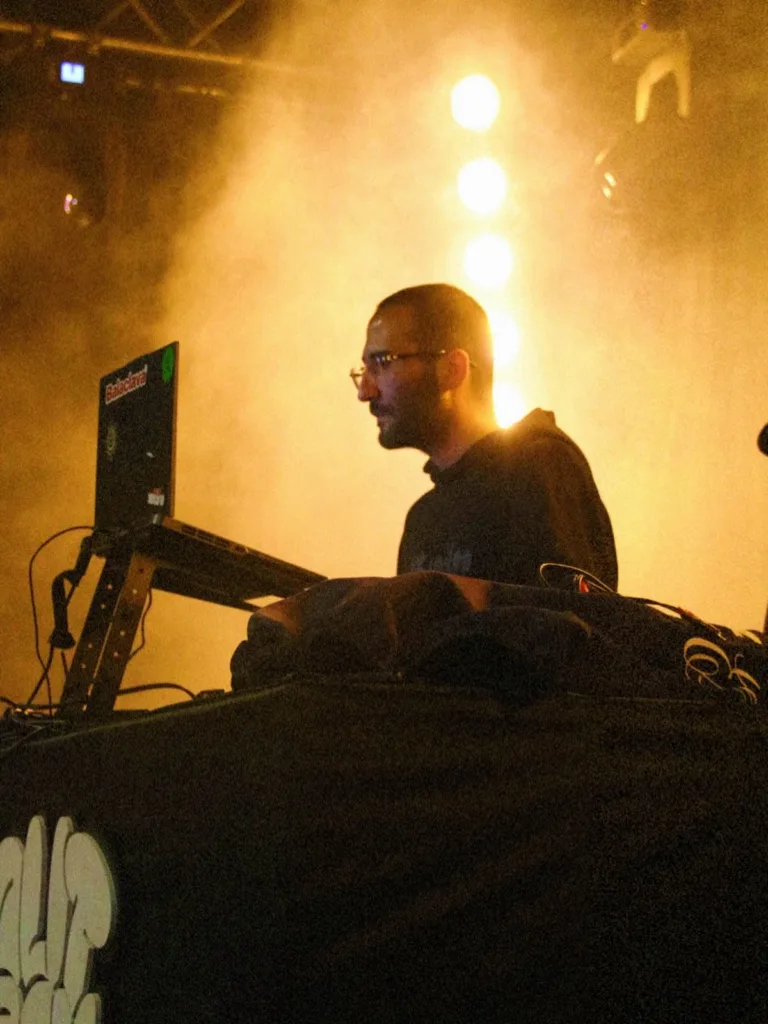
‘We did a lot of things that we truly wanted to do when it came to rapping about the Tunisia and Arab rap scenes,’ he reflects. ‘No one was talking during this time about the difficult conditions for artists and producers. We wanted to express this, we wanted to make the point and we needed someone to say this. A lot of artists want to take this path and speak freely but they can’t. Because that’s the industry, with the conditions imposed by big companies. You cannot be 100% free and make it.’
That intention remains a core component of John Six’s artistry and humanity, willing to take the more challenging path in order not to compromise the ultimate mission of free expression.
For him, compromising his morals for more fame and notoriety simply is not worth it.
His moral clarity extends to giving credit where credit is due. Where producers in the United States have largely become household names and headlining acts in themselves, producers in the Middle East and North Africa still have to fight for recognition and to be seen as equal to the artists for whom they produce.
For each song he produces, John Six makes sure to include himself as a visible collaborator on the track along with the artist so that fans and listeners see that partnership more explicitly.
On 4lfa’s album Trips in Rehab, on Ta9chira’s EP ETHICS, MANNERS, AND VALUES, and on Ktyb’s acclaimed album 16 released just this past January, listeners will see John Six’s name on all of the tracks for each album.
‘And now a lot of new producers in Tunisia do this as well,’ he says, paving the way for a small but subtle shift helping redefine how producers are recognized in this system.
John Six believes in getting to know artists as humans first, insisting on spending as much time with them as possible to cater his production style to their performative preferences.
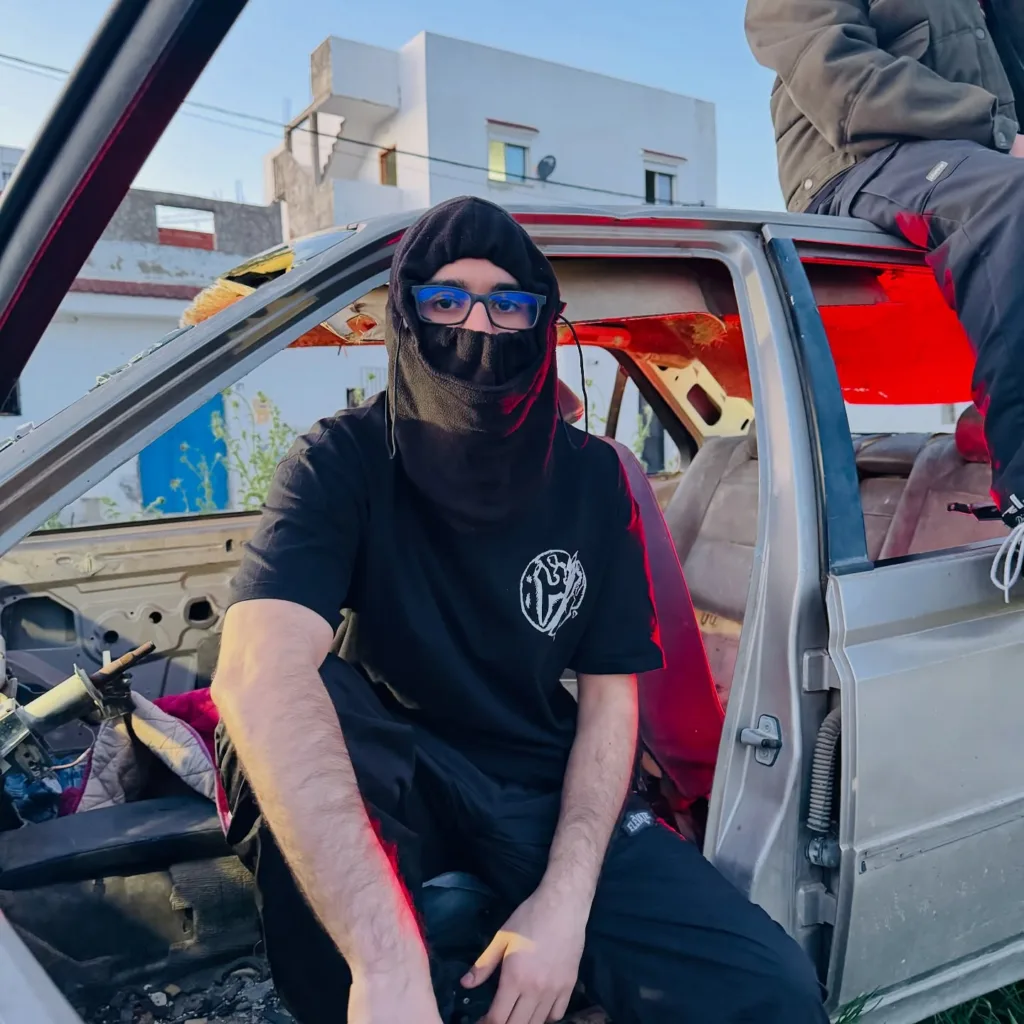
‘When I work with an artist, I produce an artist, not a project,’ he says. ‘This artist needs to be someone in my life that I see everyday, not just when it’s time to work. I can’t produce an artist and I see him 3 times a year, you know.’
He continues: ‘I don’t want to just make albums, I want to make classics in my life. In order to make classics, you need this kind of relationship with an artist.’
He’s since set his sights on working with up-and-coming rappers in Tunisia like FIJO and ODA, wanting to foster the growth of a scene still understanding its identity.
Ultimately, he insists on imparting his wisdom and experience for a younger generation of producers and rappers building on the foundation he helped lay. And he wants to maintain that free expression so sorely needed in Tunisia and regionally.
‘I just want to make more music in my life in the same condition and the same mind like now,’ he says. ‘I want this freedom. I want to make what I want to make.’

US-based music writer and editor.