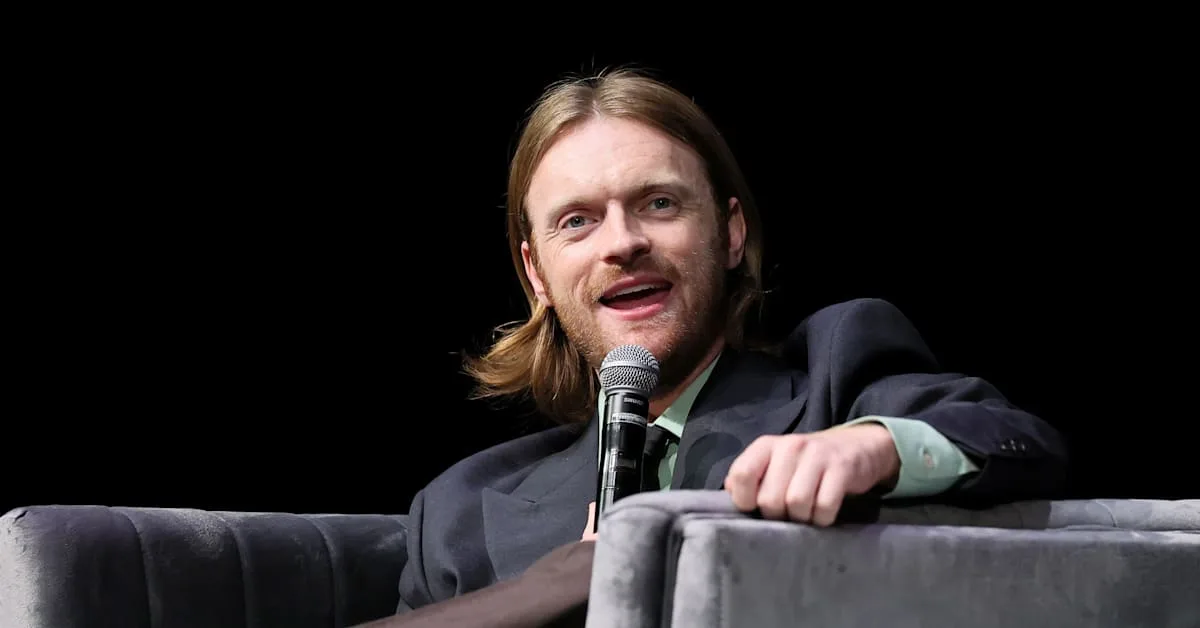

On a crowded subway car somewhere between downtown Manhattan and Queens, a stranger grabs the mic and delivers a wildly confident opinion to millions online. This is the standard Kareem Rahma has set for NYC’s public transportation, so when asked, “So what’s your take?” Rahma is the only name to come to mind.
Known mostly for his brand of hot takes –and even hotter chaos– on the streets of New York, Rahma’s creativity is ever-flowing. His projects, many and unconventional, include a haiku poetry book, a rock band, and even a pizza museum. Across all of them, Rahma remains the common denominator, proving that he is a multidimensional artist despite often being labelled the “Subway Takes guy” – a title that, by the way, doesn’t really bother him.
In this piece, Complex MENA chats with Kareem Rahma to learn about his relationship with the internet, the need for laughter, and his favourite Egyptian rap song.
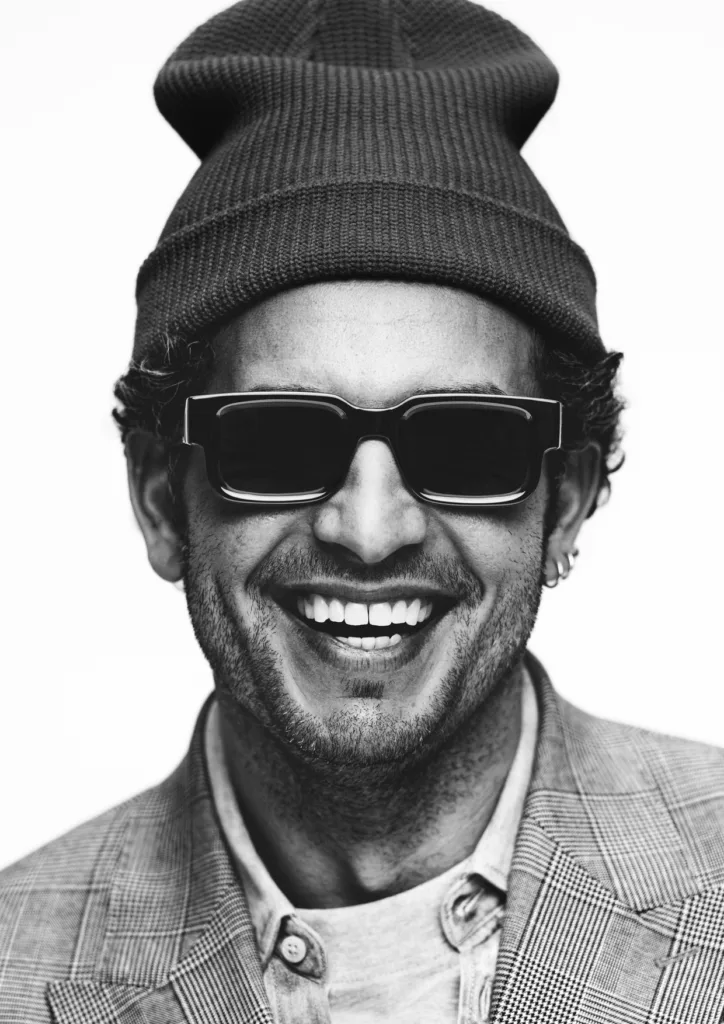
COMPLEX MENA: You recently fronted an H&M campaign shot across New York. How did that collaboration come together, and what did it mean to bring your particular version of the city into a global fashion campaign?
KAREEM RAHMA: It was really exciting to work with H&M, and I was really flattered that they chose me alongside all the other amazing models, so it was really an honor to be a part of it.
I was really excited to collaborate on the Dirty Laundry series because H&M had reached out and essentially asked to do different ideas, whether that be Subway Takes or Keep the Meter Running, and then I was really excited to present them with a brand new idea, and they really enjoyed that idea. So, it was cool for them to come in and say, “Hey, we like Subway Takes and Keep the Meter Running, can we do one of those shows?” And for me to say, “What if I made you a custom show, like your own show?” They were super fun and easy to work with, and I’m really proud of the final product.
Read More
CM: That’s great, and I will come back to the campaign, but you’ve constantly moved between different mediums throughout your career, yet you’re still mostly known as the “Subway Takes guy.” Do you worry about being permanently labelled by one format, or do you see that kind of internet shorthand as just part of the game?
KR: I think it’s okay to be known for something, and then take that knowingness to different projects and different levels. Everyone’s known for something, so if that’s how people know me, and then they explore my other content and my other work, then that’s fantastic. It’s better to be the “Subway Takes guy” than nothing.
Before ‘Subway Takes guy,’ I was ‘Keep The Meter Running guy,’ and then I stopped doing Keep the Meter Running, and Subway Takes became massive, and then who knows what will happen next. I feel like it’s a temporary position at the moment.
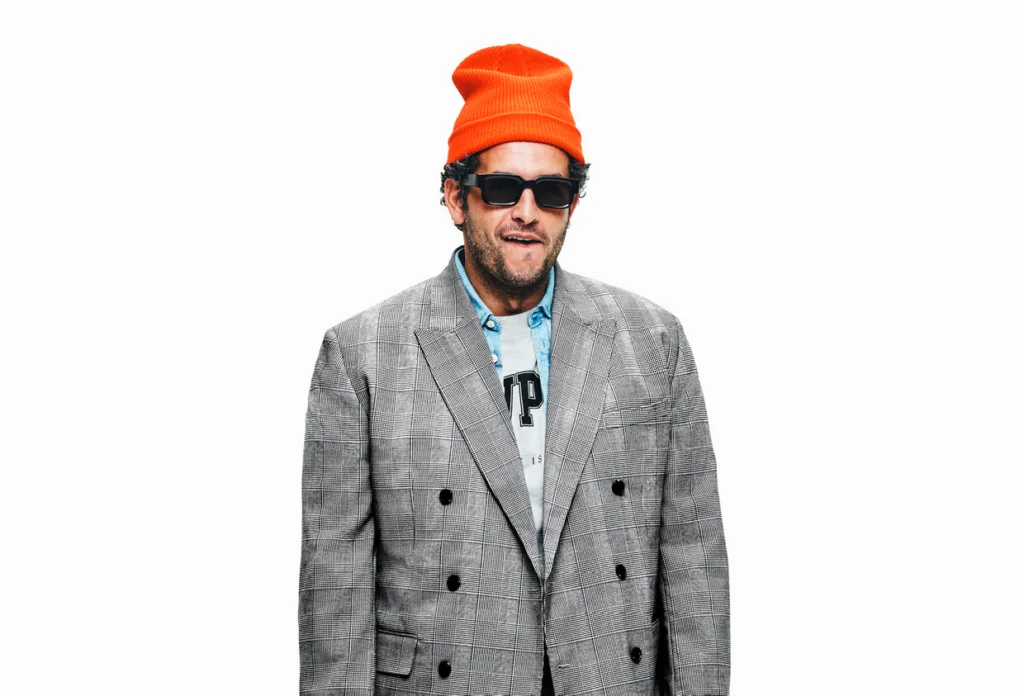
CM: Okay, going back to the campaign. Fashion campaigns often try to capture a version of New York that feels cinematic or polished. Your work usually lives closer to the everyday rhythm of the city. Did working with H&M change how you looked at New York at all, or just give you a bigger stage to show the version you already know?
I was only responsible for Dirty Laundry. The other work, which was, I believe, Raphael Pavarotti… He really brought that whole vision to life. And I think he did an amazing job. But with the Dirty Laundry series, I tried to shoot the show and animate the show with my personality in the same way that I do with Subway Takes and any other content that I create, and try to make it as engaging and fun and as light-hearted as possible, whilst also being a little bit different or a lot different than a lot of the branded entertainment that we are seeing these days. It just feels more real and less polished. It’s high quality, but it’s less polished, if that makes sense. You can still see the work and the effort rather than the final product only.
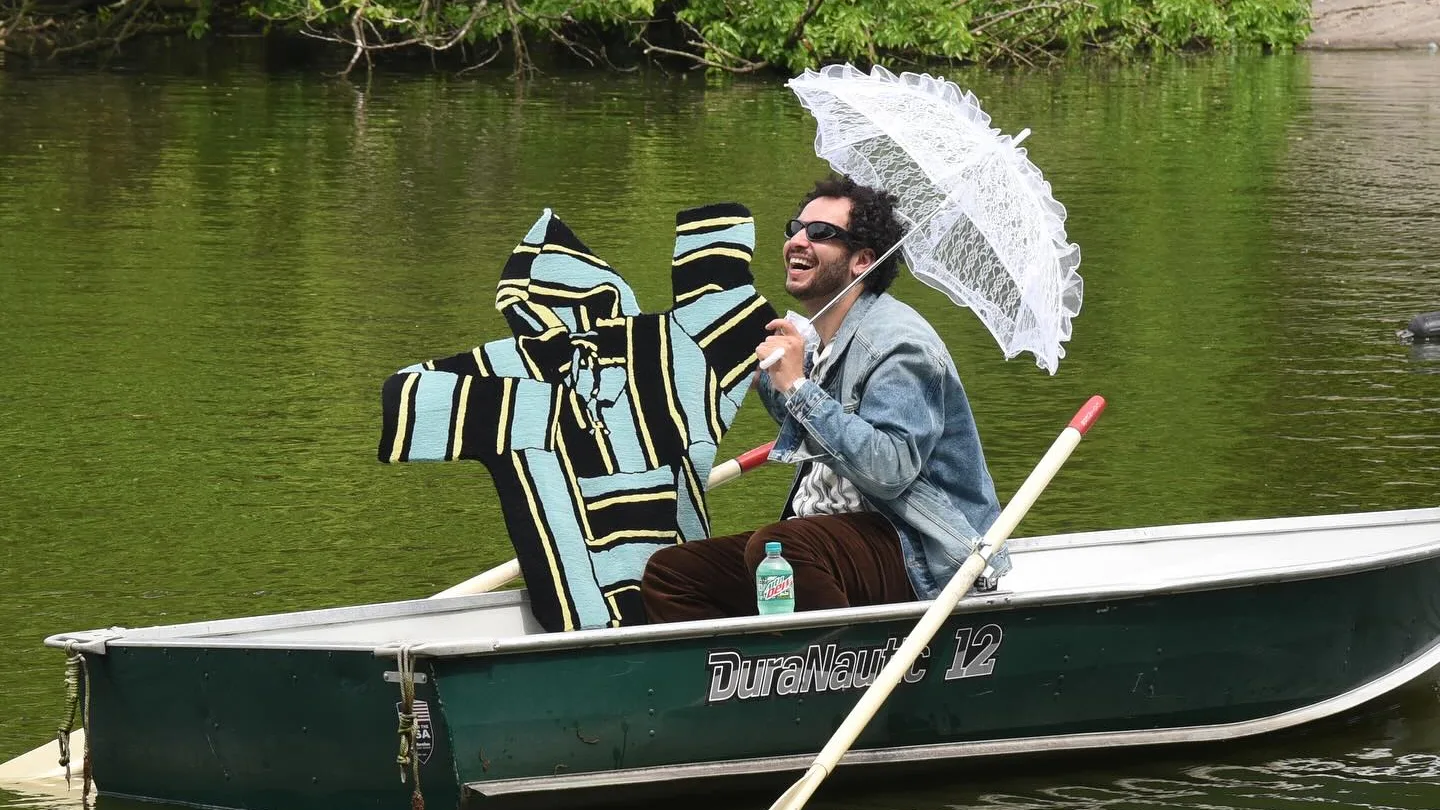
CM: Yeah, that’s important for sure. Between New York and Cairo, where do you feel most at home these days? And what do the two cities usually share that people might not expect?
KR: I definitely feel more at home in New York. That is my home. I think that New York and Cairo have a very similar frantic energy, where everyone’s always going somewhere. And a lot of the time, I’m like, where’s everyone going? I have that thought all the time. Especially when I’m in Cairo, it would be four in the morning, and there’s a traffic jam. I’m like, where’s everyone going? Like, literally, where’s everyone going? Or I’ll be in New York City, and people are in the streets, walking, everyone’s walking. Like, we’re in the middle of the day. Where’s everyone going? Don’t people have work? That’s a connection that both cities have.
CM: Absolutely, I can see that. It’s actually interesting you bring that up because my next question was about your work, or at least your latest internet projects, orbiting motion, and subways and taxis. I wonder why vehicles? Why transit? What is this fascination that you have when it comes to movement?
KR: Well, I’m addicted to momentum, both physically and emotionally and mentally. And I think that just ends up showing itself in my work. I also think that the liminal spaces are really underexplored. I’ve always loved the point in between A and B, rather than the destination.
I guess that’s a cliche, but one of my favourite parts about traveling is literally the airplane ride. I love being on the way, and I think I try to harness that actual feeling in my work and in my everyday life. Being on the way is really exciting. The anticipation, you don’t know what’s going to happen next. Looking forward to the destination. I feel like that’s as good as getting there. You know, many times I’ve gotten somewhere, and then I’ve been like, all right, well, where do we go next?
CM: Totally. I also find myself most inspired, perhaps especially in writing, when I’m in an airport or something. If I’m in a limbo, I’m good. I’m inspired. Your work moves between very different worlds – viral short-form content on one side, and films that land on platforms like MUBI on the other. Do those spaces demand different creative muscles, or is the tension between them overstated?
KR: I think each project requires a different version of me. One beautiful thing about, for example, short form, unscripted vertical video content such as Subway Takes is that I’m able to release it quickly. Every day I can release work. And it’s really important for me to release work and to have people see what I’m working on. That is something that I do value. At the same time, having that allows me to also be able to focus on projects that take a lot more time, because I don’t need to release them because I’m already releasing. Do you know what I mean?
I’ve been working on a new album –A Honey Gun album, which is my band– and I’m enjoying taking my time. Like, I don’t need to release it because I already release Subway Takes all the time. So it’s nice to be able to play in both worlds.
For me, it’s really valuable to take my time on some projects and then also to operate at a crazy frequency on others. And when I’m working on something that’s more long form, or that is deeper, for lack of better words, it does require this kind of isolation that I’m not super comfortable with. It’s a challenge for me to be alone. And writing, for example, is a very solitary act. So it’s very hard for me to sit down and write because I like people. But you know, it’s a good thing that I have a show that also requires zero writing.
CM: Yes, as if one feeds the sense of accomplishment and the adrenaline rush, and the other is a more focused, isolated process. You’ve launched everything from the Pizza Museum to a rock band, made films, and started a “walking marketing firm.” Do you believe creators should dabble across multiple disciplines, or is there still value in picking one lane and mastering it?
KR: I think people should do whatever they feel like. That’s how I feel. Like, I feel like doing these things, so I do them. But I don’t necessarily think there’s a better or worse way to live.
I want people to see different sides of me. I feel like a three-dimensional being. And I don’t want to be flattened into one thing. So I very well could be Subway Takes guy and just do that. And that’s all the people would know about me. That is maybe enough for some people. But it’s not enough for me. I want to intellectually stimulate people; I want them to see me in different ways. And at the end of the day, I’m just an artist that has a lot of different mediums and a lot of different canvases to paint on.
CM: Absolutely. And correct me if I’m wrong, but you’ve worked in editorial before becoming the viral internet character that we know you as today. What do you wish publications and culture platforms were doing more or less of today, if any?
KR: Well, I worked in media. I worked at Vice and The New York Times, but I wasn’t like an editor or a publisher or anything like that, or writer even. But in terms of Hollywood, I think that they need to take more risks. They just need to do something new, because that whole thing is failing. And it’s really apparent that it’s failing. They’re losing viewers and audience and the younger generation at a rapid clip. So if they want to be around, they better start participating.
And then, in terms of internet publications, I guess, I don’t really have an opinion at the moment.
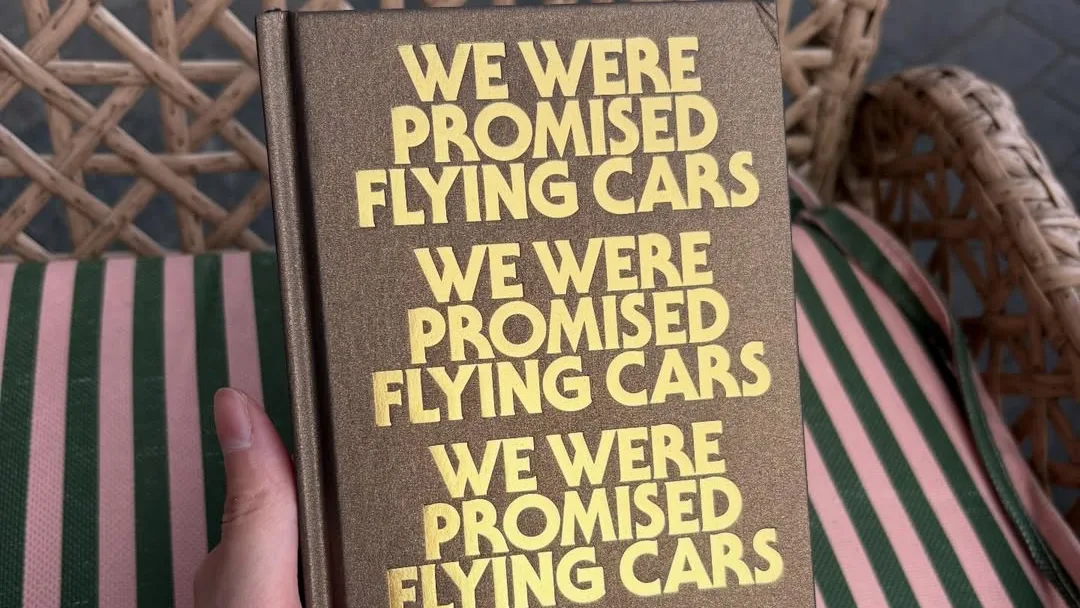
CM: You’ve published a poetry book, ‘We Were Promised Flying Cars’, and it was reportedly described as dystopian. When you look at the world today, do you think we’re headed somewhere better than ‘We Were Promised Flying Cars’ or worse?
KR: I think we’re getting further away from the promise of a better future. That’s pretty unfortunate. At the end of the day, though, what’s crazy, and maybe this is just me coping, but I’m still an optimist. I still believe that there is a way to turn it around, and I still believe that we probably will. Even though it doesn’t feel like that at the moment. And maybe that’s just a coping mechanism, and we’re headed straight towards destruction. But I don’t know, man, the more I live, the more I want to see the world become a better place.
But the reality is that when I wrote that book, which I think was five or six or seven years ago, we were in bad times. And right now we are in worse times.
CM: Yep. This might be a cliche, but does having a child or bringing humans into the world affect your hopefulness?
KR: I’ve always been optimistic. I’ve always kind of had this ruthless optimism. I think maybe it is borderline delusional. To be completely honest, there’s a lot of gray skies and doom and gloom. But I’m always like, you know, just hang on a couple more months, a couple more years, and things will turn around. And again, maybe that is naive, honestly. But maybe it’s not. And maybe there is a world where things get better.
I think having a kid did not really change my perspective, because I was already optimistic about it. But the one thing that it made me feel is that, at the very least, I can create a kind of bubble for myself and my family. And even if the world outside is scary and challenging and dystopian, at least I can affect my own environment and try to make it the most comfortable and optimistic place it can be.
CM: Yes, makes perfect sense. How would you describe your relationship with the internet today? Is it still a playground, or has it started to feel more like infrastructure?
KR: I would say it’s still a playground. I’ve always really loved the internet. I grew up on the internet. When other kids were playing sports, I was building websites and chatting with strangers in other parts of the world. I always really enjoyed surfing the web, learning new things, and experimenting and tinkering. So I’m still having a good time on there. But I do think that I’m probably more addicted to the internet than I should be. At this point. I think I’m an actual addict. I think we all are, but maybe that’s an addict speaking. “No, I don’t have a problem. No, me. I don’t have a problem.”
CM: No, no, none of us do really. I want to ask you, what do you think is the role of humor in times like this? You dabble in a lot of things, but ultimately what brings it all together is humor and comedic timing, even sarcasm. How do you find the line between wanting to bring joy, but also make commentary without being insensitive?
KR: I just think it’s okay to laugh. It’s a thing that I think about sometimes. I think if I’m not having a good time, I will very quickly go to what is the point of any of this? And I don’t think that that’s a good place to be. For me, the point is to laugh or try to laugh. And otherwise, there’s really no point in anything. There’s no point in making work. There’s no point in making money. There’s no point in trying. So I would much rather be in a place where I’m at least kind of trying to enjoy life than to just go into a black hole of despair. So I think that humor is super important. And also, kind of as a way to cope with the modern-day world.
CM: Yeah, I agree. I’m wondering if you listen to any Egyptian rap. Obviously, the rap scene in Egypt is really huge. If you do, can you give us a song or two, or a name that you tune into sometimes?
KR: Yeah, Wegz is my guy. That’s the homie. I got the pleasure to meet him a couple of times, and he’s such a nice, sweet guy. I don’t know the exact name of the song because I can’t read Arabic, but it’s the number one song on Spotify.
CM: Let’s see. Okay, This is Al-Bakht. This is definitely his most famous song.
KR: In terms of Egyptian rap, that’s what I know.

Pop Culture Editor-At-Large at Complex MENA.