
There are two things guaranteed in life: death and Moroccan rap beef.
Each week it seems that the Instagram pages documenting Moroccan rap news report on a brand new beef between rappers or the continuation of long-running feuds with no end in sight.
In 2025 alone, Moroccan hip-hop witnessed battles between Small X and Shaw, Dizzy Dros and Don Bigg, LFERDA and L’morphine, and too many more to mention.
Yet one beef that stood out among the rest was that between two of the women rappers in the country: Khtek and FRIZZY.
FRIZZY first hinted at an upcoming feud with her song “Peppa”, in reference to Peppa Pig which took subliminal shots at an unnamed rapper who chose to become a “sellout” and declared lyrical superiority over this person.
Fans widely interpreted that the unnamed rapper FRIZZY aimed at was Khtek. The pig is a symbol that Khtek and her fans have used and embraced when praising the rapper.
Read More
But in case there had been any doubt, FRIZZY released “Frizzelda” months later—this time name-checking Khtek directly.
That set off an ensuing exchange of diss tracks in rapid succession of each other between the two emcees with the rap beef becoming increasingly personal, each of them taking shots at their public personas.
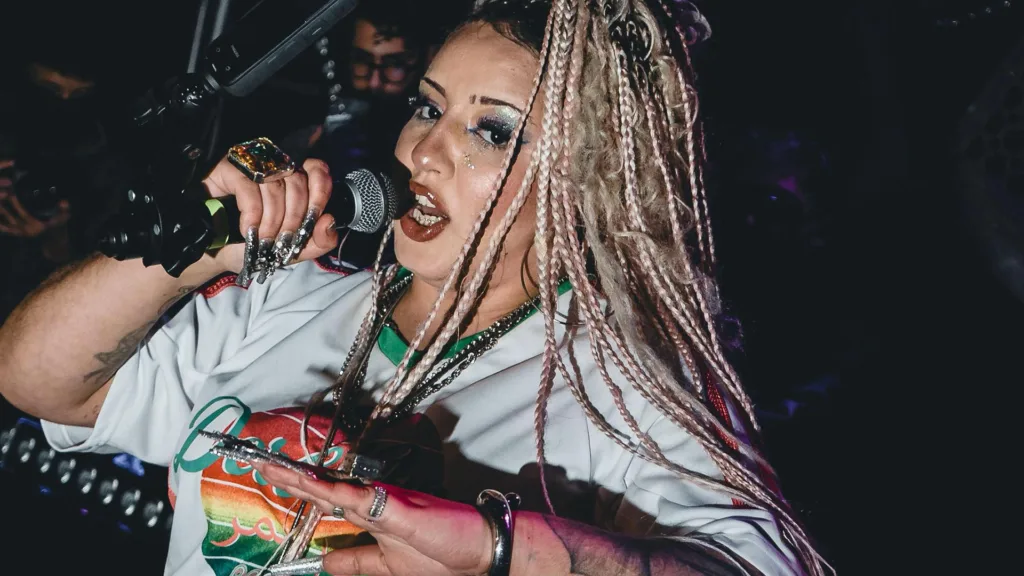
‘I didn’t take things seriously’, Khtek says, reflecting on the beef with FRIZZY over Zoom from her home in Casablanca. ‘I didn’t go for real things because to be honest, I don’t know the person. We met two or three times. I don’t know you. I don’t have things to say about you, so I’m not going to take things seriously. If I take things seriously, it’s not going to be good for either of us. She answered again with a diss that was clearly personal and with many things that was made to discredit me and my image…. For me, it wasn’t something that hurt me, but it showed me that the person has evil when it comes to me. She really wants my downfall really badly. At this point, it’s an obsession’.
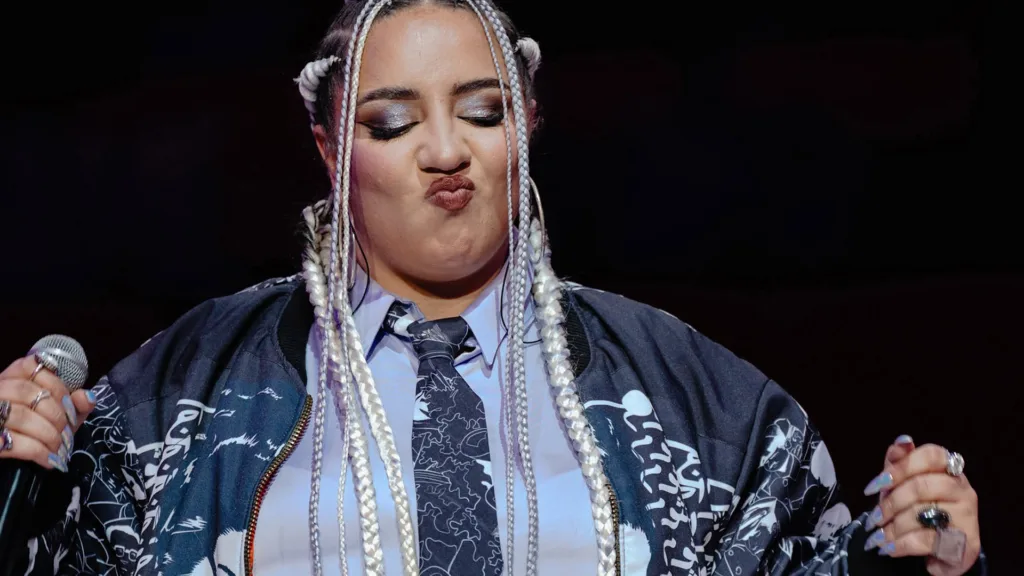
Khtek has been on the receiving end of diss tracks and petty Instagram posts and stories that take shots at her since the beginning of her career.
The artist shares that, in her view, rappers in Morocco either praise her lyrical ability and her skills as a rapper or they try to discredit her in ways that feel sexist and disingenuous.
‘I think society is always intimidated by women. And rap in Morocco is a miniature of our society’, Khtek explains. ‘It’s the same thing, the same codes that we have in our sexist society, we have them in a Moroccan rap. So I think people are intimidated because I don’t need them. I don’t need a rapper to do what I do, and I don’t need anyone to have the opportunities that I have’.
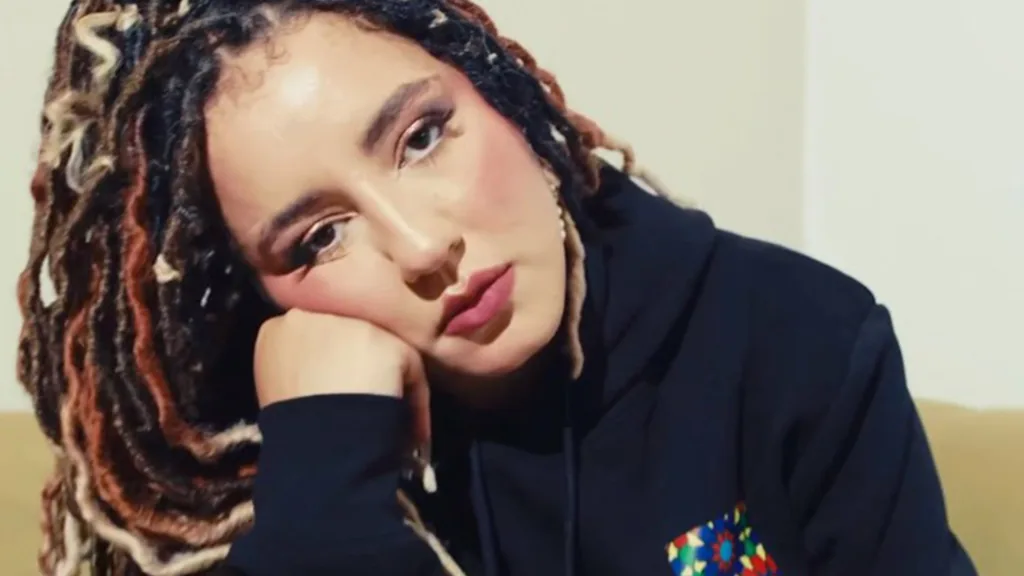
Over the last six years since the emcee first publicly entered the rap game in Morocco, Khtek, whose real name is Houda Abouz, has quickly established herself as one of the preeminent lyricists and emcees in the country and across the Middle East and North Africa.
The breath control and verbal ferociousness that she employs evokes the early Soundcloud days of the Moroccan hip-hop scene, quickly giving Khtek a massive platform and major co-signs with some of the country’s most influential rappers.
‘Hors Série’, her 2020 posse cut with ElGrandeToto, Don Bigg, and Draganov, immediately cemented Khtek as a force in the game, and her other 2020 song “FRATELLO” with Tagne and Stormy catapulted her career to a different stratosphere very quickly.
Perhaps what has been most impressive thus far about Khtek’s career is that she has achieved this level of fame and success without the help of a major label, choosing to remain fiercely independent and have the flexibility to rap without any kind of limits on her speech.
That has allowed the emcee to speak up boldly and directly about sexism, mental health, and, most recently, the Gen Z protests that swept her country last year.
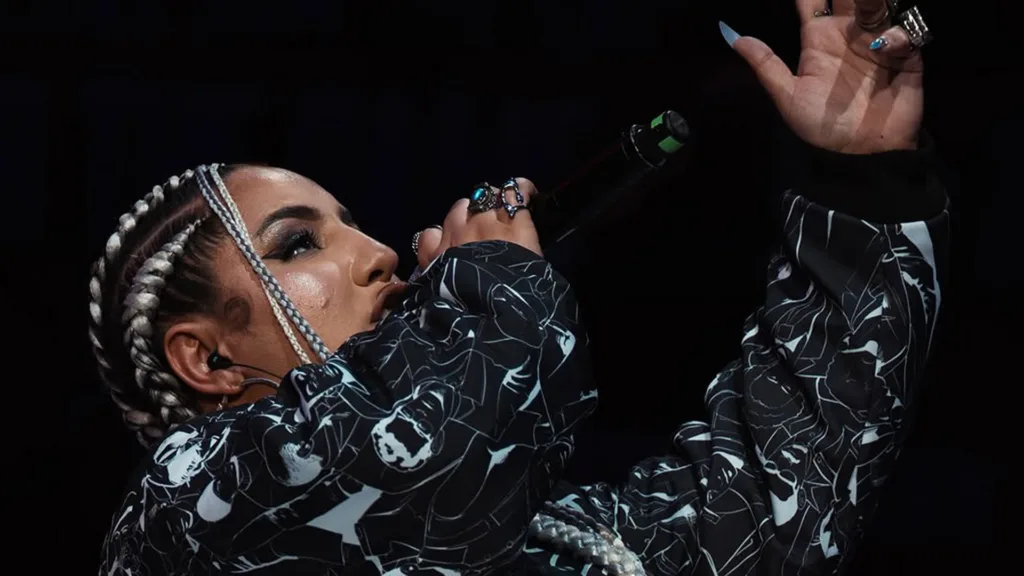
Khtek acutely understands the importance of using her platform to speak on human rights and injustices facing Moroccans, Palestinians, and other communities globally.
Her father, a politically active leftist who had been engaged in social movements in the country, had been arrested in 2020 just as the rapper’s career began to boom.
‘I was really lost between saying my dad didn’t do anything wrong—talking about it openly and publicly—because it’s not going to help him and it’s not going to help me’, she vulnerably shares about her decision not to advocate publicly for her father at the time. ‘It’s going to impact my family. It was very complicated. I wanted to find that balance between my personal life and my status as a rapper. It was very complicated because if it happened now, I would still not know how to process it. I would still not talk about it. I felt like I was very hypocritical because I am open.’
Khtek continues: ‘I needed to protect him. I needed to protect my career. It was very complicated to balance because you need to go perform, be on stage while dad just got arrested. When he got arrested, I went to the police station to bring him food and some clothing. And it was like such a shocking thing to see people recognize me and ask me what I was doing there. So It was really complicated. I didn’t have the right to talk about what happened to him and be vocal about it’.
Her sense of activism extended to the Gen Z protests in a meaningful way. As she saw fellow Moroccan rappers Pause and Raid arrested for speaking out publicly and participating in the protests, Khtek organised efforts to raise awareness and help free them.
She turned to her father for guidance on the best way to approach the situation and offer help to her friends.
‘It was a call of duty’, she says matter-of-factly of these organized efforts. ‘Since I started shaping my personality, shaping who I am, everything that started for me…it’s not about the music, but about my beliefs. 2011 was a year that shaped Houda and shaped who I am. When things started happening in the region with Tunisia and Egypt—people going to the streets asking for social justice, for equality, for those things—for me, it was an eye opener because I was like, why is it happening? For me, it was a sincere thing to just ask myself, why? Why is it happening? What is social injustice? Why are we poor? Why is the region finally waking up? So all those questions were part of my involvement as a person’.
Khtek adds: ‘I saw the horrible police repression, I saw my friends getting arrested. I said to myself, you have a platform, you are able to help, you have contacts, you have access to the media—you can help. So it was just so natural for me to use my platform to create this link between the detainees and the lawyers, but also to talk openly about what’s going on and having access. People in Morocco, when they talk about patriotism, they think it’s about loving the country and always saying that Morocco is beautiful. And it is beautiful. But I think real patriotism is also being there for your brothers and sisters when the system is doing the best to make them shut up’.
Yet despite these potential threats to her livelihood and to her ability to speak up, Khtek continues to thrive in her rap career.
On the heels of releasing her song ‘KIYA’ this past November, the emcee, who has performed live numerous times in other countries, organized her own tour in Morocco. It marked a milestone as the first tour led by a female rapper in the country, drawing large crowds in multiple cities eager to see her perform.
Khtek has embraced the subtle-yet-powerful symbolism of what it means for her to stand on a stage in her country as a headliner—and as the project manager for all of the performances.
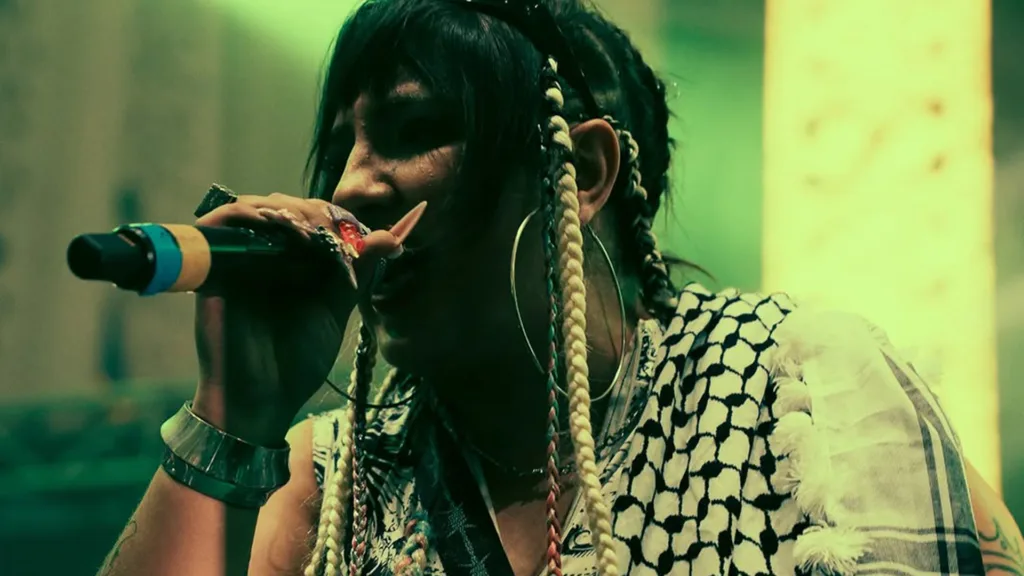
‘Just the fact that I am performing and having a tour is a resistance in itself’, Khtek says. ‘It’s my audience. The audience knows me. The audience knows the country. I try to make it a sacred experience where only art matters, and my music is enough. My music has enough messages that I don’t need to put them in the visuals and tell them on stage. Because it’s what I always do in another country. It’s been a year since I started working on this tour. I am trying to make it as good as possible and I have the best team around me. It is my vision. So stepping on that stage is just putting this hat—the artist hat—and then removing it to get back to the curation, the artistic direction, the programming thing, the fact that everything needs to be good, the coordination with the team’.
Khtek emphasizes that, culturally and artistically, she is ‘proud’ to be part of the Moroccan rap scene and to see her fellow artists succeed and be ‘the most influential scene in the region’.
But when it comes to her feelings on the political element of the rap scene, Khtek candidly admits she feels ‘isolated’.
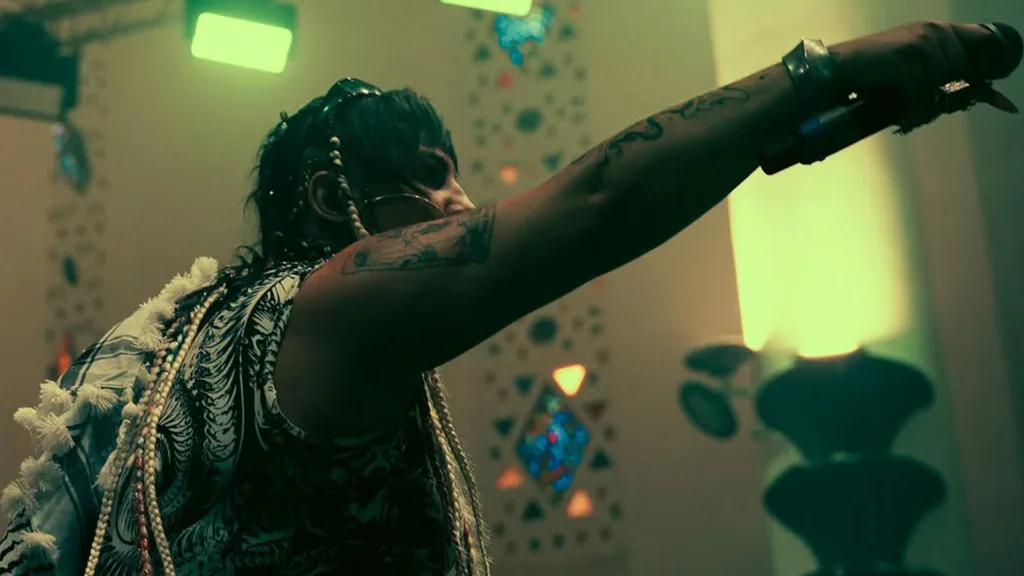
‘I feel that I only have a few people to share this political engagement with’, she says.
And while she understands why people might be hesitant to speak up publicly about anything political, Khtek simply is not wired that way. And thus far, that has not slowed her career down or halted the trajectory she is on in any way.
‘Even If it’s scary to speak up, I think I’m always going to take risks because for me, it’s like seeing an animal being beaten by a human being and not doing anything about it. It makes you complicit in injustice. And I’m not the person who’s going to leave Morocco because I’m scared or tired. I’m always going to be part of this society. I’m always going to be part of this equation’.

US-based music writer and editor.