
In Conversation | Anthony Touma and Joanna Khalaf on Performing ‘Mensonge Blanc’ Amid the War on Lebanon
Speaking to us during the war on Lebanon, the duo reflect on carrying art through uncertainty, the weight of choice, and finding honesty inside fiction.
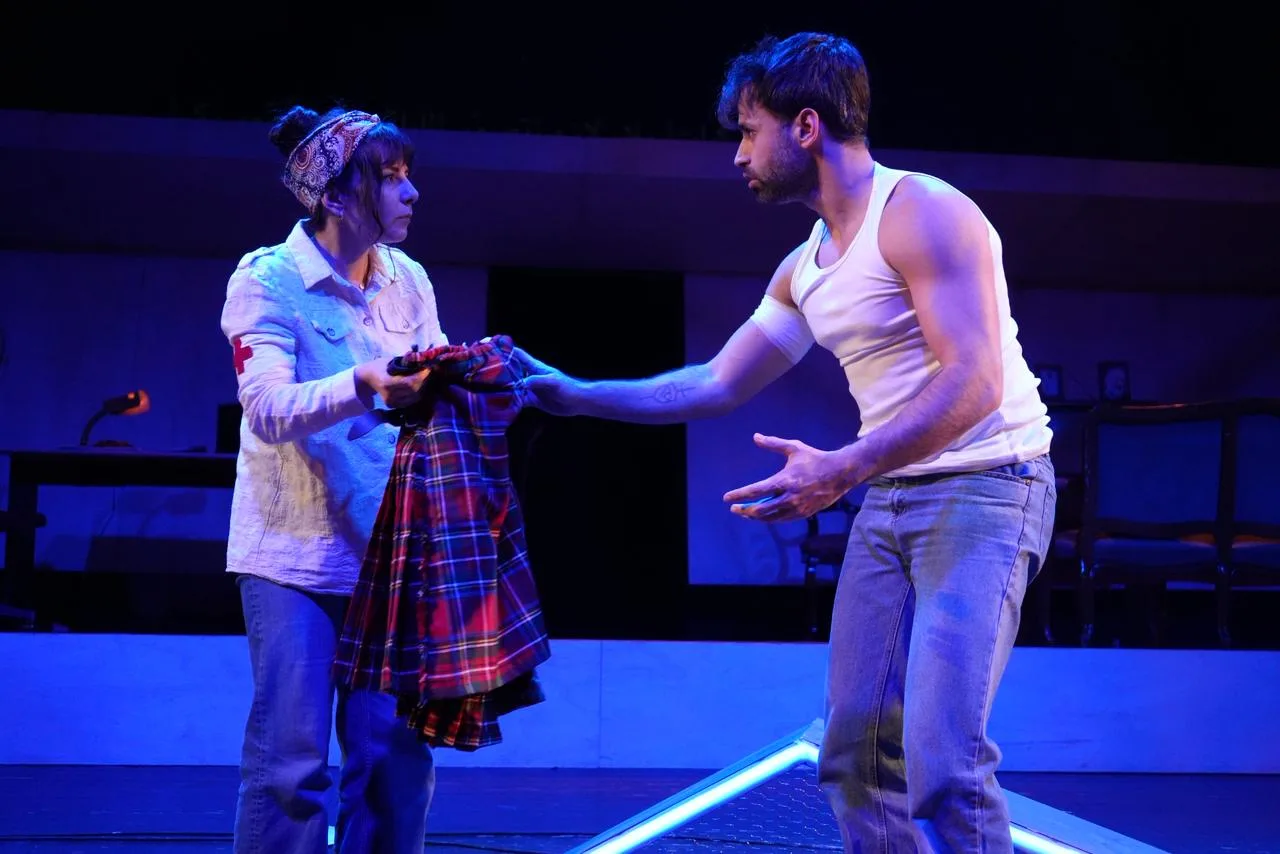
On a stage in Beirut, while the sound of airstrikes lingers in the background, ‘Mensonge Blanc’ unfolds with a kind of critical defiance. Set during the early years of the Lebanese civil war, the play follows a young man caught between the life his family imagines for him and the one he chooses in secret, shaped by conflict, love, and the impossible weight of decision-making in wartime.
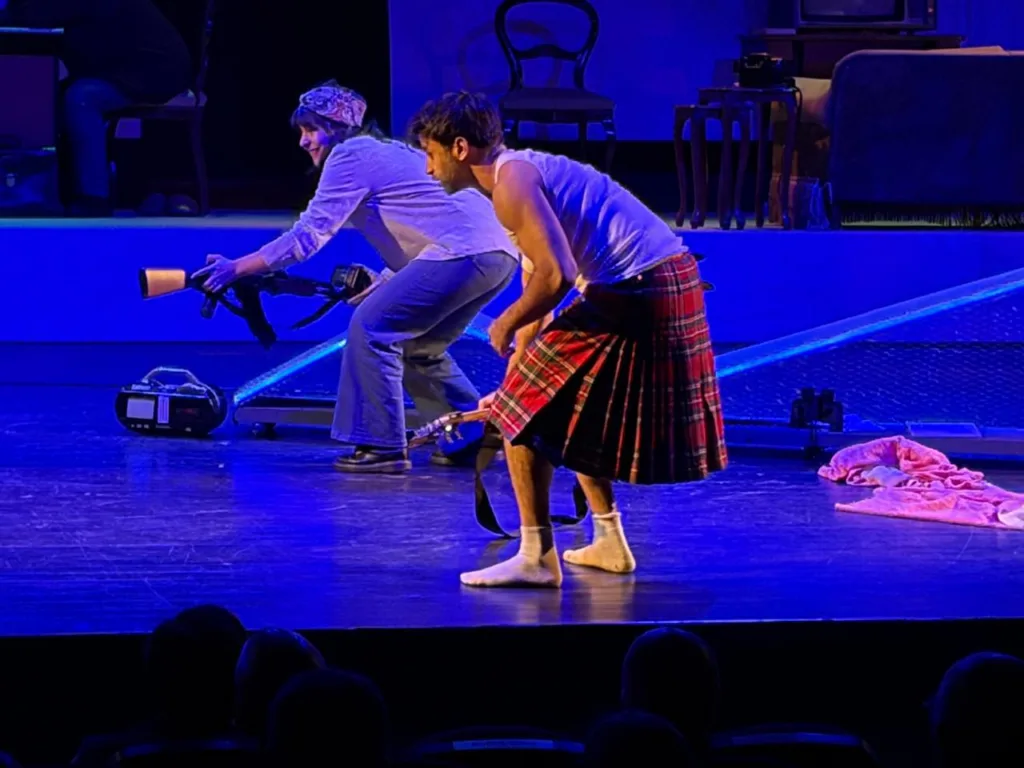
Written by Alexandre Najjar and directed by Lina Abiad, the production leans into contradiction. It moves between dark comedy and something more fragile, asking questions it refuses to neatly answer: about duty, truth, and the lies we tell not just to others, but to ourselves.
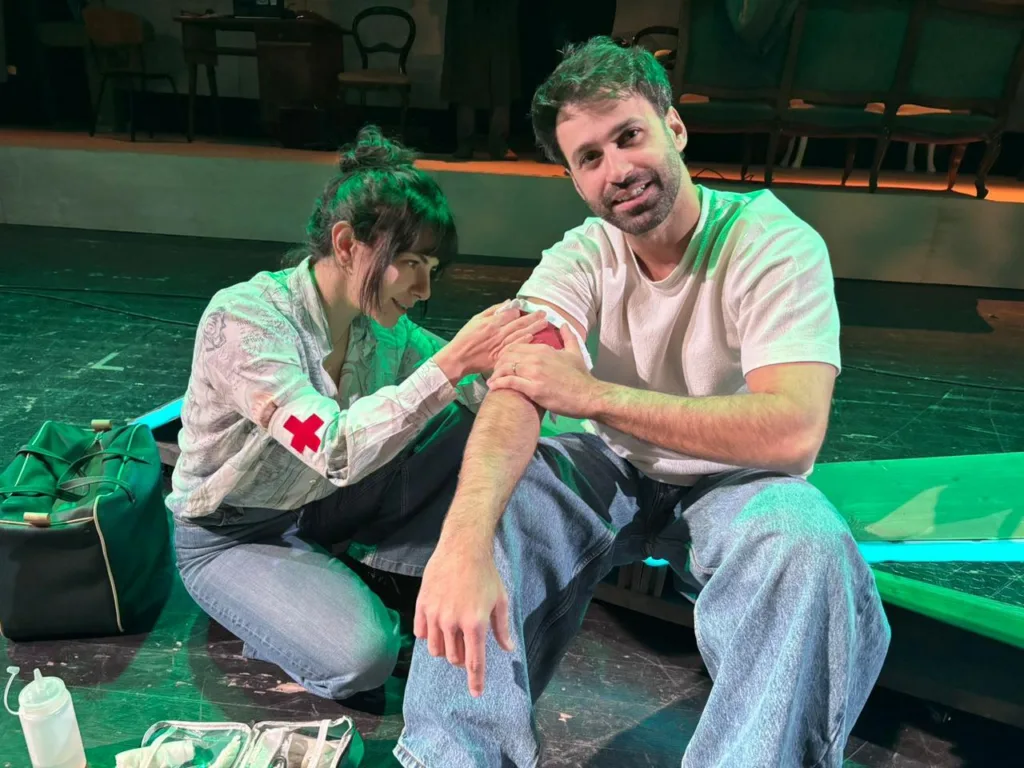
At the centre of it are performances that carry that tension without forcing it. Anthony Touma steps into a role shaped by privilege and guilt, while Joanna Khalaf brings a sense of grounded humanity into a story that could easily tip into abstraction. Together, they navigate a narrative that feels less like history and more like something still unfolding.
Below, they speak on performing through uncertainty, the blurred lines of truth, and why comedy still finds its way into the darkest rooms.
Complex MENA: The character you play is caught between privilege, duty, and the pull of war; what did you tap into personally to make that internal conflict feel real on stage?
Anthony Touma: ‘I honestly didn’t have to look very far. I have been torn between wanting to live in Lebanon permanently and being “responsible” towards my family and settling somewhere more stable for most of my life. I have lived in Paris, London, Jordan and Dubai, and I keep ending up in Lebanon whenever things calm down just a little. All that while being very aware that having a French passport and being able to just “decide to leave”, while friends and family and Lebanese citizens have no other choice but to stay, is a privilege’.
Read More
Complex MENA: The play touches on a lot, generational tension, human solidarity, love; how did you approach your character within all those layers without losing that sense of ease on stage?
Joanna Khalaf: ‘I held onto sincerity as my anchor. I tried to stay gently connected to myself and the character, serving the text. I also relied deeply on my scene partners, letting their energy feed mine, because the story is shared, never individual’.
Complex MENA: Performing this play while actual airstrikes are happening outside changes the stakes; how does that reality shape your performance each night?
Anthony Touma: ‘What is happening on the outside affects everyone, on many levels. We are worried, it is harder to focus during rehearsals, we are sad for everyone going through difficult times, and some of the actors themselves have a hard time going back home. It is tough. However, when the play starts, everyone is locked in and everyone is giving 100%. For one hour and 20 minutes, the play is our only reality’.
Joanna Khalaf: ‘It brings a lot of uncertainty, wondering if we will perform, if it is safe, if anyone will come. It deeply affects our acting, making each performance feel unique, almost like it could be the last. But there is also a quiet resistance and a humble pride in carrying art through it’.
Complex MENA: The story sits inside a lie that slowly unravels; what do you think the play is really asking about truth, especially in a time where everything feels uncertain or fractured?
Anthony Touma: ‘To me, the play is not about the lie unravelling but rather about how there are no right and wrong choices in such times. Was Gino wrong for wanting to defend his country? Was his father wrong to worry about him and try to send him away? These choices are impossible to make. The last scene emphasises that idea. Everyone is entitled to make their choice and when you force your convictions on someone, it most probably will not lead to anything good’.
Joanna Khalaf: ‘In these difficult times, it is hard to know what is right or wrong. Our view of life is often clouded, courage can feel small, then in moments of heroism we try to “save the world”. What matters most is staying gently true to ourselves and our own inner truth’.
Complex MENA: The play is listed as a dark comedy; what do you feel is the role of comedy in difficult times?
Anthony Touma: ‘The role of comedy and art in dark times has always been consistent. Making the unbearable bearable by laughing at our miseries, saying what cannot be said directly in real life and therefore challenging the status quo, providing an escape from real life to those who need a break, and most importantly getting people together and feeling connected’.
Joanna Khalaf: ‘Art should not hand out answers, it is there to make us ask the right questions. Comedy does it best: when we are laughing and in a good mood, the ideas sneak in without us even noticing. It is like learning while having fun’.


