In Conversation | Tarek Qaddumi Quietly Shapes Sneaker Culture From Kuwait To The World
The sneaker collector and artist, better known as KicksTQ, shares his love for sneakers and his passion for activism
Catching NBA games live can feel like a hassle for fans living in the Middle East and North Africa.
Even for the diehard fans of the league in the region, dealing with substantial time differences makes seeing their favorite players and teams play in real time all the more difficult.
But for Tarek Qaddumi, growing up in Kuwait during the reign of Michael Jordan and the Chicago Bulls, waking up earlier than usual to catch a game live became an obsession, a necessity to living.
“I was just fascinated by just how he played, how he carried himself, just the way he just flew in the air and how he was just winning,” says Qaddumi over Zoom from his home in Kuwait City. “He was a winner. And through him, like every other kid who’s into basketball, they try to emulate their favorite basketball players. I wanted to play like him, wanted to dress like him.”
He distinctly remembers watching the 1992 NBA Finals between the Bulls and the Portland Trailblazers, where Jordan would capture the second of his six career titles.
It was also the year that the GOAT debuted the Air Jordan VII, a historic silhouette that Jordan also wore as part of Team USA’s celebrated Dream Team during the 1992 Summer Olympics.
Read More
For Qaddumi, seeing Jordan play not only got him into basketball, but also invigorated his interest in sneakers.
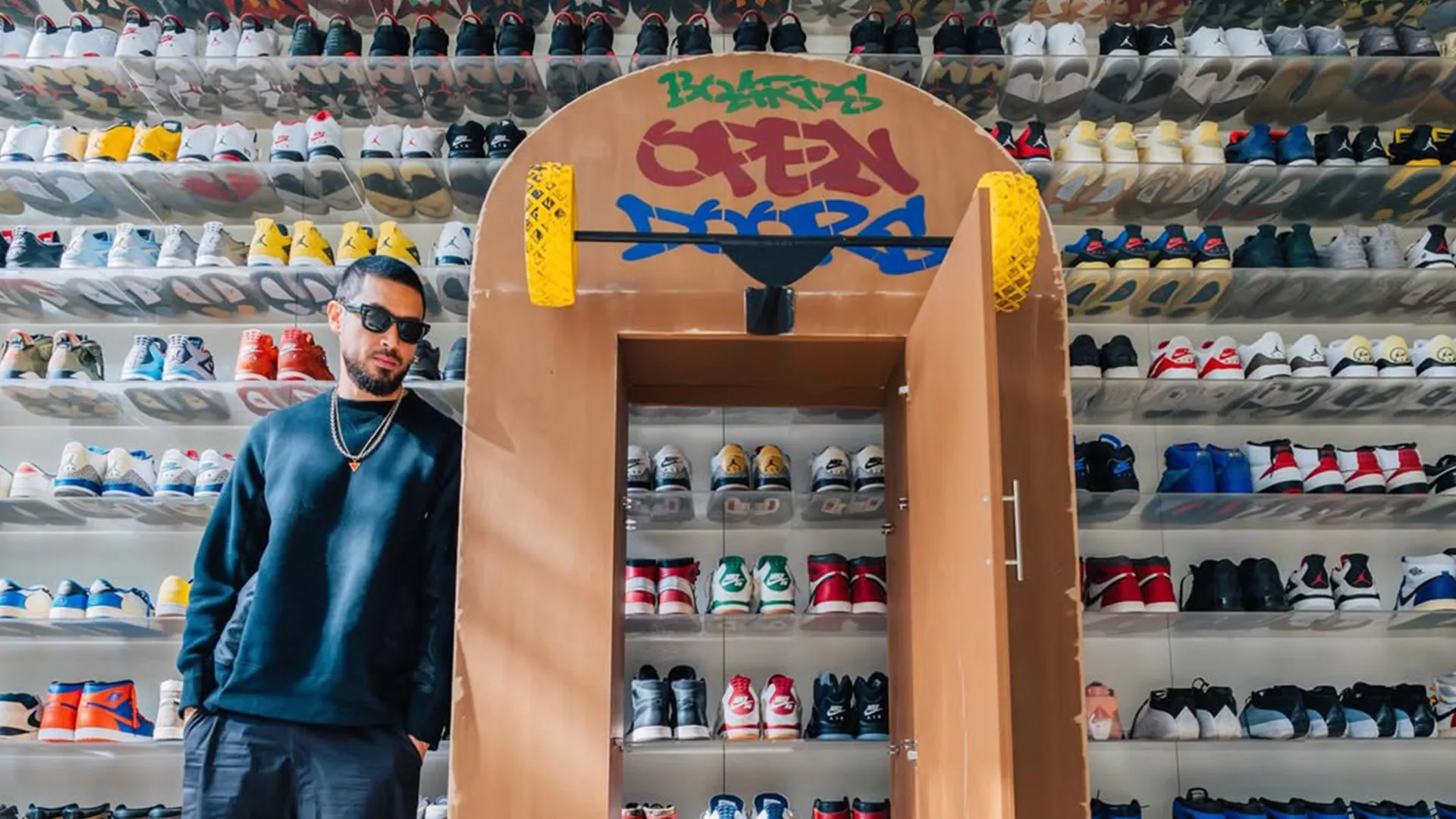
Qaddumi, who is better known as KicksTQ, has quietly become one of the most influential sneaker collectors in the Middle East and North Africa, if not globally.
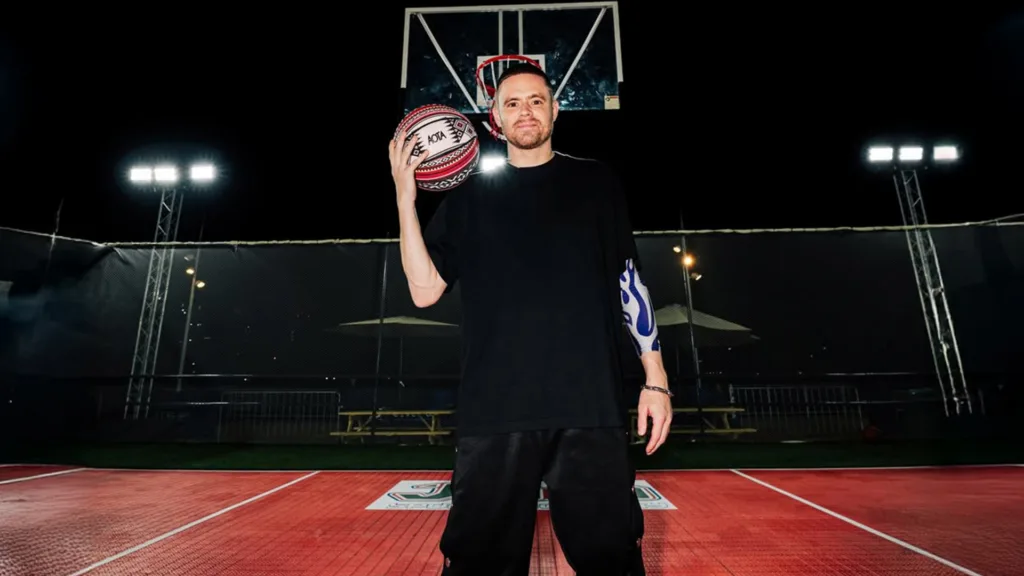
In addition to amassing hundreds of sneakers, Qaddumi serves as the founder and creative director of his agency OUT THE BOX and also founded AOTA (All Of The Above), a clothing brand that speaks to culture with a purpose.
Some of the pieces Qaddumi designed for AOTA have been worn by some notable basketball players, including Dallas Mavericks star Kyrie Irving and streetball legend Grayson “The Professor” Boucher.
Most recently, Qaddumi collaborated with fellow Kuwaitis, the rap duo Sons of Yusuf, for an exclusive clothing capsule tied to their album Kuwait Beat Tape, Vol. 1.
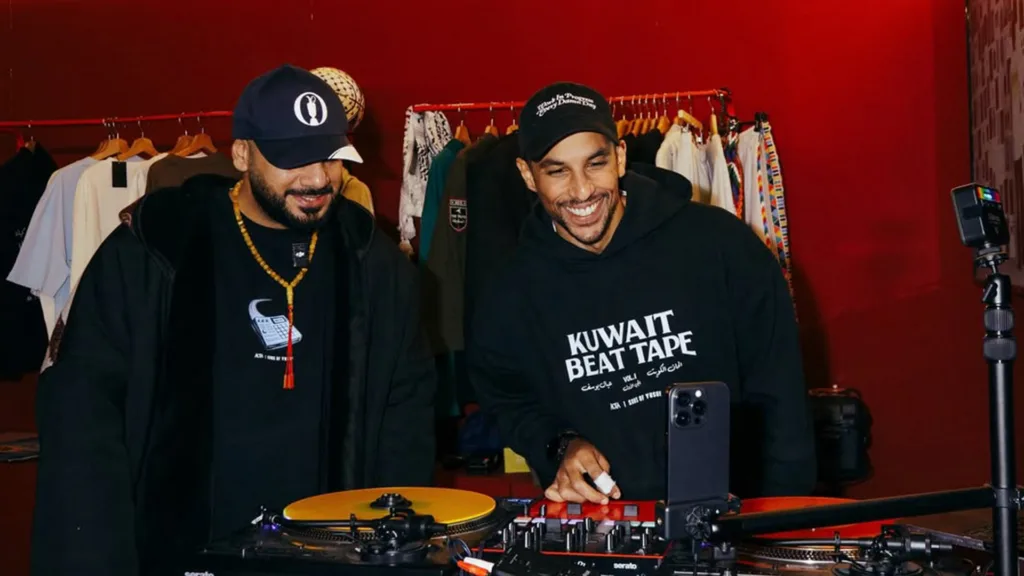
Yet even with all of this success, Qaddumi remains humble and grounded, speaking in a calm and disarming way like an old friend waiting to chop it up about the world around them.
And he saw much of that world early in his life. Qaddumi and his family left Kuwait during the Gulf War and relocated to Singapore for a couple years before moving back to Kuwait once the war ended.
Singapore taught Qaddumi how to love the game of basketball and make new friends in an unfamiliar community.
It’s also where he got his hands on his first pair of sneakers, the revered Air Jordan V OG “Black Metallic”.
“I had to convince my mom to get the grades for it before she got me a pair of Metallic Fives,” he says affectionately.
That moment cemented his love for sneakers in an incredibly personal way, one built on genuine connection with other human beings and friendship. His pair of Jordans were a way for him to bond with other kids his age.
A little over a decade later in 2003, when Qaddumi was old enough to make his own money, he began to “really collect sneakers as a proper sneakerhead.”
The first pair Qaddumi purchased were the Air Jordan III “White Cement”, which had just been retroed that year for just the second time since the original release of that colourway.
“I feel like that’s what really kicked off my addiction or my obsession with sneakers,” he says. “I think from when I was able to really afford to buy the sneakers I wanted, [my obsession with sneakers] just started growing and growing and growing.”
As his collection of sneakers continued to grow over the years, so, too, has the sneaker community and sneaker culture in the Middle East and North Africa.
Qaddumi has maintained a front row seat to this growth from the very beginning, both as a witness and as an active player in the region’s sneaker game.
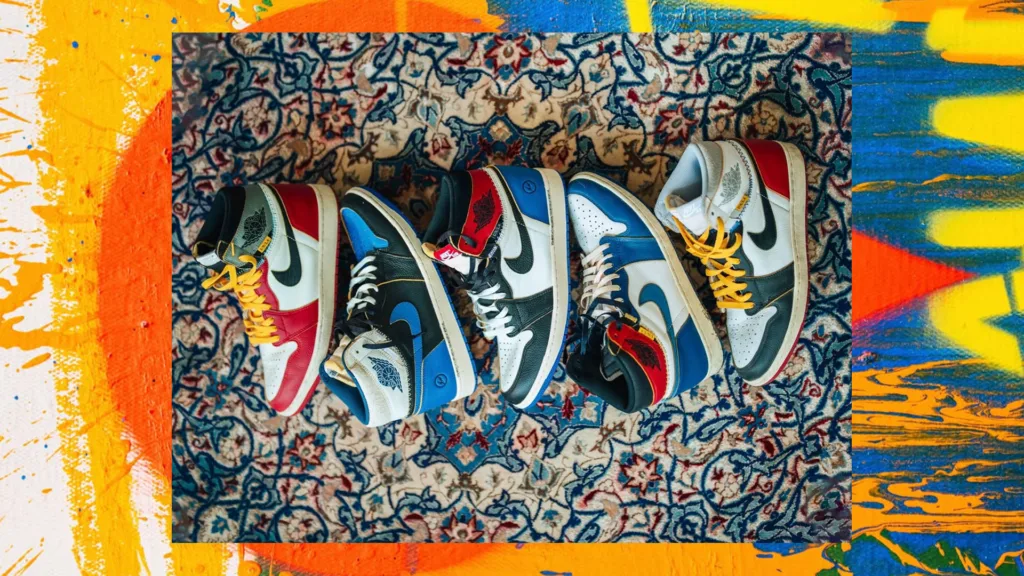
“From 2014 up until 2018, the hypebeast era was in full force, man,” he recalls. “Here in the Middle East, people had the buying power: Supreme, Yeezy, the Off-Whites. I really saw that then. The resale culture really hit Kuwait and the UAE as well. I’ve seen that growth. Then 2019 happened. I’ll never forget it, man. At the Avenues Mall, the black and red Yeezy Supply 350s drop. It was like a stampede in Harvey Nichols and in Foot Locker. Fights were breaking out. That’s when I realized sneaker culture had arrived. I saw it right in front of my eyes. I’ve seen that.”
While COVID slowed some of this momentum down for the region, coupled with slow retail sales of sneakers globally, Qaddumi says that sneaker culture still exists and has evolved beyond hype.
“You still have your OGs. I mean, I’m still there. I’m still trying to push sneaker culture as much as I can, but in a different way. Now, I’m trying to tell stories through sneakers. I want that to be more important than just an upper or suede or cushioning or colourway.”
Qaddumi sees his involvement in sneaker culture and streetwear as more consequential than simply creating fashion pieces.
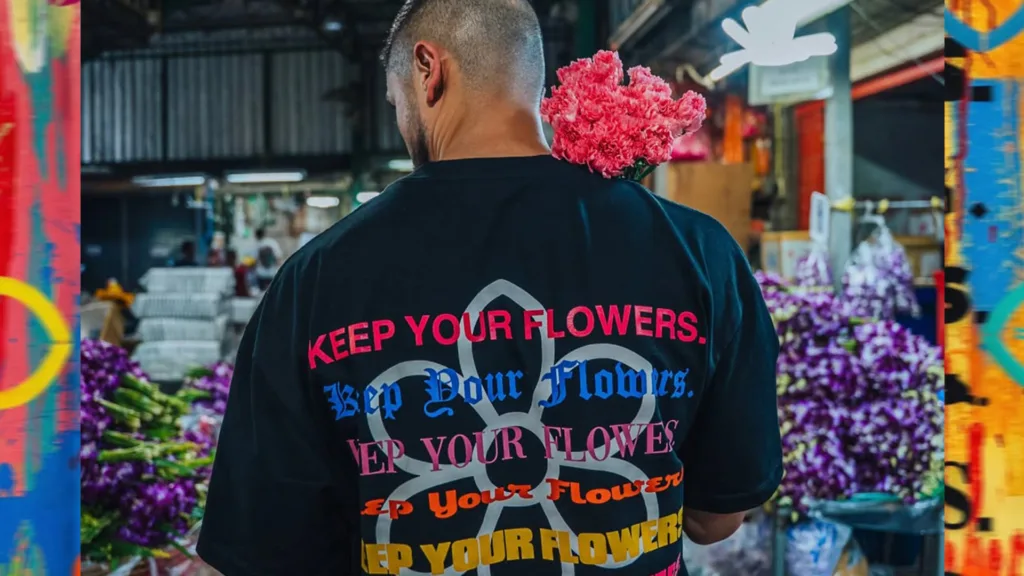
His expansion into art and fashion allowed Qaddumi to explore intimate and personal stories dear to him.
His first art installation delved into Palestinian tatreez through his grandmother, who taught him about this craft. Qaddumi quickly learned about Palestinian resistance through art and what that meant to him as a Palestinian navigating life.
And through his work with AOTA, Qaddumi has created cultural pieces like a basketball with a keffiyeh design and clothing that dares to call out injustices against Palestinians and others more broadly.
He feels a higher calling to his work.
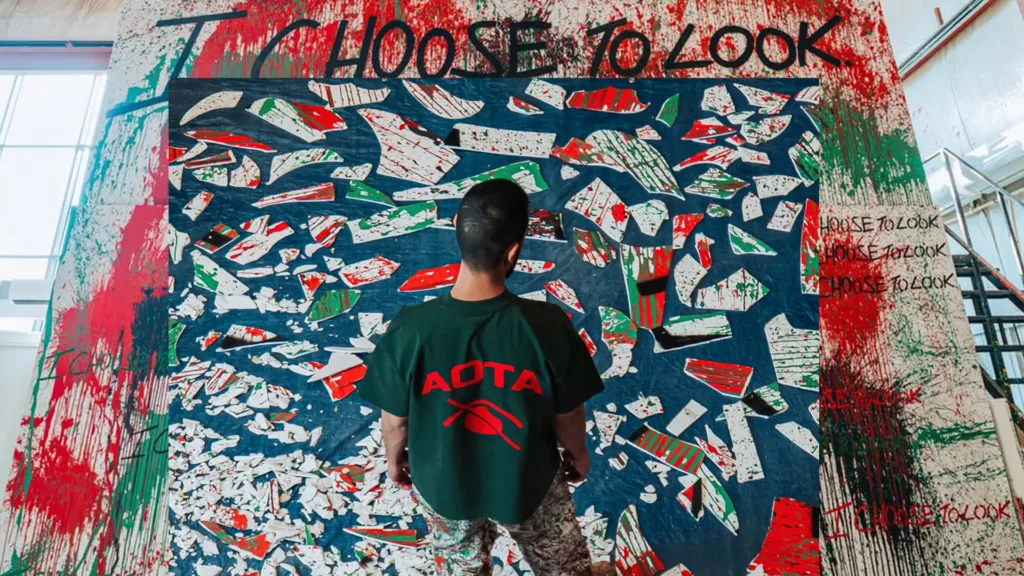
“It has to be done,” he emphasizes. “I don’t work. I’m not seeking profit. I’m not seeking applause. I consider myself like a self-actualized guy. Once I have an accomplishment, my next step is, how am I going to beat that? When I talk about my art, that’s really how I started my career into the art world. I set the bar really high for myself. I’ve just been going strong ever since.”
He continues: “It’s not a time to be afraid. I’ve always had this rebellious nature in me, even as a kid. But the older I grow, especially with everything that’s been happening since October 7, I just find myself in a place where I just have to use my platform as much as I can to my greatest ability to just influence people to be brave more than anything. Whether it’s about Palestine or any other issue, you just have to be brave. You have to be courageous. That’s the only way things will change. And nothing else really matters. I can’t just let people hear my voice about how to style an outfit with a pair of nice sneakers. I want to talk about my story and why I’m passionate about Palestine and why I’m passionate about making a difference. So it’s just the way I was raised. Sneakers really opened the door to Instagram. Instagram gave me the platform, and now I’ve actually realized this platform shouldn’t just be for sneakers.”
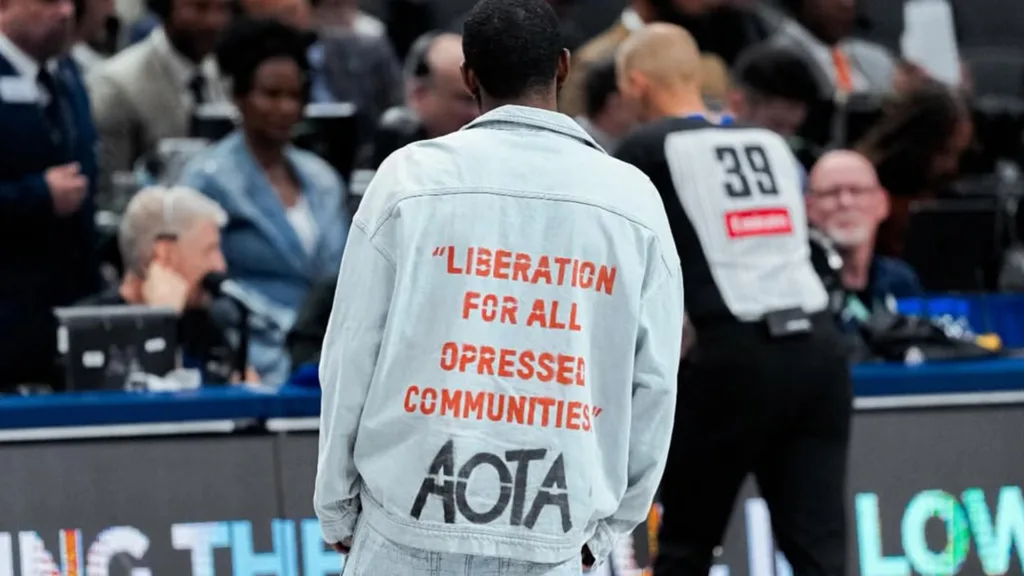
When Kyrie Irving, himself one of the most outspoken players in the NBA on Palestine along with Boston Celtics star Jaylen Brown, was seen wearing a one-of-a-kind custom AOTA jacket, Qaddumi said it felt “surreal”.
“Huge, huge step for the brand,” he shares. “It’s moments like that also that made me realize I need to just not stop with this brand. It’s meant to be.”
Qaddumi understands that his influential platform in shaping the narrative around sneaker culture in the region came through perseverance and at a time when sneakers still had not caught on in the Middle East and North Africa.
And while sneakers were the entry point, they only tell part of the story of his influence and his dedication to advocacy.
“There were a lot of L’s and there were a lot of speed bumps,” Qaddumi shares candidly. “But everything that I’ve done, obviously, didn’t just happen overnight. So I always like to mention that when I talk about my accomplishments. I made a lot of mistakes and learned a lot of lessons. But that’s what helps you grow.”

US-based music writer and editor.