
In Conversation | Nour Abukamal and the Invisible Politics of Colour
With credits spanning award-winning films and music videos for Haykal and BLTNM, Nour Abukamal is resisting cinematic stereotypes and constructing a visual identity beyond the desert filter.
It is not a myth, worlds are painted intentionally. The film industry is an example in its entirety, and Hollywood offers the clearest case, it dyes Mexico in yellowish hue, Russia in gloomy blue, and Japan in a saturated and vibrant neon. There is politics to colour, a quiet propaganda of visual codes that conditions perceptions.
Our Arab world is no exception to this “colour propaganda,” mostly lumped together through a warm, desert-like filter, disregarding a diversity of people with diverse shades and environments.
This is where Nour Abukamal comes in, a colourist based in the West Bank and working on constructing a Palestinian visual identity suited to honour all of the country’s nuance.
As the sole colourist operating in occupied territory, Nour is aware of the responsibility. Today, the struggle for liberation is led, more than ever, through visuals.
“A break dancer coming out of Palestine? Nobody wants to look at that, but a break dancer that lives next to the wall, that’s something else. It’s not necessarily always a good approach but that’s one layer of image-making, then comes colours.” Abukamal says. For him, there is not a specific or technical philosophy to colour grading a Palestinian production but the goal is clear:
“We try to show Palestine as is. The sea is 30 minutes away from here, even though we can’t reach it, but it’s here. The desert is basically an hour away. So, it’s not one singular palette.”
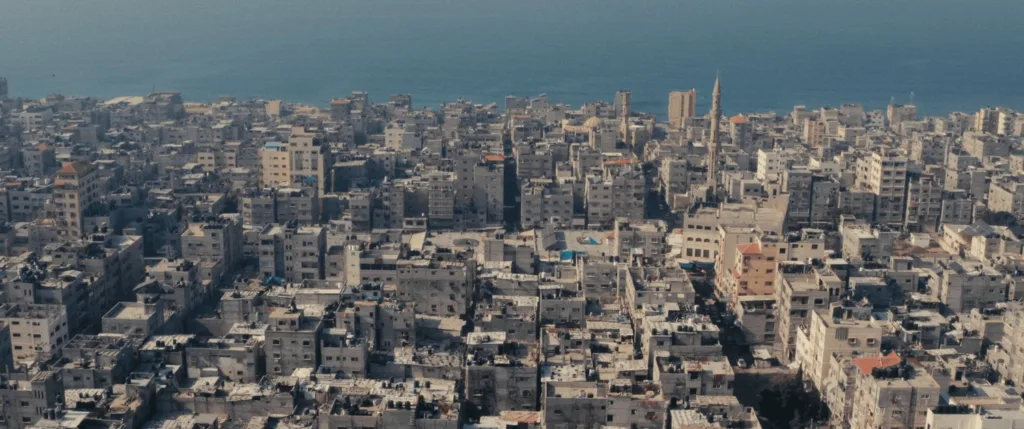
Colour grading, which he jokingly refers to as “Instagram filters on steroids” is how Abukamal fights the fight. In fact, this analogy of Instagram filters is how he got his foot in the door in the first place.
Read More
Before enrolling in Dar Al Kalima University to study filmmaking, Abukamal had a knack for photo editing and retouching, a service provided to his friends for free, but where he arrived today can be traced back further.
As a child, Abukamal had three main interests: video gaming, cables, and fire trucks. Random, yet related, Abukamal believes they provide a fully connected circle.
“As a child, I wanted to become a professional gamer. I played a lot of video games and watched a lot of gaming content. And I loved to hoard cables, any cables. I just liked electronics I think. I remember I would act like I’ve fallen asleep on the living room couch, obviously I was a bad actor, and to get me to get up my mother would say outloud ‘oh here’s the Dyson advertisement playing on the TV’ because she knows that will make me jump out of my place,” Abukamal recalls.
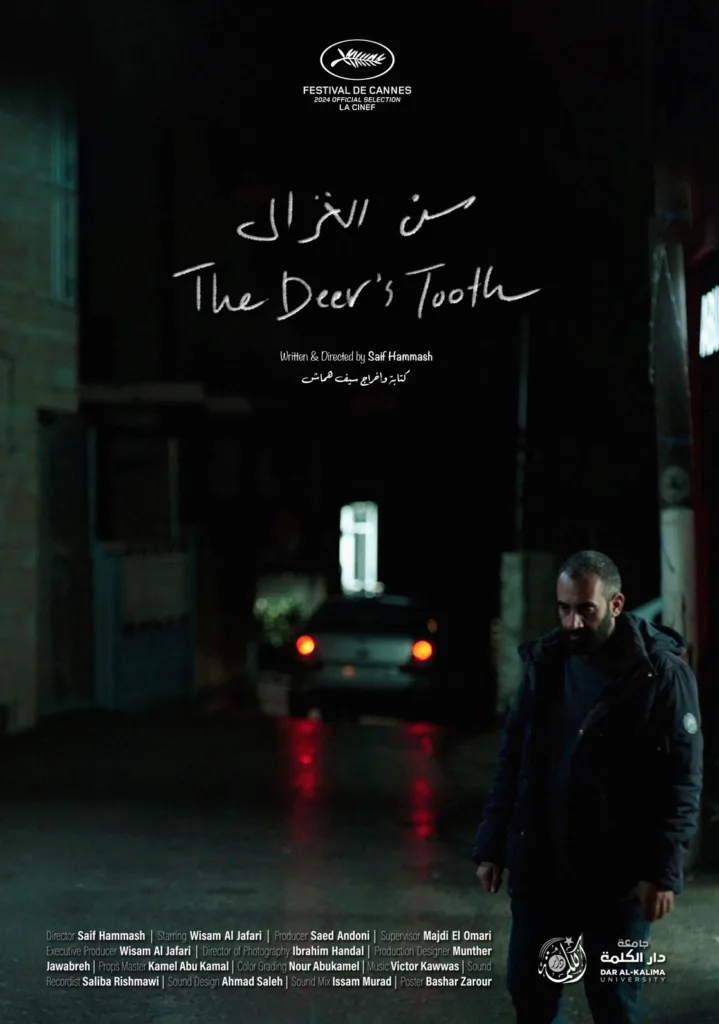
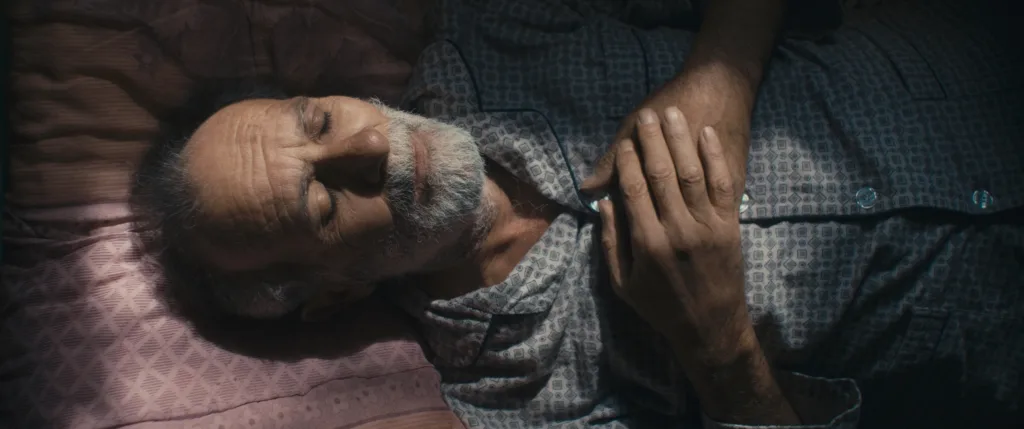
As for firetrucks? Nour Abukamal spends his days manipulating the knobs of his grading board, reminiscent of a front board or pump panel operated by firefighters, to colour grade many of the West Bank productions including The Deer’s Tooth (2024) by Saif Hammash which premiered at the 77th Cannes Film Festival, Palestine Comedy Club (2025) by Alaa ‘Regash’ Aliabdallah which premiered at the SXSW London, and Janin Jenin (2024)’ which follows late filmmaker Mohammad Bakri as he returns to Jenin refugee camp twenty years after his famous documentary Jenin, Jenin.
Aside from films, many music videos, which he describes as “the dessert after the dinner” have travelled through Abukamal’s grading screens including most of BLTNM’s music videos, Kokym’s, Nemahsis, Lina Makoul’s and a music video for music producer Molotof.
But it’s not just grading, Nour Abukamal has directed the first music video for Haykal “Vespa” and shot “Skamleh” by the same rapper. He was also a digital image technician for Thank you for Banking with Us (2024) by Laila Abbas and All That’s Left of You (2025) by Cherien Dabis.
This long resume comes from a belief in not declining work: “Calling myself a workaholic is an understatement, but I really barely say no to projects, because I know that person has no other option either. so It’s not like I work on big projects only. Most of the projects I work on, I’ll be fixing lighting or fixing bad makeup,” Abukamal says with laughter.
It’s true, not many colourists other than Abukamal (if any) operate from within Palestine, and colour grading in of itself is a niche profession anywhere. “Technically, colourists are lazy cinematographers. We really only realise a colourist’s work when they mess up,” explains Nour Abukamal, but locally, our industry is also more so of a “scene.”
“It’s not like we have theatres or cinemas or business people that invest in films and make their money back,” says Abukamal. “It’s a completely different story on our end. That’s why we call it a scene, because we basically rely on grants. But that’s something we are trying to change. Myself and the young filmmakers I know, we try to create the best from nothing.”
“I was working with old and prestigious local filmmakers and I was the first colourist they ever worked with, or for example, I had one grading course in college and the teacher used to call me after class to help him colour his personal projects.” he continued.
Besides what he considers a moral duty to take on work, all the work, Abukamal is adamant about creating a shared, unmistakable visual identity for Palestinian productions. Beyond the monitors and panel knobs, Abukamal believes this identity is a collective mission, possible only through collaboration with other filmmakers and creatives.
“Just like you can know an Iranian film by the first scene or an Egyptian film by the first shot,” he says, emphasising what he thinks a Palestinian visual identity would look like.
“Ours would be high in contrast, because of the sun, basically. And if we want to philosophise it, because of the huge contrast that we have in our lives. But also warm, because life here is intimate. Family is everything for Palestinians, so walking in the streets feels intimate,” says Abukamal.
“You can never get lost and the streets are small. Even if you want to show a crime scene in Palestine, it’s going to be still intimate at the end of the day, because they’re probably cousins, or their fathers know each other, you know. Lastly, texture, because of nature and the age of things. Here you have a building that is 300 years old and next to it is a modern apartment building.” He continued.
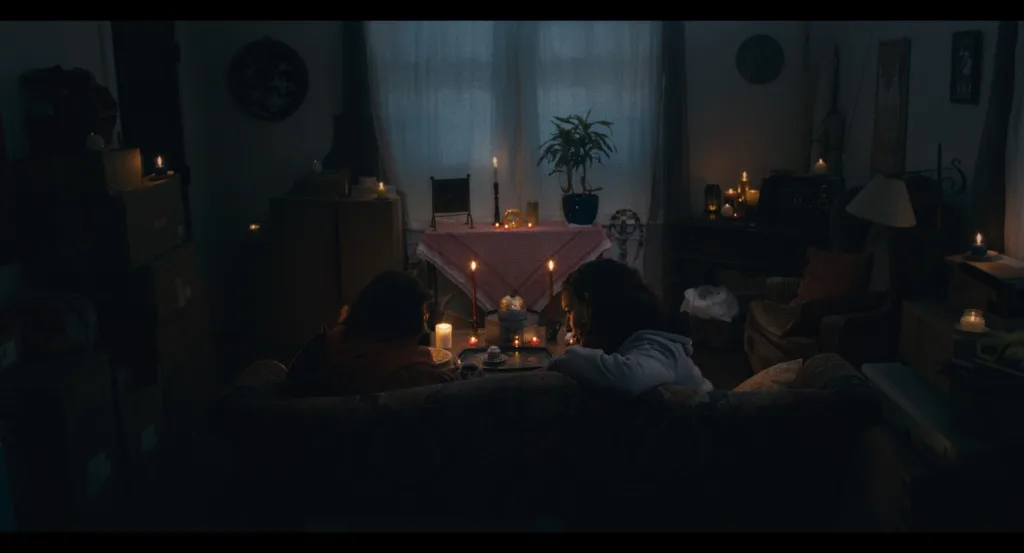
Still, Nour Abukamal is conscious of the balance. Not every production should look the same or be stamped with a single style – a trap he’s careful to avoid as one of the few Palestinian colourists. Above all, the work must feel timeless.
“Immortality of visuals is the most important to me,” he says. “Because the last thing I want is my work to look outdated. Sometimes you’re watching music videos now that were made years ago and notice they look outdated because they used a specific effect that was trending back then but isn’t anymore.”
For Abukamal, this sense of immortality is both the measure of success and the bridge between a “scene” and a self-sustaining industry. Scenes, after all, are how industries begin.
And somewhere in a small studio in Ramallah, hands moving across a grading board that looks more like a firetruck’s control panel, an underdog is preparing for the moment the alarm goes off. Until then, Nour Abukamal is quietly recalibrating how Palestine looks, and in return, how it is understood.

Pop Culture Editor-At-Large at Complex MENA.