

Growing up between Canada and Egypt, Rami Helali has long heard about Egyptian cotton, but rarely directly from its keepers. Its legacy, endlessly mythologized and reinvented in the West, is spoken about far more than it is listened to.
True to his mission of reconnecting with his lineal seeds, Helali returned to his ancestral home in Egypt, where he found himself living in a cotton-farming community in the Nile Delta for six months. Immersed in the realities of smallholder agriculture, he came face to face with the human cost, and cultural depth, behind one of the world’s most coveted textiles.
Upon returning to New York in 2015, Helali, alongside Mackenzie Yeates and Benjamin Sehl, had fully formed the ethos of their brand, Kotn: a pursuit of the perfect T-shirt that does not compromise on price, quality, or the integrity of smallholder cotton farmers.
Ever since, Kotn, the brand Helali launched with his friends, has grown rapidly. Today, the brand is opening its 12th store globally and the very first European store located in London.
But the store isn’t Kotn’s only London debut. This February Kotn entered the world of hospitality with the launch of Beit Kotn, a private hotel and creative residency space inspired by Arab hospitality and the simple idea: my house is your house.
“Arab hospitality is instinctive.” Says Helali. “It is generosity without conditions. That is difficult to preserve if access is tied to a transaction. A stereotype you will often hear about your middle eastern friends is that you will never end a dinner without a public fight over who will pay the bill. This is the energy we wanted to bring into Beit Kotn.”
Read More
Although in recent years, many clothing brands have moved into hospitality, and many membership clubs continue to multiply, Beit Kotn aims to avoid the common formulas of gatekeeping, hyper-exclusivity, and wealth-based access.

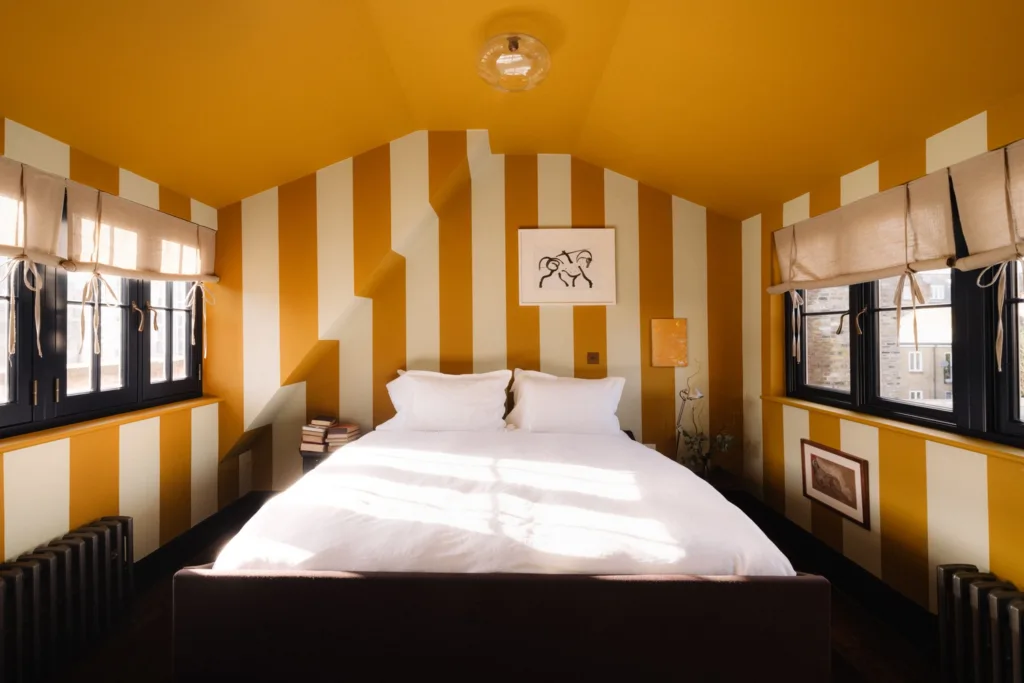
Biet Kotn London

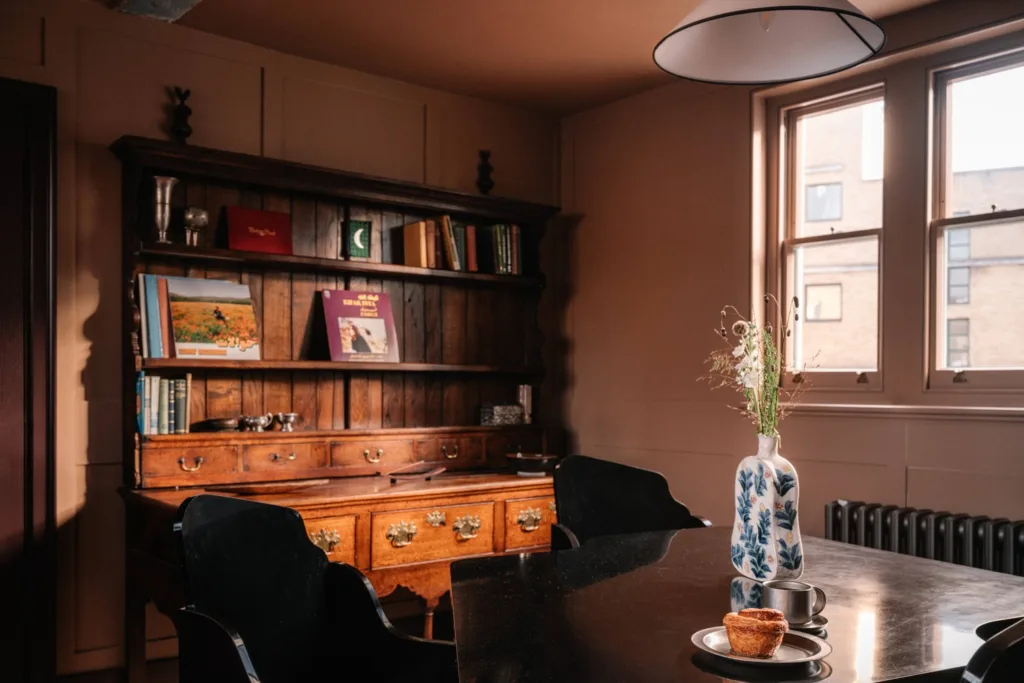
“Private clubs are built around exclusivity. Beit Kotn is built around belonging. People show up differently. They contribute differently. It becomes less about consumption and more about participation.”
For a brand that has, to date, funded 25 schools in the Nile Delta and Fayoum, Egypt through their initiative ABCs, it comes as no surprise that Beit Kotn fully eliminates transactions. In doing so, Kotn aims to replace currency with community, exchange, and creative collaboration.
“By removing the transactional layer entirely, we allow the space to function as it is meant to. It becomes about shared meals, conversation, collaboration, and time spent together. The absence of money changes the energy.” Explains Helali.
And it’s not a one-and-done either. Hospitality for Kotn is a long-term project. Preparations are underway for Beit Kotn to open its doors in Egypt by next year, laying the foundation for cultural homes for Arab creatives, wherever they are.
“For us, this is not a clothing brand moving into hospitality. Kotn has always been about community first. Over the years, we built a global creative community that moves between cities. What was missing was a space that felt rooted in our culture, not just aesthetically but philosophically.”
This belief explains London as a first stop, a city Helali describes as “a practical stop for creatives moving between cities” as for Cairo, it remains central.
“Cairo is the foundation of Kotn. It is where our story began and where it will always be rooted. The project there will be a larger expression of the same philosophy. The long-term goal is for Beit Kotn to become a network of spaces connected by culture and community.”

Pop Culture Editor-At-Large at Complex MENA.