
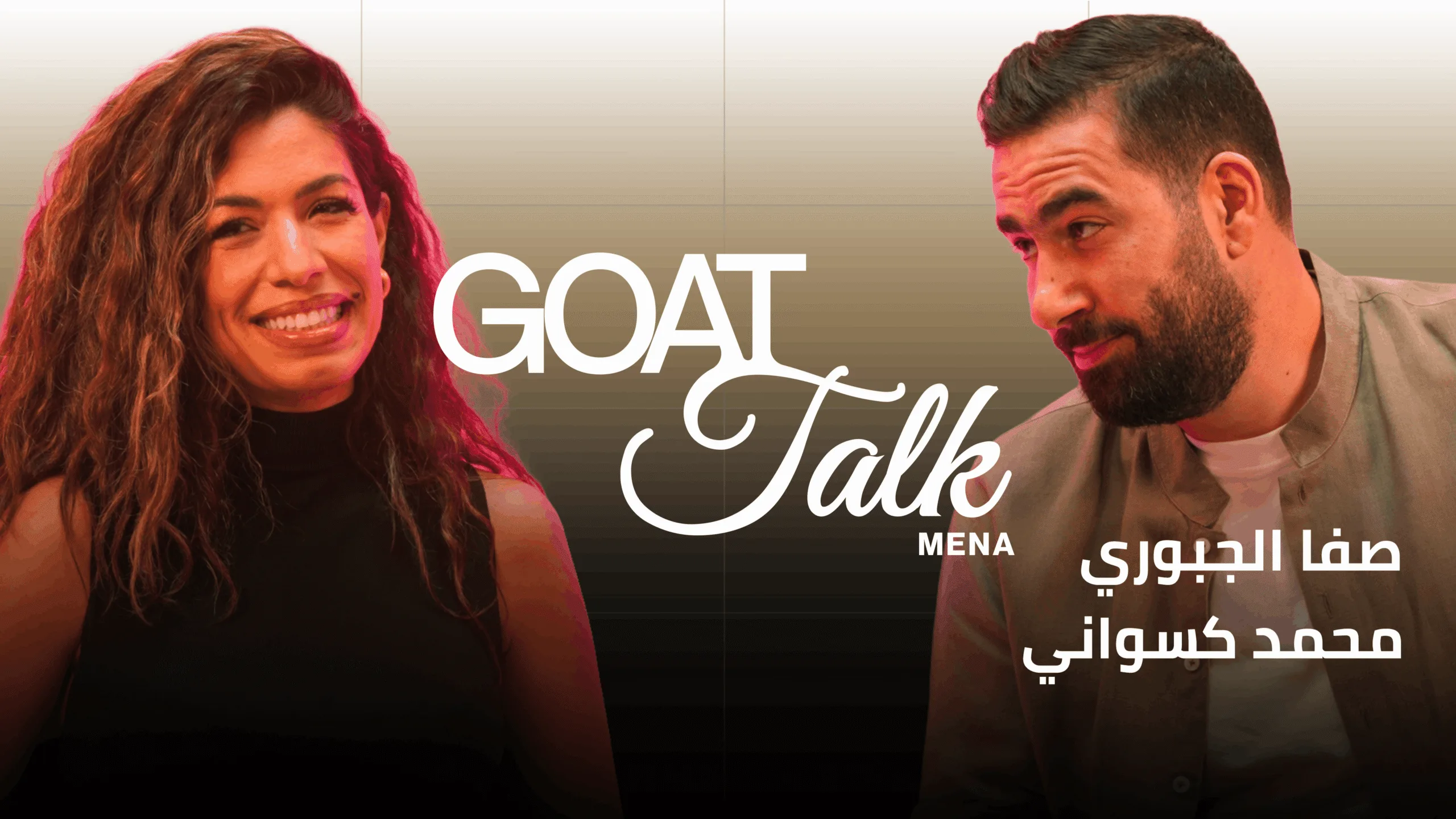
GOAT Talk MENA returns for Episode Two with a Valentine’s Day–ready conversation, bringing in Safa Al Juboori and Mohammed AlKiswani, the breakout couple from Love Is Blind, Habibi.
As the only pair from Season One to leave the experiment married, and now expecting their first child, Safa and Mohamed arrive not as reality TV nostalgia, but as proof that something real can grow inside a format built on uncertainty.
Hosted by Khaled Saqer and Elham Ali, Love Is Blind, Habibi reframed modern Arab dating by stripping away appearances and forcing connection to live or die on conversation alone. For Safa, a financial manager from Iraq, and Mohamed, a senior commercial manager based in Dubai, those early pod debates about values, careers, and expectations became the foundation of their relationship.
On GOAT Talk MENA, that story becomes something looser, warmer, and more playful.
The episode centers on what they call their “GOAT pod moments”, the conversations that made them fall in love. They debate how to apologise properly. They compare love languages. They shout out Arab couples they admire. They argue, passionately, over the region’s greatest shawerma. Romance meets everyday ritual.
It’s less about perfection and more about process: how two people learn to listen, adjust, and grow in public and in private.
Read More
Like the debut episode with Manal and Stormy, Episode Two positions GOAT Talk as more than a personality format. It’s a space where cultural identity, personal history, and lived experience intersect. Here, love isn’t presented as fantasy- it’s shown as negotiation, humour, compromise, and shared memory.
Timed with Valentine’s Day, Safa and Mohamed’s appearance feels intentional. Not as a postcard version of romance, but as a reminder that lasting relationships are built in conversation, sometimes in pods, sometimes over shawerma, sometimes in front of millions.
As GOAT Talk continues to expand across music, sport, and pop culture, this episode anchors the franchise in something timeless: two people learning how to choose each other, every day, long after the experiment ends.


