
Meet Marwan Abbas, known online as Marwan Pixels, the pixel artist who is transforming our beloved Arab cultural icons into collectible figurines under his project named Mixles: a combination of Marwan, his first name, and Pixels, the medium in which he is steadily becoming a master.
“I’ve had this fascination with Pixel art since forever. Playing Atari and all of the early video games was a visual intake that remains with me till the day, but it always felt alienating to a certain degree, it didn’t look familiar to my surroundings back home in Egypt,” says Abbas.
This sense of alienation was a driving force. Abbas set out to learn pixel art so he can draw a world he can see himself in. From drawing locations, then characters, then a moving animation, Abbas was turning a hobby he’s picking up from online tutorials into a constructed reality, pixelated but easily recognizable and relatable.
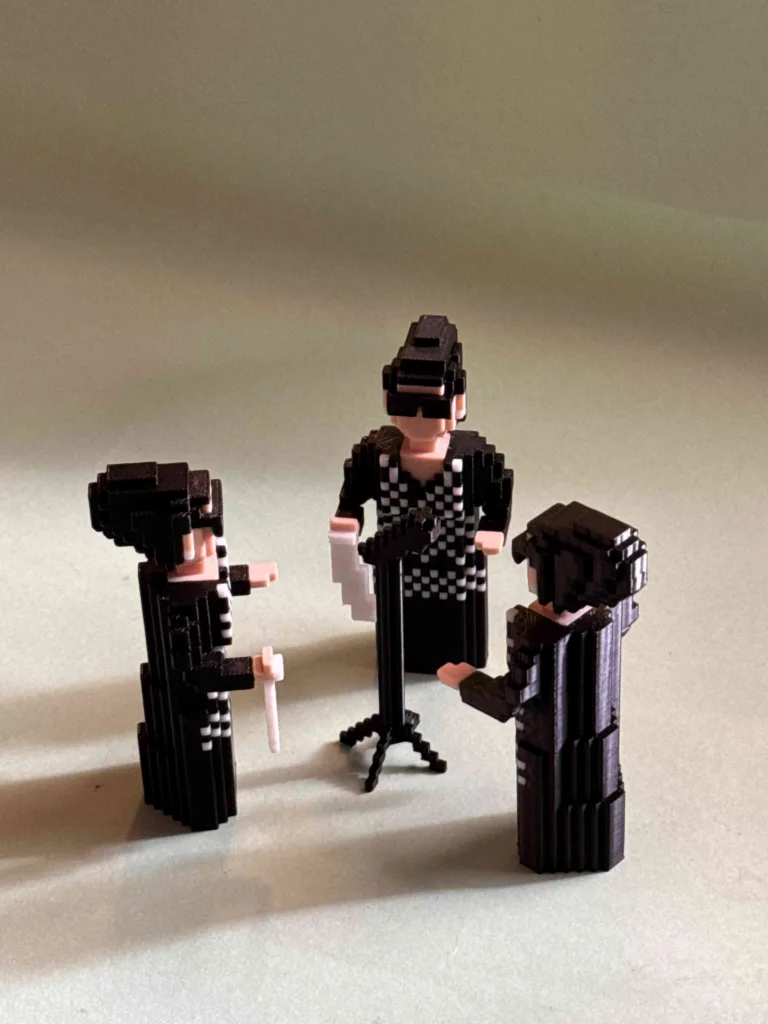
“I was animating whole concerts for Oum Kalthoum and Warda — orchestra, audience, and all. That was a turning point, as I started learning how to capture facial expressions and movements and it became this fun and exciting challenge,” he says.
The animations quickly gained traction, leading to commissioned work for big-name commercials and music videos for artists like Tamer Ashour, Double Zuksh, Hisham Kharma, and Hamza Namira.
But 2D wasn’t enough, Abbas wanted those worlds he’s creating tangible.
Returning to his earliest inspiration, he started building a 3D design of Oum Kalthoum. Once only as a drawn figure in an animation to a 3D printed figurine.
“Making figures has been a dream of mine since the jump. I’ve always seen these things getting imported from outside, I mean, we all buy Funko Pop and action figures from abroad but they never speak to us directly.”
Abbas continues: “I was done with foreign celebrities and wanted something that expresses our culture and artistry, so I started with the legend, Oum Kalthoum.”
Abbas is not wrong, collectable figures are a global phenomenon, a whole culture with collectors from all over the world investing significant time, money, and passion. While this hasn’t traditionally been a major thriving culture in the Arab World, it’s probably because, as Abbas believes, those figures are never ours.
Read More
“I marketed Oum Kalthoum organically, and I was shocked it sold out so quickly. It almost proved my idea that this is a culture we will welcome once we feel included in it. So I started making more, and continued with musicians, Mohammad Mounir, and most recently rapper Marwan Pablo.”

Inclusion is central to Abbas’ philosophy, so he is intentional about creating figures that are relatable to all generations, whether 60s classical music icons or modern hip hop pioneers.
“What makes pixel art both special and challenging is that, to this day, there are no shortcuts. You are building a character block by block, and limited when it comes to facial features,” says Abbas. “So with Marwan Pablo, I had focused on one of his early music videos, using his yellow shirt and hair locs as signifiers. It is an old look of his but immediately recognizable. For me, it marks the time when Egyptian hiphop started to become of the caliber it is today.”
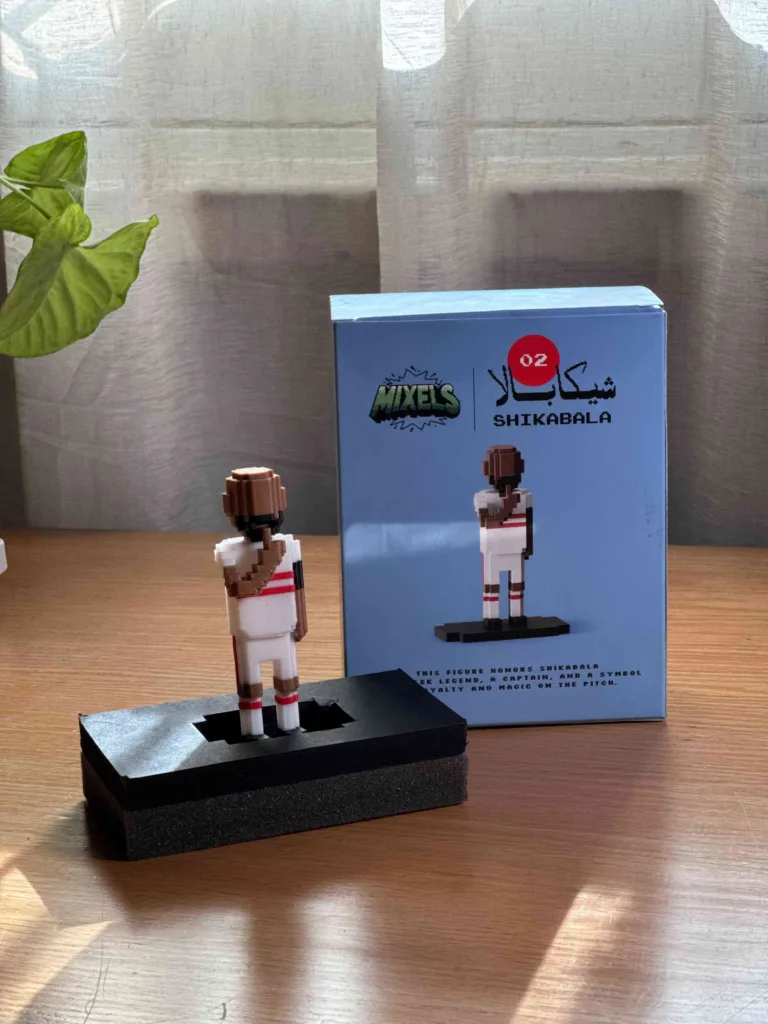
But it’s not just musicians, although Marwan Abbas still holds his job at an advertising agency, he is building a full and complete Mixels world with the integration of football players starting with Mahmoud Shikabala who plays at Zamalik, even though Abbas himself is an Al-Ahly fan.
While still a growing endeavour, Mixels follows a successful strategy: all figures are numbered, released in limited edition drop, and packaged with meticulous care.
Given how quickly each release sells out, it’s not hard to imagine Mixels becoming a cornerstone of Arab pop culture collectibles.
“Mixels operates fully online so far, but the dream is to expand to physical stores and locations with more figurines and characters. See, We may have a small collectible culture — but we have infinite Arab culture waiting to be collected.”

Pop Culture Editor-At-Large at Complex MENA.