Life Below Ground: Saleb Wahad and the Sound of Ramallah
How Saleb Wahad and Ramallah’s underground hip-hop scene forged sound as a form of continuity in a city defined by permanent uncertainty
There is a sound specific to a de facto capital; a place uncertain of its own presence, yet its people bursting with existence. This sound is the sound of constant construction, of sidewalk cafes, and of youth stuck in the midst of an urban sprawl bordered on each side by a military cement wall. Violent but vibrant, alive but perpetually nearing death if ever a soldier twitches compulsively, with a finger on the trigger, as you stand stranded at a checkpoint. It’s a contrasting condition specific to the Palestinian city of Ramallah in the West Bank; an odd case of being that resists language, yet finds articulation in the music of hip hop crew Saleb Wahad.
While the story of Saleb Wahad formally begins almost fourteen years ago, when a few friends arranged themselves a laboratory of beats and rhymes, its lineage stretches further back. In 2002, Muqata’a, often regarded as the godfather of Palestinian hip-hop, founded Ramallah Underground with Asifeh (formerly known as Stormtrap). Beatmakers and rappers alike, the two declared an underground presence in occupied territory. Their messaging was blunt and undeviating as if to say, “We are youth controlled by politics we didn’t choose nor approve of.”
The two, later joined by Aswatt, recorded music dealing directly with the occupation, staging their videos against the separation wall. But as their name suggested — and later their song ‘Sot Ramallah’ (The Voice of Ramallah) would make even more explicit, they were speaking of Ramallah itself –the town, the streets, the dualities.
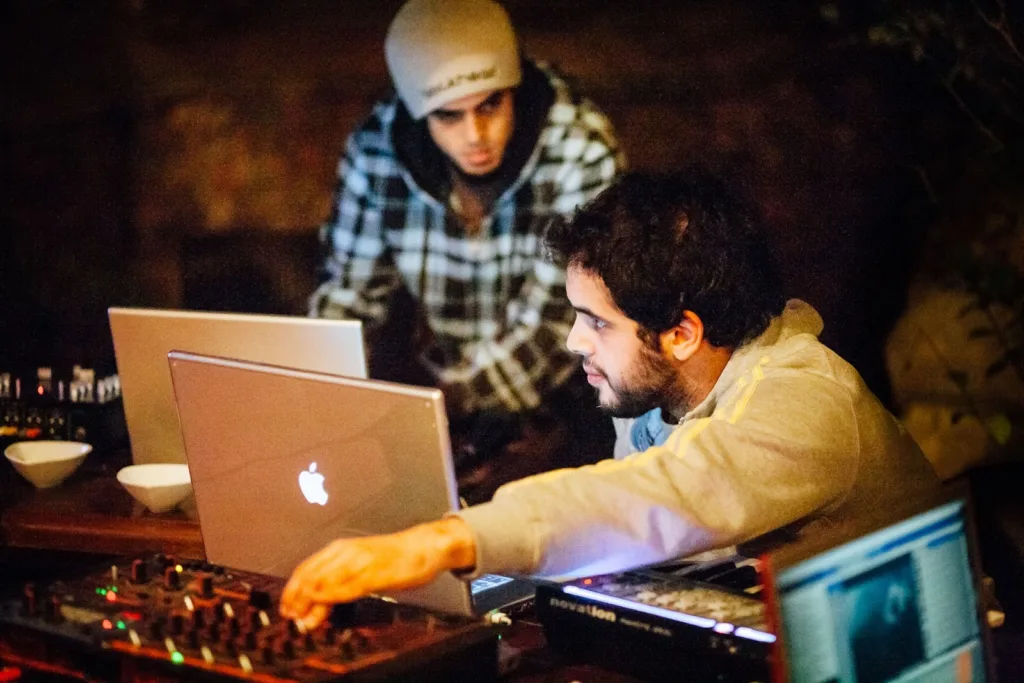
By the time Ramallah Underground ceased to exist around 2009, it had already laid the infrastructure for an underground scene in the city — one that would eventually give rise to the hip-hop crew Saleb Wahad (or -1). Even its name suggests a room below ground, a minus floor. For Saleb Wahad, the focus wasn’t on addressing the occupation in its most literal forms, as Ramallah Underground had done, but on tracing the life unfolding within it. The crew’s lyrics were more nuanced, more haunted, and more grounded in the everyday, referencing spots, narratives, and lingo accessible only to those moving within the circles we’ve come to call the underground.
The need for an underground in the case of the West Bank was as urgent as the need for autonomy for us Palestinians. In one way or another, it meant a sense of self we had fabricated to reconcile a lasting alienation. We were Palestinians searching for a place in the world, but also youth seeking refuge within our own societies.
All in all, Saleb Wahad was the voice of Ramallah in all its contradictions. Haykal, one of the rappers who rotated through Saleb Wahad’s line-up, said it in his song ‘Robu’, ‘The contradictions in Ramallah, even the contradictions within myself.’ He later emphasized the city as a reference point with ‘Sot Ramallah’, using the same title adopted a decade earlier by Ramallah Underground — a continuity and threading of generations through sound.
Read More
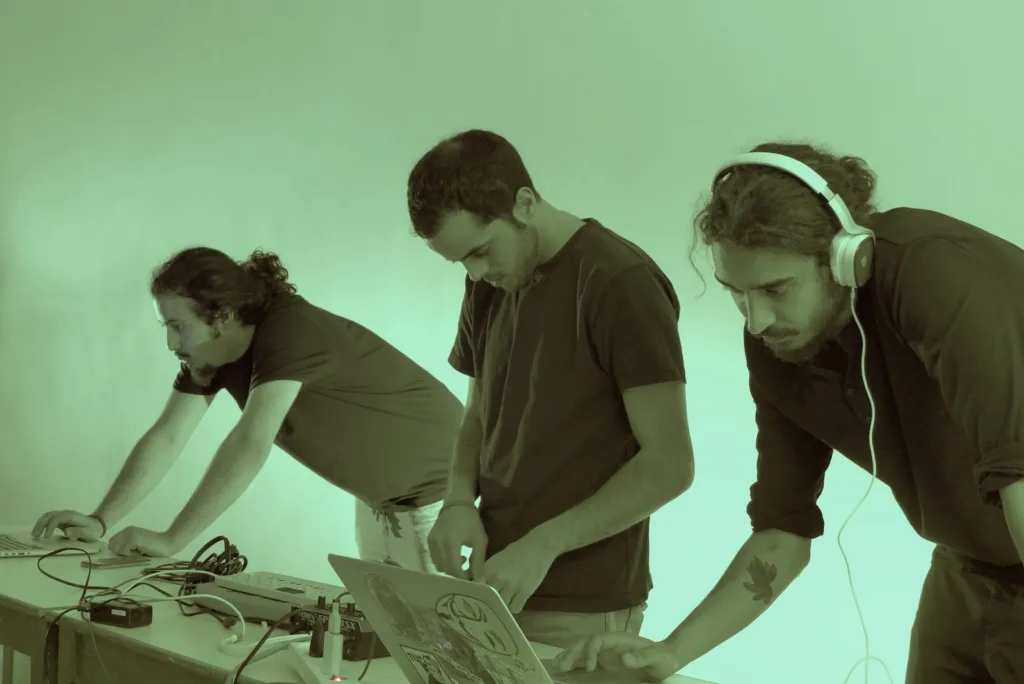
Although lyrical geniuses, poets even, these MCs were not necessarily concerned with stardom. This ethos, inherited from Muqata’a, who would later become one of the Saleb Wahad’s founding figures, treated the underground not as a genre, but as a way of life. For years, the crew remained in Ramallah. Some held steady jobs. One crew member, for instance, taught me in high school, delivering lectures with the cadence of a fully formed verse. Others were intermittently unemployed, yet prolific, content with a vast discography circulating quietly on SoundCloud. And then there were figures like Al Nather, who would go on to become one of the region’s most respected producers as he co-heads BLTNM alongside Shabjdeed.
Evident by Al Nather’s beats, lyrics weren’t the crew’s only forte; they had exceptional melodies, mellow and dreamy, yet accompanied by sharp drum patterns. Unlike today, where trap and more recently drill beats occupy the regional soundscape, the crew focused on old-school hip-hop instrumentals, transforming a place like the West Bank into a hazy experience with softer edges. It was their way of creating a utopia in a way, for us the West Bank residents. The harshness was there, the occupation was still looming, but perhaps they were attempting to add melody to the occasional grey areas we had found ourselves in as we lived de facto, ourselves, in a de facto state.
That is the honesty of Saleb Wahad’s music. A sonic language that does not shy away from its reality nor attempt to be something it’s not, that is their brilliance. Their ability to find the sweet spot of constructing alternative spaces while still remaining grounded in their surroundings is what made them work out; that’s how Ramallah learned to sound like itself.
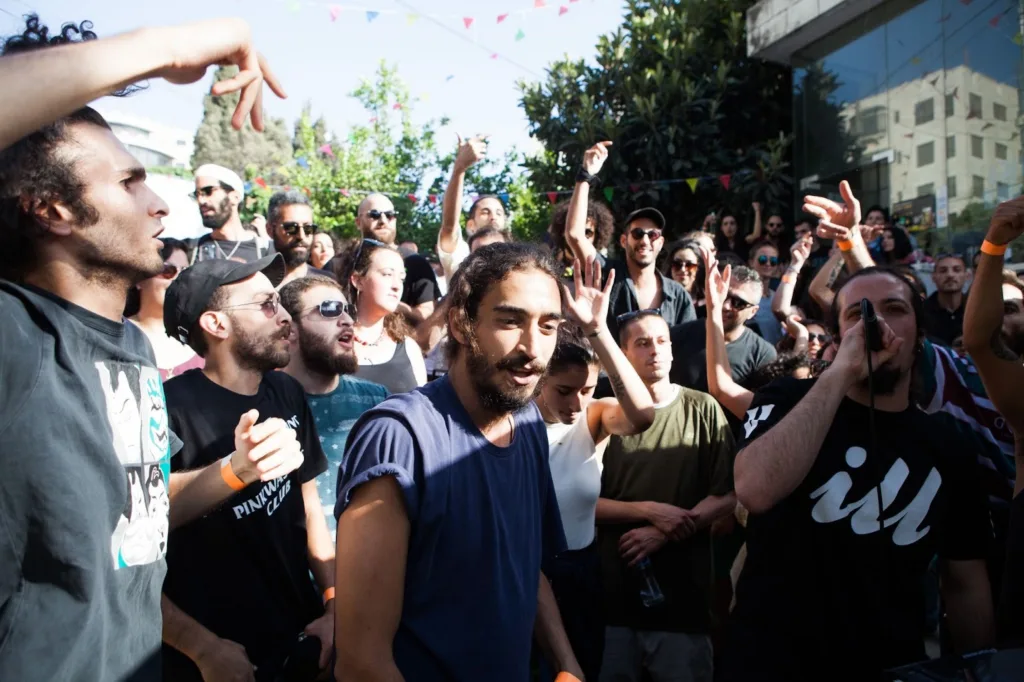
As their reputation grew, Saleb Wahad were featured in Boiler Room Palestine. A few months later, Julmud, or as I like to call him, king of sounds, told me jokingly: “Ever since Boiler Room, it’s like we’ve been cursed”. There is loyalty to the underground, one that’s costly whenever you betray its manifesto. This is not to promote purity or say artists are bound to be stagnant or extremely localized they become inaccessible, but Saleb Wahad knows to whom they speak and at the heart of it all, the crew doesn’t aim to market itself to a larger or more lucrative market. At the end of the day, Saleb Wahad will forever simply be ‘Sot Ramallah’.

Pop Culture Editor-At-Large at Complex MENA.