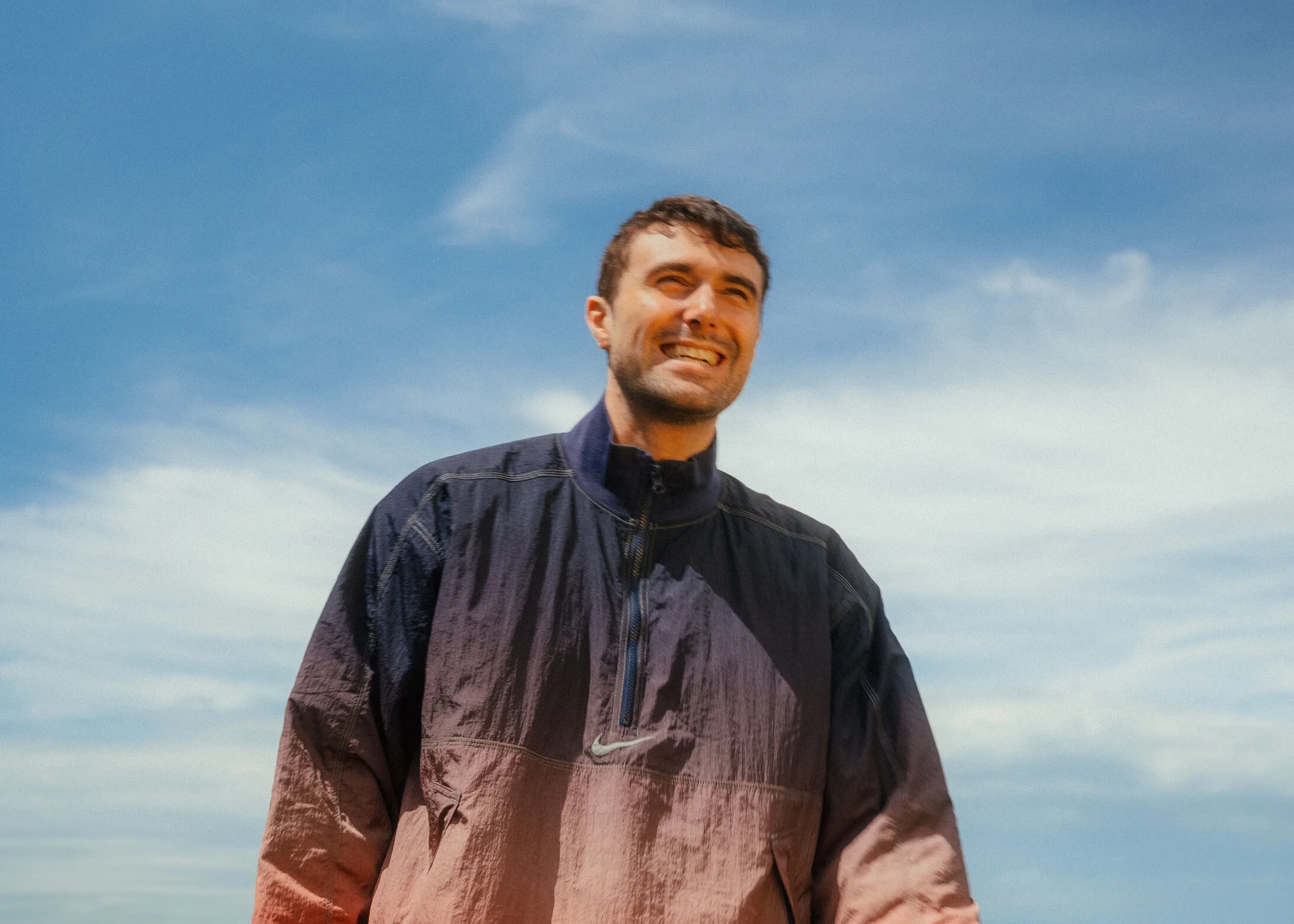

“Sorry man, the electricity went out,” El Rass shares from his home in Tripoli, Lebanon while speaking with Complex MENA.
It’s a sentence that many Lebanese have become accustomed to uttering at any given moment during any conversation or meeting. It’s a phrase emblematic of all the economic failures, political corruption, and social fragmentation that have plagued the Mediterranean country at least since the Civil War. At this point, those words are intrinsic to Lebanese identity and may as well serve as the national motto. But that phrase also embodies the root of why rappers in Lebanon feel that hip hop encompasses more than just another musical genre.
Rap provided a creative outlet for many Lebanese to directly challenge the systems and structures that further much of the political, economic, and social fragmentation within the country. Hip-hop remains inherently political in Lebanon, exemplifying hip-hop in its purest form and in its original intent as a genre of protest.
Locality as Currency for Authenticity
Unlike many of their regional peers in the Middle East and North Africa, Lebanese rappers by and large write lyrics that speak to local issues as opposed to partying, luxury, or any perceived superficial themes that have come to typify mainstream rap.
Read More
That ethos of Lebanese rap, coupled with the lack of infrastructure and support from the state and the continued instability of the country, fostered an insular scene more concerned with speaking to its people than achieving global or even regional notoriety.
It’s a different mentality from many peers of Lebanese rappers, both within hip-hop and in other genres, who have publicly and consistently made their intentions to “go global” well known.
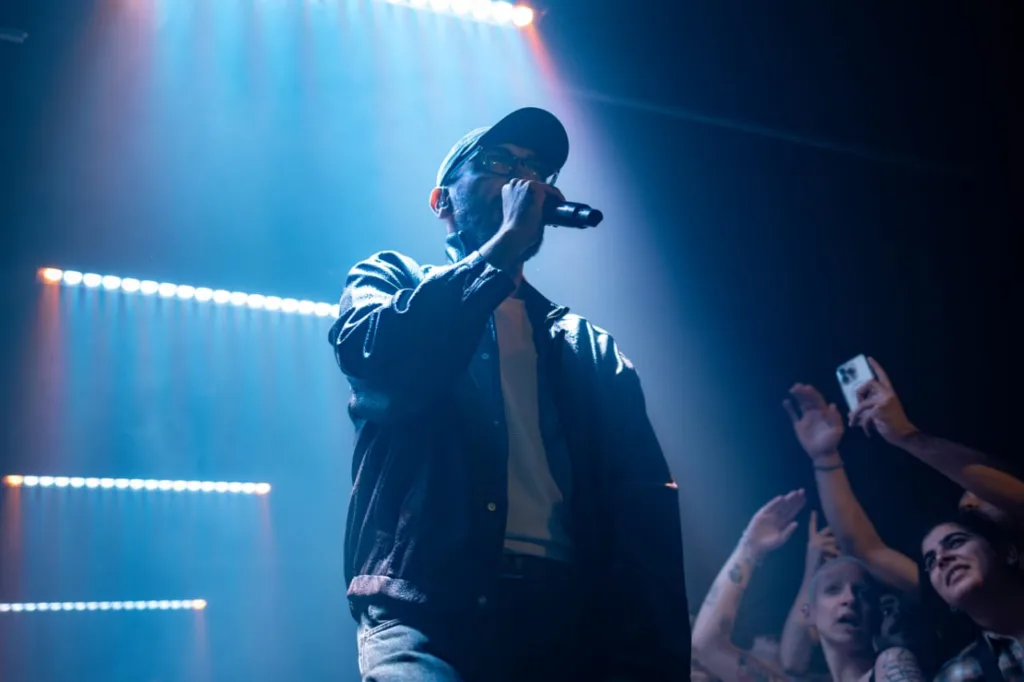
El Rass, continuing his original point in an electricity blackout now, continues: “We fail to articulate that this desire to be global, this desire to be part of this general appeal comes with a huge price. You lose your locality, you lose your ability to articulate your local reality, and you inflict that on your audience, and the audience itself becomes uprooted.”
Locality remains the highest form of currency for Lebanese rappers, something highly safeguarded and has yet to be traded for fame by any rapper in the country thus far.
A Lineage in Rap History
Depending on who one asks, Arabic-language hip-hop in the Middle East and North Africa started in the mid-nineties and early aughts by rappers from Lebanon, Palestine, Algeria, and Morocco.
In Lebanon, the genre arrived to the country through the duo Aks’ser, made up of rappers Rayess Bek and Eben Foulen, after their formation in 1997 and the release of their debut self-titled album in 2001.
The duo ultimately defined what would eventually become the soul of Lebanese hip-hop: witty social commentary and satirical lyrics.
The branches that grew from the tree of Aks’ser were multiple. Pioneering rap groups like Fareeq Al Atrash and Touffar built on the lyrical foundation laid by their predecessor with direct challenges to political corruption and social inequality.
Solo acts in the country like Roy Chalach, El Rass, Bu Nasser Touffar, and Chyno with a Why?, who co-founded and fostered the Beirut-based Arabic rap battle league The Arena, would follow in the 2010s with their own sound, operating in the context of the revolutionary protests across the region.
The New Guard
Now, the emerging generation of Lebanese rappers like Ziggy, Nuj, Jamul, Sabine Salame, Zeusaeed, BILLY TSTRK, Salloum, 3li3bboud, and HADI are all embodying the ethos of hip-hop in the country, holding a mirror up to Lebanese society and rapping about its different facets.
Many of the new wave of rappers are performing hip-hop as a way to protest conditions, both internal and external, facing Lebanon.
And Blu Fiefer, a multi-hyphenate artist with roots in hip-hop most notably through her own satirically political song “Sint El Ew”, created the “Fi Shway Budget” freestyle competition for up-and-coming rappers to win the chance to work with her label, Mafi Budget.
All of this continues to be built on the ground laid by Aks’ser and their debut album twenty five years ago, a common thread of cleverness and sarcasm ingrained in the DNA of Lebanese identity.
“In terms of how many rappers there are now and how many different kinds of rap and the amount of people who are doing this now, I think it’s actually a great time for the Lebanese rap scene,” says Sabine Salamé from her home in Spain. “You have a lot of different people, you have a lot of different groups in different places as well in Lebanon who are doing different things. I think that’s very rich.”
Ziad Rahabi’s Influence Continues
Rayess Bek, speaking from his home in Marseille, is quick to pay homage to the originator of this style of Lebanese music.
“We have to be honest here,” he says. “We have the legacy of Ziad Rahbani who was already smart with playing with lyrics in popular music that would speak politically and socially in a clever way. It’s in our genes, yes, but we have to also acknowledge the people that came before us and opened a path.”
The legacy of the late Ziad Rahbani looms large over Lebanon’s rappers as a blueprint for intertwining socially conscious lyrics with a uniquely Lebanese sonic perspective.
Nearly each artist that spoke with Complex MENA cited Rahbani as an influence for their work in some capacity.
“If you look at someone like Ziad…he introduced jazz in Arabic, for example,” adds Jamul, who himself released the politically satirical “HAIFA” in 2025 with Ziggy. “So we’ve always been people that tried to innovate from what we actually got right now. We tried to give it our own twist to it. That’s where Lebanese music was born.”
Navigating Censorship
Rayess Bek explains that the witty lyrics and satirical political innuendos employed by Aks’ser came mainly as a way to navigate censorship in the country at the time.
“We had no choice. Everything being imported culturally and commercially in the nineties was controlled and scrutinized,” he recalls of the early days of Aks’ser. “Every CD, every song, every tape, every lyric was checked. Our albums were blocked. They opened our CDs, started listening to the lyrics…our albums were blocked until we explained every little sentence in our music.”
While censorship against explicitly political and aggressive rap played a major role in keeping Lebanese hip-hop generally confined within its borders early on, Lebanon still remains one of the few places in the Middle East and North Africa where artists feel they are able to fully express their thoughts and feelings about politics in a way that their peers in the region cannot.
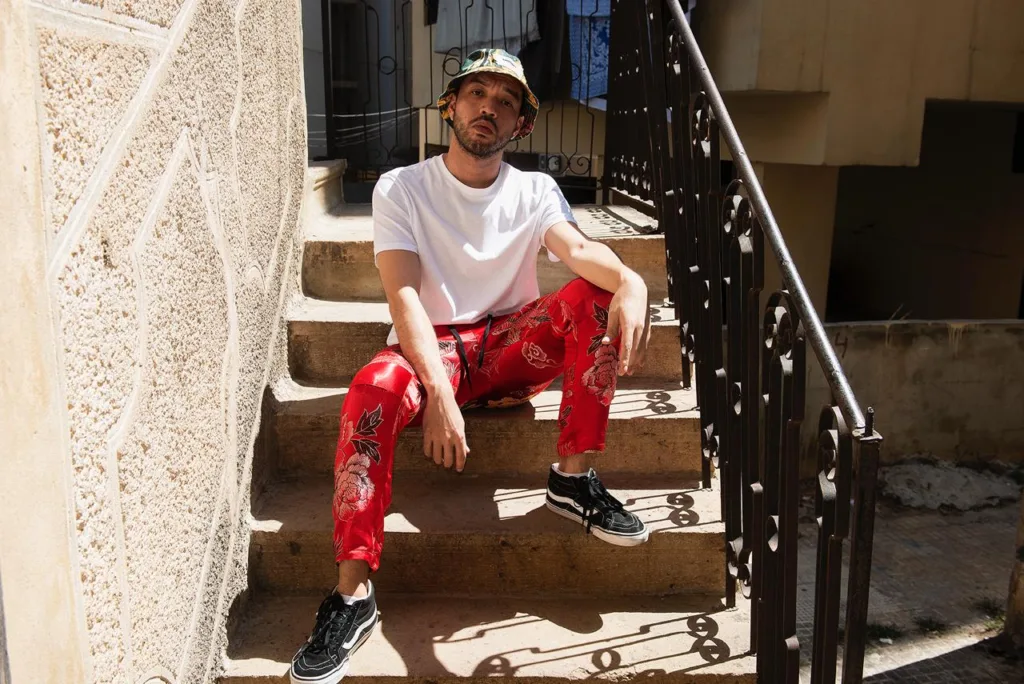
Chyno, who has since co-founded the boutique independent hip -hop label MILQ Records, explains that rappers in Lebanon have a bit more leeway to gravitate more toward the social awareness roots of hip-hop than many other scenes—an exception being Palestine, given the occupation.
“When you’re in Egypt and you can’t say anything about the president, you’re going to live in the margins of aesthetics, and you are confined with aesthetics,” he shares from his home in London. “That’s my criticism of Egyptian hip-hop. You don’t have anybody challenging anything. That’s a weird concept for me. Lebanese rappers have foregone aesthetics and we accepted the rawness of where we’re from. That became the aesthetic.”
Hip-Hop as Critique
Nuj, an up-and-coming rapper and winner of the Fi Shway Budget competition in 2024, agrees that hip-hop in Lebanon is able to have an uninhibited and honest look at its current state in large part because of this ability to critique.
“The lives of Lebanese people and the community don’t look remotely similar to any of the countries around,” Nuj adds. “And rap being the modern history book for our nations, that makes it unique and special. It’s the only real outlook of the nation in our eyes, untouchable, unfiltered.”
In the larger regional rap scene, there is no doubt that much of the attention of fans and the music industry tends to focus primarily on Egypt and Morocco, with additional consideration for hip-hop in Palestine and Jordan as well.
Rap in Egypt and Morocco in particular grew exponentially in the last ten years, thanks in large part to both their mass appeal and the music industry tapping into those two markets as viable and profitable.
The populations of both countries alone give each the ability to be their own markets. Coupled with their own histories of cultural and artistic influence and the changing dynamics of hip-hop as a mass marketed genre globally, Egypt and Morocco have maintained an outsized influence over regional and diasporic consumption of hip-hop
A tiny country with a fragmented society, economic instability, and the prospect of war at any moment will hardly be able to compete on a financial level in achieving the same widespread appeal in the Middle East and North Africa.
Yet 3li3bboud, a crafty producer, argues that this lack of any ability to export Lebanese rap is what helps keep the genre’s purity in the country.
“Lebanese rap does not possess the symbolic capital that would allow it smooth entry into cultural or media institutions, because it does not serve dominant narratives nor does it conform to the prevailing taste,” he says. “Regionally, it is marginalized because it does not present an easily consumable image. However, this exclusion grants it a critical position that allows it to deconstruct the logic of recognition itself.”
Lyrics Matter
HADI, a rapper from south Lebanon who released the politically poignant “Al Sawt” about Israel’s daily incursions into the country, takes this point further, saying that the lack of commercialized rap in Lebanon gives the genre a greater purpose in the country and the region.
“We have an active role to play,” he says to Complex MENA over Zoom. “We want to be political. We don’t want to let the political message be lost. We’re not political for the aesthetic of being political. We are political for the idea that we actually believe that music can change the status quo, at least.”
Aks’ser did try later in their career to change their sound in an effort to have more regional commercial success. Rayess Bek, however, admits that he hated every minute of it.
“Don’t try to fool yourself,” he reflects in hindsight on this time for the pioneering duo. “This is not who you are. Know who you are and deal with it. You’re not going to be someone else. You’re not going to be a nice rapper. You have your traumas and you have your anxieties that you’re going to talk about. This is who you are.”
And when it comes to doing that talking, HADI boasts that, lyrically, few can come close to Lebanese rappers.
“I think our scene is literally superior to every other scene. Maybe vibe-wise, they’re superior in some ways, but us, lyrically for sure we are better.”
Regional Respect
Yet when the regional conversation turns to talking about the best scenes or the best rappers, Lebanon and its deep bench of lyricists feel rarely mentioned in the same breath as artists like Wegz, Marwan Pablo, and ElGrandeToto.
El Rass, one of the few rappers in Lebanon who has been able to carve out an audience beyond the country’s borders, believes that while marketing and demographics do play a factor in this lack of recognition, the societal value of economics over culture is also a reason why consumers, the industry, and fans may not know as much about what’s happening in Lebanon.
“Contrarily to a previous period where culture was the definer of weight, during that time, we were really spearheading Arabic hip-hop,” he says. “Beirut was a nod through which a lot of Arabic hip-hop dynamics happened. But then when the center of gravity shifted from culture towards more economic consideration, that changed.”
3li3bboud adds that Lebanon’s history of resisting accelerated change also plays a role in this conundrum.
“Lebanon is a relatively slow country, not in the sense of backwardness, but in the sense of resisting forced acceleration,” he stresses. “The mountains, the sea, the green expanses, and the short distances between nature and the city all impose a less intense and more contemplative rhythm. This slowness is directly reflected in the musical sensibility and in the way rhythm, space, and improvisation are approached. Listening to this scene is listening to another rhythm within Arab culture, a rhythm that doesn’t always shout, but says a great deal.”
For Salamé, the sexism that still exists in Arab societies adds another layer for rappers who are women in terms of that recognition and respect.
“It’s not necessarily the rap scene itself that holds us back, but it’s society and the way that society is,” she stresses. “I think that applies to a whole bunch of the Arab world in which women are not supposed to speak up.”
Salamé adds that there is constant pressure on women in particular to “be perfect”—and constant judgement if they fail to meet fabricated listener expectations.
“It’s hard to be a woman in the rap scene because then people put different expectations on you,” she begins. “I feel this pressure of being one of the few women who are actually doing this. I really feel the pressure sometimes of people, like expectations. You see people, even random people that you don’t know, come and comment on your work in a way that they would never comment on for guys.”
Salamé shares that, despite this, she has received nothing but support from her rap peers in Lebanon.
Nuj believes this lack of recognition helps preserve the integrity of Lebanese rap.
“Its beauty is in the tight circle it’s in,” he says.
Jamul shares candidly that he and other rappers in Lebanon have made peace with this perceived slight by the region, arguing that his purpose to creating music is a higher one that calls for change and influence with his own community.
“I believe in our sound, and I believe that we have the potential, even though the odds are against us, maybe not now, maybe later, maybe in a couple of years, but I feel like we’re competing against the machine. I look at us as freedom fighters because at this point, there’s a whole industry, whether in Egypt, whether in North Africa, we’re not really included in it. We’re carving our own way. I think it’s a noble thing that we do.”
The Future of Lebanese Rap
“We’re just used to chaos, and we are willing to go that far all the time,” Chyno says. “If something happens in the banks, we’re burning down banks, bro. It’s a little, handed-down PTSD. That’s our natural reaction to things: We’re going in.”
The future of Lebanese hip-hop remains bright, rich with lyricists ready to carry the spirit of wit, clever lyrics, and social commentary. Even within an economic collapse, the lack of consistent electricity, sectarian politics, and a fragmented society, Lebanese rappers remain well-equipped to step up and challenge the system immediately.

US-based music writer and editor.