
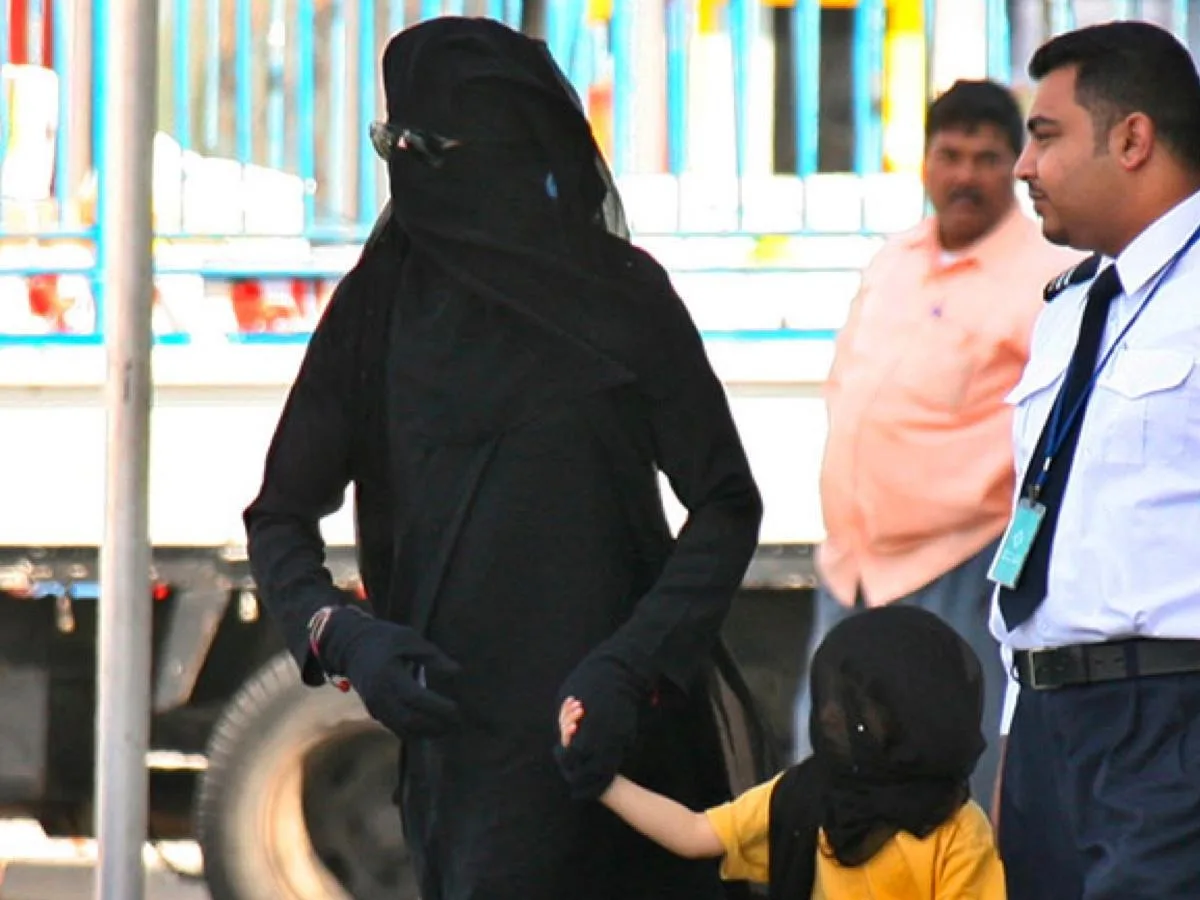
This is what the world saw: Michael Jackson veiled, dressed in a black ‘abaya’ and holding the hand of a child, also veiled, in Bahrain. The image was striking, a spectacle misread as conversion, exile, or eccentricity, coming at a time when turbulence and numerous allegations took over the pop star’s life. Yet, this image wasn’t supposed to be the highlight of the year Jackson spent in Bahrain; instead, what the image erased was something far more ambitious: a serious attempt to build a Gulf-based cultural institution around what was at the time, the most powerful celebrity brand on the planet.
Today, common discussions of the MENA region’s expanding role in the global music industry often frame the phenomenon as new, particularly in relation to the Gulf. While this perception is not entirely unfounded, the region was already testing similar ambitions through high-profile but short-lived ventures nearly three decades earlier. Among the most notable, and now largely forgotten, were those linked to Michael Jackson, whose partnerships in the 1990s and into the 2000s offer an overlooked case study in early cultural investment, celebrity capital, and institutional fragility.
Public memory of this period has largely condensed into a single image but often disregards Two Seas Records, a joint venture between the embattled pop star and Bahraini royal family. The record label, Two Seas Records, was founded with the intention to launch Jackson’s musical comeback, with plans to release the singer’s first album since 2001 by the following year, alongside a memoir, a stage musical, and a Cirque du Soleil show, as reported by The Guardian.
Although Michael Jackson recorded a few songs, some co-written by Sheikh Abdulla Hamad Al-Khalifa including Hurricane Katrina benefit song, the songs remain unreleased and Two Seas Records (a literal translation of “Bahrain”) wouldn’t survive the year. In fact, by June 2006, the BBC reported Michael Jackson parting ways with the label to launch The Michael Jackson Company, which will look after his business affairs, including the album meant to be released via Two Seas, and postponed until 2007.
But the venture’s collapse did not end quietly. In 2008, Sheikh Abdulla Hamad Al-Khalifa filed a lawsuit against Jackson in London’s High Court, alleging he had spent $7 million on the star in the form of loans and expenses including, as reported by Arabian Business, $35,000 to pay an outstanding utilities bill at Neverland, $300,000 for a ‘motivational guru’ and $250,000 so that Jackson could ‘entertain his friends at Christmas’.
However, as per an article in Fortune, the day before Jackson was due to testify, the parties settled out of court, with Sheikh Abdulla reportedly receiving $5 million from promoters AEG Live to break Jackson’s contract with Two Seas. The Guardian then reported that this settlement cleared the way for AEG to schedule Jackson’s ill-fated 50-show residency, This Is It.
Read More
While this venture is usually framed as an attempted redemption arc or a royal lifeline extended to Michael during a moment of personal, legal, and financial crisis, Two Seas wasn’t the first joint business venture connecting Michael Jackson to the region. In fact, almost a decade earlier, during the height of his career, Jackson had already entered into a multimillion-dollar partnership with Saudi billionaire Prince Al Waleed bin Talal.
According to the Times, in 1996, Prince Al Waleed bin Talal and Michael Jackson appeared in Paris for a press conference announcing a multimillion-dollar show business joint venture called Kingdom Entertainment. Its first joint activities were a sponsorship of Jackson’s world ‘History Tour’ in which Jackson performed in Tunisia. In the Paris press conference in 1996, the joint venture was described as a vehicle for investments across animation, theme parks, video and more.

While not much materialized apart from the tour, Kingdom Entertainment produced Michael Jackson’s Ghosts, a 1996 short film starring Michael Jackson, directed by Stan Winston, and written by Stephen King and Mick Garris. The Wall Street Journal reported the company also went on to purchase 50% of Landmark Entertainment Group, a theme park design and attractions company started in 1980, in hopes of building a theme park, like Disneyland, that would be named ‘Peter Pan’s Neverland’. Like Two Seas, however, the broader vision remained unrealized.
Taken together, Michael Jackson’s ventures in the Gulf, spanning Kingdom Entertainment in 1996 and Two Seas Records nearly a decade later, were far from isolated curiosities or misadventures. They reveal enduring patterns: the tension between personal ambition and institutional support and the difficulty of translating high-profile partnerships into lasting impact.

Pop Culture Editor-At-Large at Complex MENA.