
In Conversation | Inside Ahmed Sorour’s World of Kitsch, Fantasy, and Questions
Raised on Egyptian pop culture, Y2K fantasies, and an aunt’s Amr Diab-core taste, Sorour learned to begin with questions.
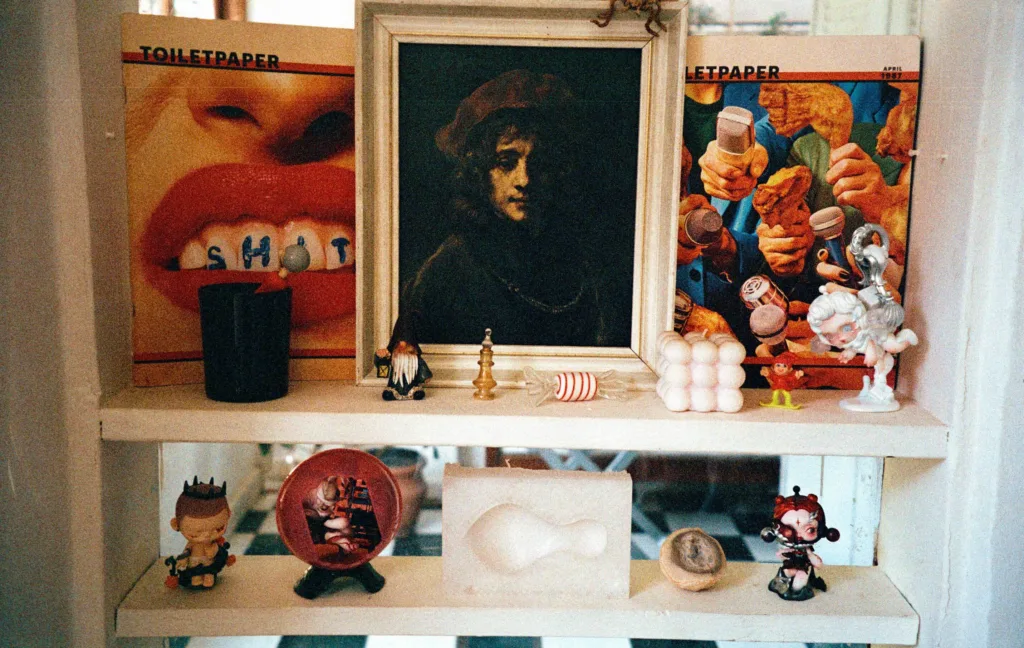
Stepping into Ahmed Sorour’s apartment, one of the first things you’ll see is a plastic blow-up chair with a Hello Kitty doll perched on top. In the corner, shelves of trinkets and small plastic toys tell stories of the past and a lot about who Sorour is and where his artistic vision is rooted. A conceptual artist, a creator, a person with ‘passion for fashion’, Sorour is also a fantasy, a question put forth, a conceptual endeavour in and of himself.
Born and raised in Egypt, Sorour lives and breathes fashion. Observant by nature, his artistic eye took shape at a young age. Trips to China and South Korea as a child lend meaning to his love of kitsch. He was enamoured by his aunt’s spiritual journey and her Amr Diab-core aesthetic at family lunch. Piqued by his female cousins’ Y2K looks that were then unattainable; by Egyptians’ street style, from the upper-class women of the suburbs to the local barber. He began to ask questions, not necessarily to get answers, but to start discussions.
‘It’s not about being beautiful’, he says. ‘I’m always questioning the idea of beauty. What is beauty, what is considered beautiful?’ Somewhere in between the world of kitsch and Egypt’s societal constructs, Sorour found his creative launch pad.
‘I’m intrigued by the non-binary, by fluidity, by the option for human beings to question gender through fashion, through art. This is one of the main goals in my work’, says Sorour. His creative outlet is propelled by questioning culture, religion, and authority, most often within the context of self-representation. It is in this playground of the unexpected that Sorour has his edge.
Sorour, the Stylist
Sorour is many things, from artist to fashion designer to teacher, but in the professional industry, he’s best known for styling.
Read More
‘I never knew there was such a thing as styling’, Sorour says about the start of his career. ‘All I knew was that I’d been very picky about what I wear and how I wear it since I was ten’. His father owned kids’ clothing and toy shops, and Sorour would often be asked to curate their displays. Years later Sorour’s styling career took off, almost by chance, while working as an Architecture Teacher’s Assistant at the American University in Cairo.
‘I had never done anything like it [styling] before, and I arrived [on set] to find a full-on cover shoot’, Sorour recalls. Despite showing up unprepared, with but a few clothes he’d gathered from friends, Sorour’s misjudgement of scale did not get in the way of his success. For years following, he worked often and without an assistant, becoming accustomed to every role. When he was accepted into a Master’s program in menswear at University College London, he had to learn to tailor from scratch. Despite his disadvantage in the class, his graduation project got selected to show at London Fashion Week. Talent has a lot to do with Sorour’s popularity, but it seems tenacity is the real secret weapon behind his success.
Sorour currently works with heavyweight fashion publications, production houses, and musicians in the region. ‘I work a lot with musicians, especially hip-hop artists and rappers, because they are more open to experimentation. I have a good relationship with a lot of them, Wegz, Marwan Moussa, Marwan Pablo, Wingii’, he says. Outside of the hip-hop world, he’s styled deejays such as Disco Misr and has created costumes for Egyptian musician Nadah El Shazly and Sudanese singer AlSarah.
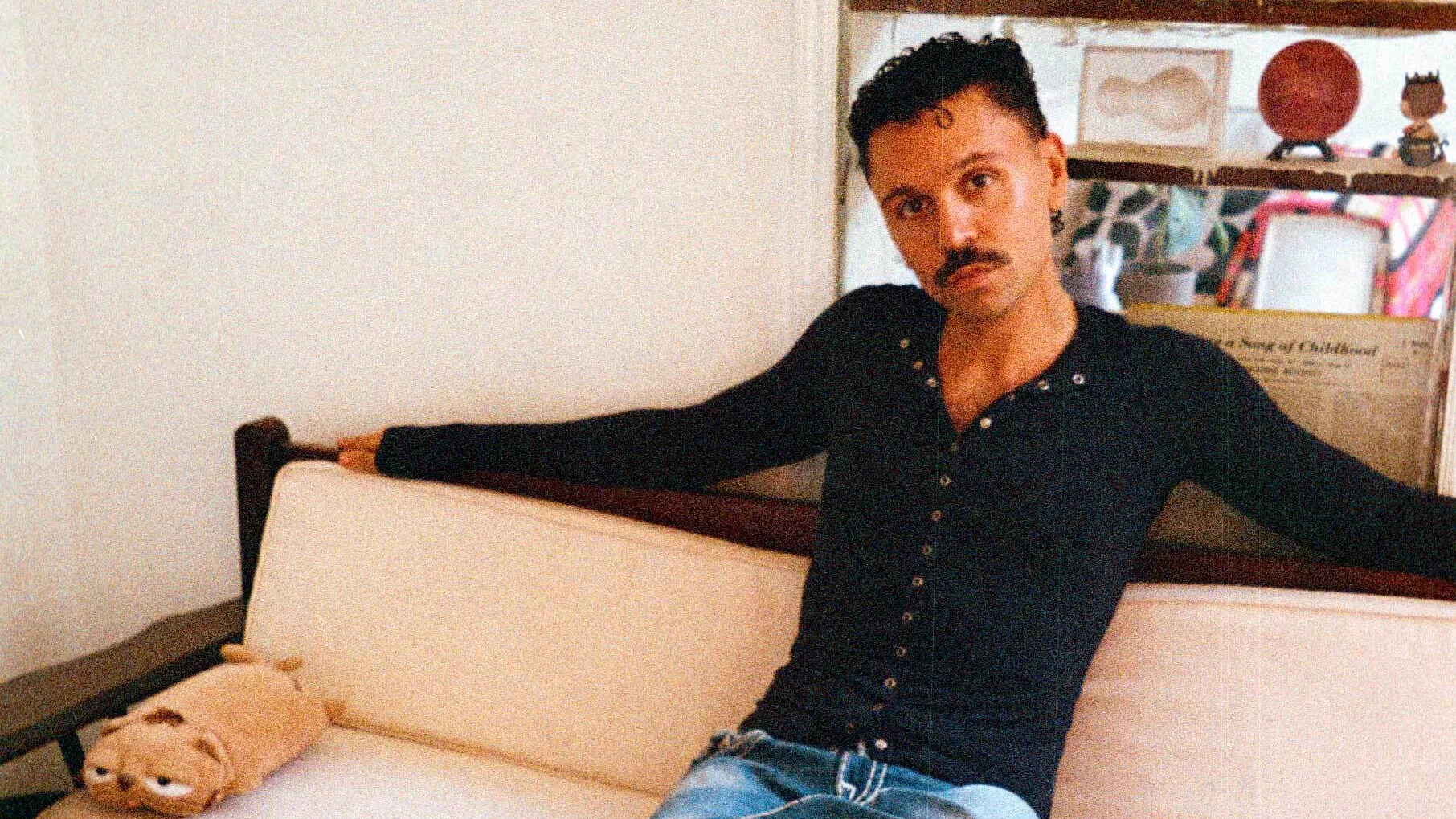
Style In Music
Sorour went from having never worked with Egyptian rapper Marwan Moussa to working with him twice within a week. Sorour was aware that Moussa wasn’t into high fashion, but believes that ‘Editorials are all about showing a side of you that’s a bit playful and a bit more interesting, it’s not about how you look walking down the street’. Styling is a conversation for Sorour; it’s about finding where to push a boundary, and when to listen. A process ultimately about trust.
After successfully putting Moussa in Margiela Tabis, Sorour was asked to style the rapper for the release of his latest album, Matador, and its music clip. ‘It was always very smooth working with him. [For the shoot] they wanted a godfather-esque vibe. Glam, old money, oversized suits and shirts, with all these girls by the pool’, he explains. Having studied suiting in his MA, things came full circle when he produced almost every item in the shoot, “All the suits are my designs, almost all the shirts, as well as some extra pieces.”
For Sorour, working with musicians means more creative freedom. He worked closely with Nadah El Shazly and director Selim El Sadek on the music video for her single ‘Kaabi Aali’, a trio of minds he describes as perfectly aligned. Aside from Nadah’s three looks, one of which he designed, Sorour designed and created the giant, faceless creatures featured in the clip. ‘We had a lot of conversations and meetings and fittings’, he says. ‘I loved what we produced for the tall creatures. I designed those pieces from scratch … They’re moving around, not knowing who they are or what they are. Some were on all fours, others were accented with long sleeves. They’re weird creatures, monsters a bit. Genderless. This was the concept’.
Are the lines blurring in the creative industry? Are stylists becoming creative directors, musicians becoming designers? Benzene’s latest campaign, which featured Sorour as one of four creative directors, would suggest so.
The brand operates under the vision of Palestinian entrepreneur and multi-hyphenate Ahmad Zaghmouri, its creative and managing director, who brought together a cross-section of the creative industry to produce what Sorour describes as ‘something urban and bougie, with a fiery effect to suit the brand’s name: Benzene’.
What’s Next
From a determined kid with a deep love for fashion to styling some of the biggest musicians of the moment, Sorour looks forward to producing more as a designer and creator. His ultimate aim is a fluid fashion line that expands representation for men in the Arab world. Of his craft he says, ‘I don’t ever want to produce something that looks dated. My ultimate fear is that my ideas or style or work are dated. I want to stay current and relevant. You have to keep up’.