
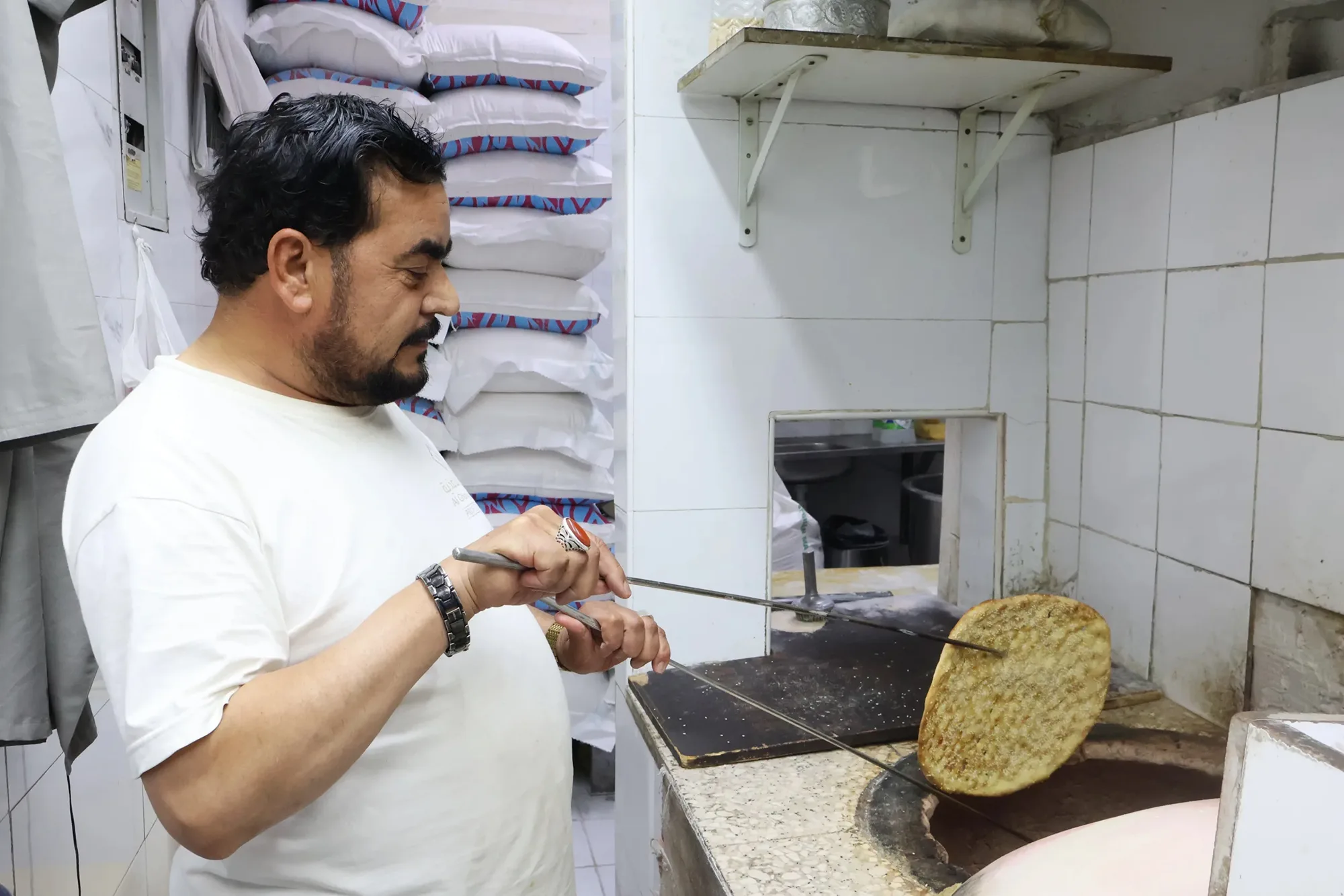
The air is heavy, weighed down by the thick, nutty scent of pillowy naan.
Bright, white lights bounce off the tiled walls and onto a little rectangle of gold plastic hung above the open door. The signage reads ‘MashaAllah’— what God has willed — perched at a crooked angle.
Invisible swirls of loose flour float in the air like miniature tornadoes, moving in and out of sight as the flame climbs and roars out of the oven. A behemoth of more white tiles, criss-crossing pipes, and a semi-circle-shaped opening of bricks, burnt bright red with many, many hours of steady fires. This cubic inferno is called a bhatti, and is the centre of the little universe that is the Salem Ali Bakery.
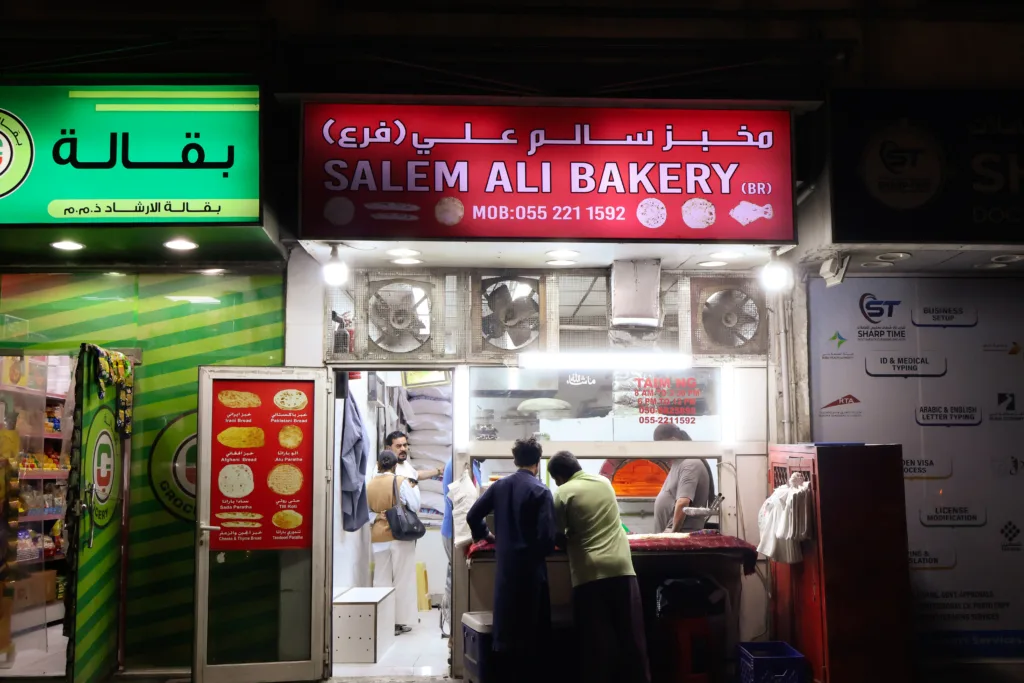
Located within the tight, winding, honeycomb lanes of Meena Bazaar, Karama, Salem Ali Bakery is not your typical bake shop. There are no aproned baristas behind sleek, concrete counters. No displays of colourful, overpriced pastries with fancy French names. No sophisticated pairs of legs, one crossed over the other. This is a rudimentary operation, serving up hot and fast the primary vessel of flavours across South Asia: the roti.
Roti, or flatbread, comes in an innumerable number of varieties: plain, with yeast, without yeast, light, dense, sweet, savoury, made with different compositions of wheat and from different parts of the subcontinent.
Read More
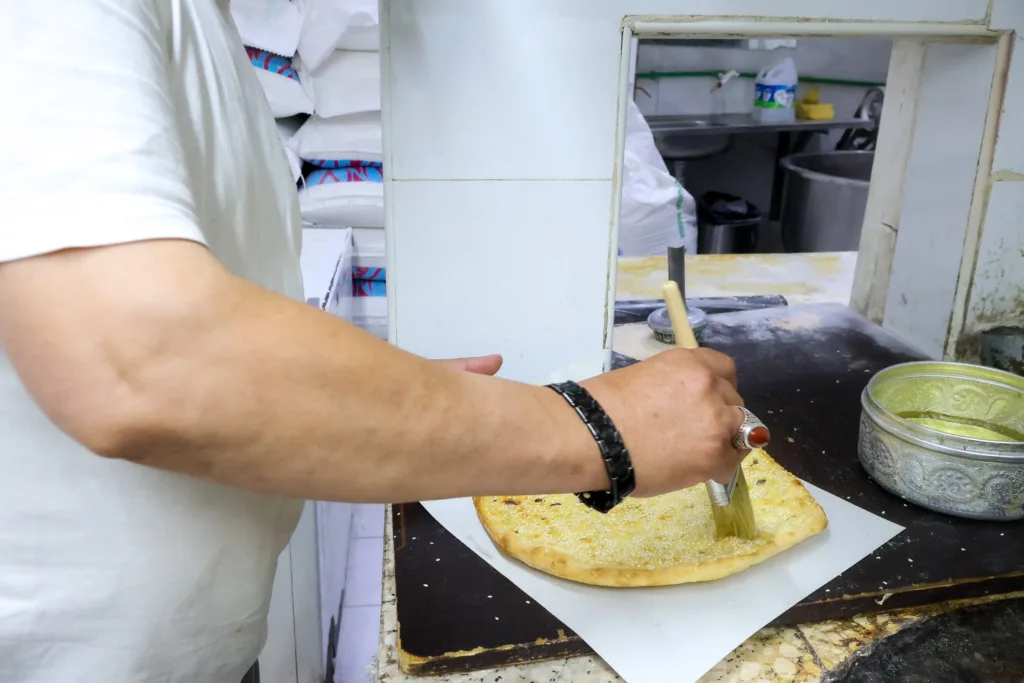
Found across India, Pakistan, Afghanistan, and throughout the Middle East, whatever the style of bread, the importance it holds remains constant, anchored by searching taste buds looking for a morsel of home. The South Asian diaspora of Dubai is concentrated in the older enclaves of the city–Deira, Karama, Fahidi, Qusais, and Nahda, and these are the areas where you will find a tandoor in every neighbourhood.
On this day, Mohammed, owner of the Salem Ali operation, stands next to the namesake tandoor, a cavernous, cylindrical pit, where he stretches uncooked flatbreads onto a handheld mound and slaps them onto the wall of the oven. This is how traditional Pashtun naan is made–a simple dough of flour, water, yeast and a pinch of salt. Once it is cooked through, golden brown splotches appearing on the puffed surface, it is picked off with a skewer and stacked for waiting patrons to take home, tear into bite-sized pieces and dip into curries, kadhais, bhartas, bhurjis, kormas and shorbas that carry them across oceans.
“This is my family business,” chimes Mohammed, beads of sweat clinging to his forehead.
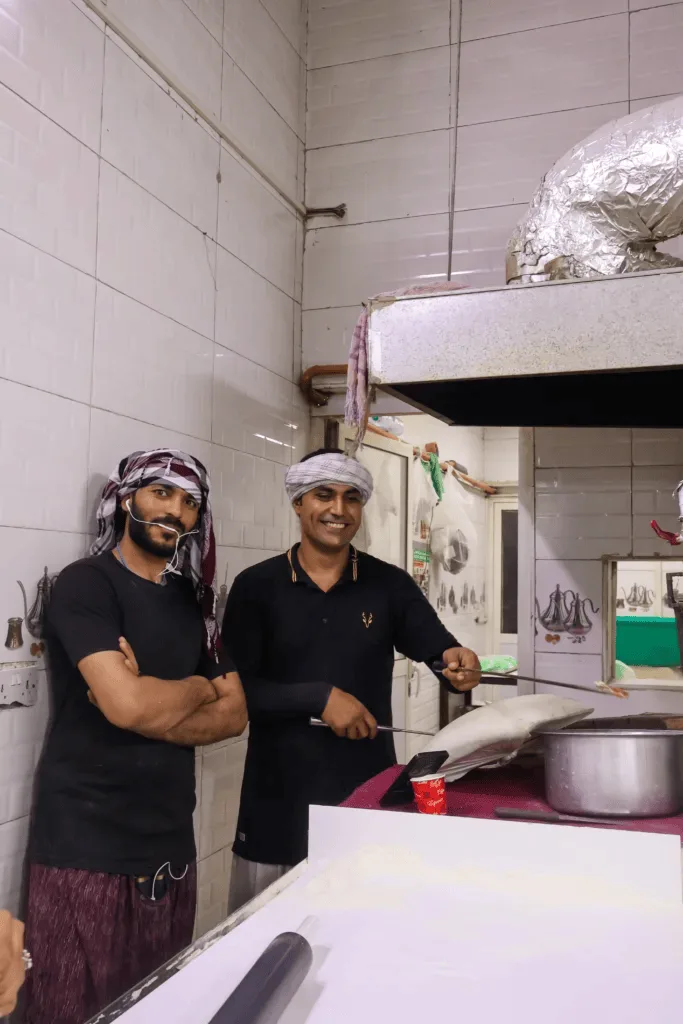
It is unbearably hot inside the tiny shop — naturally, with two open flames blazing away. A worker stands next to the bhatti, a soaked cloth tied to his head, his face ruddy and smiling.
“This is my relative,” he says.“He came with me from Afghanistan to work here, and the rest of them.” Mohammed sweeps a hand across the space, gesturing to the three other men inside.
As we converse, recalling his childhood working many a tandoor like this back home, alongside his father and grandfather, the sound of portly laughter streams in. Two customers are stood outside, clutching plastic bags of fresh ware, chatting up the workers. It is an endearing picture, perhaps the most accurate of what streetside tandoors like these mean within the cultural and social fabric of Dubai.
Primarily run by the Afghan expatriates of Dubai, these are not just bakeries. They serve as a daily reminder of identity wrapped up in rumali rotis, aloo parathas, cheese parathas and Iranian bread. They are also corners of convergence, where bachelors, away from their families, find someone to speak their language and share their struggles, maybe over a cup of chai. Fathers bring their little ones to pick up dinner for the night – a quick stroll, a memory made.
Mohammed’s bakery has been standing, as it is today, for 25 years. He sells about 2000 rotis in a day, morning through night, each sold for a mere AED1.50. He is part of an underbelly of living in Dubai, a community overlooked, unheard from, maybe misunderstood.
“Alhamdulillah for everything,” he says, hand on heart. “I thank God for everything. He is feeding our families, running our households.”
On another curbside, Mohammed Sadiq has been running his bakery, Madeen Al Joolan, for seven years. He’s an old man, with a snowy beard clinging to his face and hard of hearing. His staff tells me they sell about 800 rotis in a day, and their customers range from weary construction workers ending long days to babes in blowouts, driving Range Rovers and carrying Louis Vuitton Neverfulls.
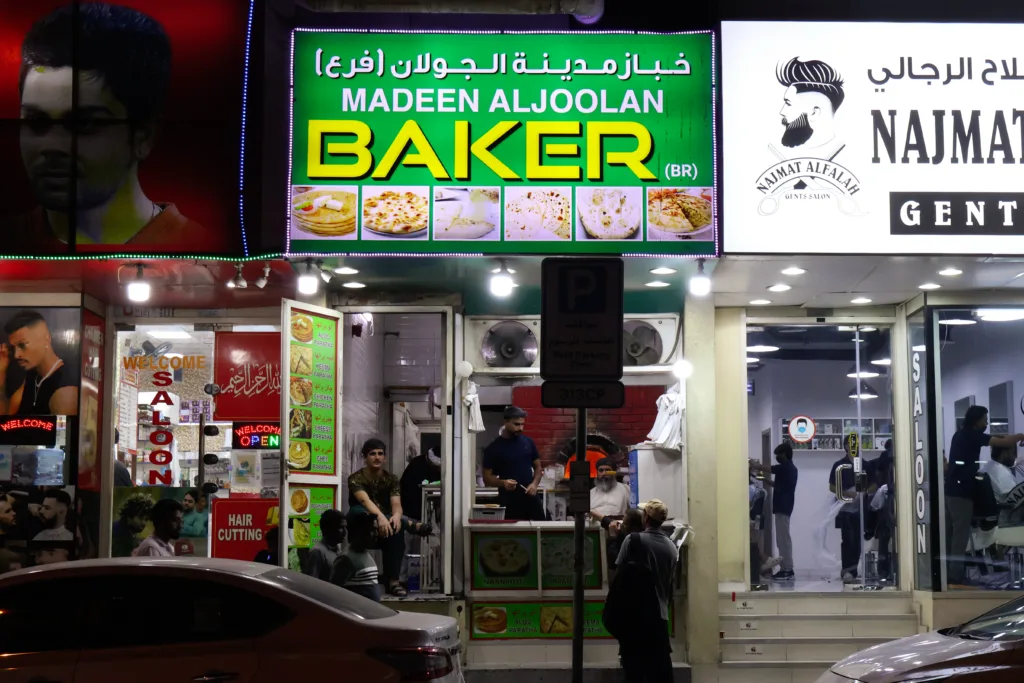
“We don’t stop,” says Ishraq Nadeem, a worker. “The people come nonstop. We keep rolling out more roti.”
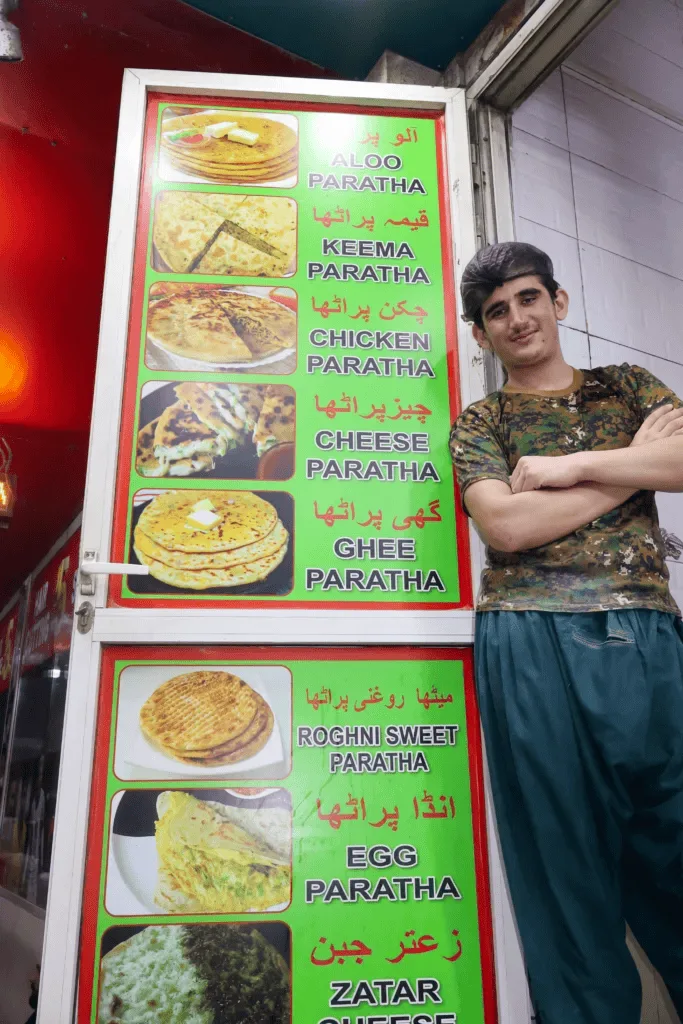
Such is the uniting power of these humble establishments, and of course, of the naan. No matter where we come from, we all kneel to the charms of carbohydrates. The menu pasted on Madeen Al Joolan’s door shows a few more unique twists I haven’t come across anywhere else–chicken paratha, egg paratha, zaatar cheese paratha–paratha being a flatbread made of refined flour, laminated and rolled out with lashings of ghee. Tear it open, and you may be delighted with a surprise of vegetal, meat, or a mix of vegetal and meat fillings.
These tandoors are a vivid part of my memories growing up in Dubai, as I’m sure they are of other Dubai born-and-breds. My mother, too, on many occasions, has asked my father to drive down to the naan shop, because she didn’t want to make roti that day. Countless times, we have ripped up steaming rotis, eating with our hands, wholly unaware of the names, faces and dispositions of those connecting us with our roots, one bite at a time.

Dubai based writer, focused on food and lifestyle stories.